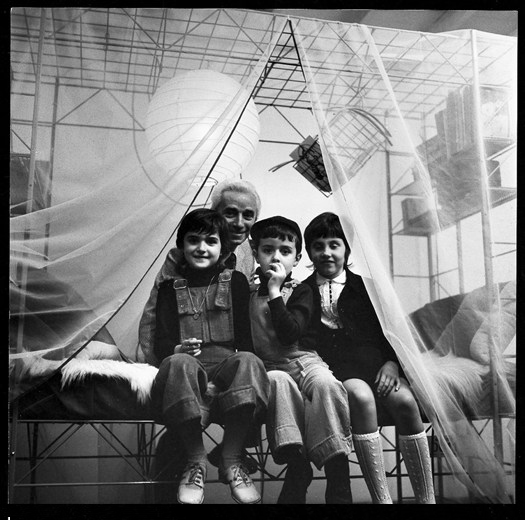
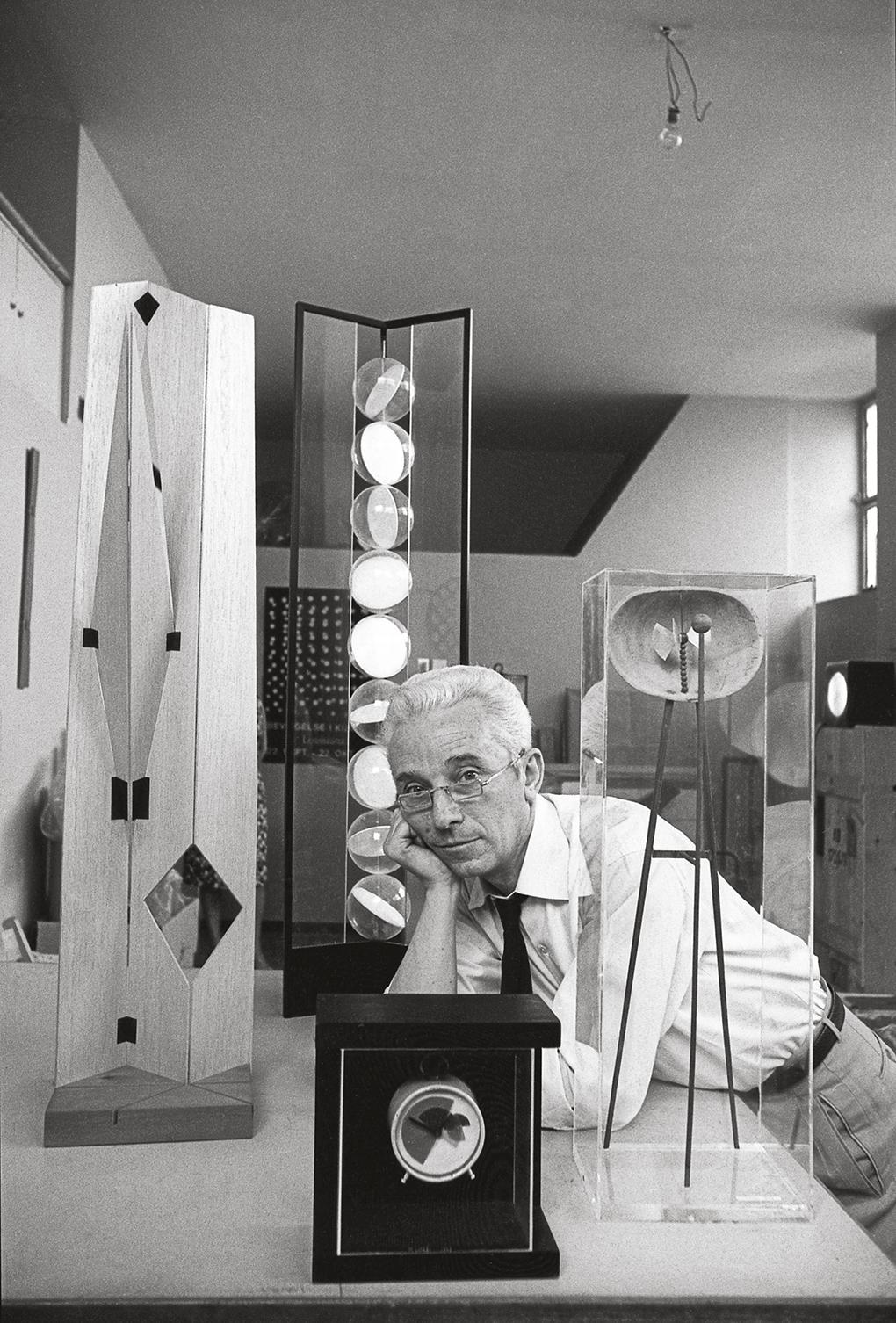
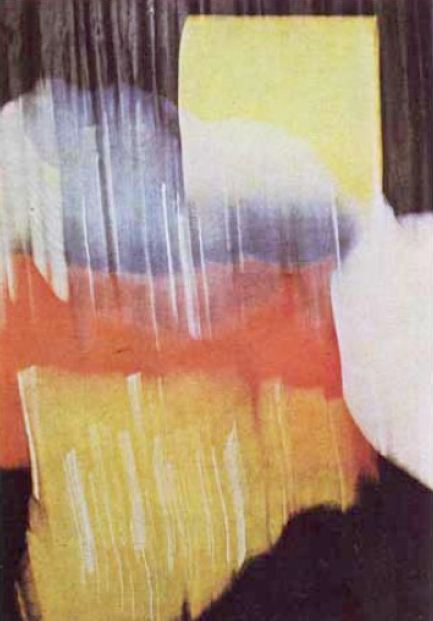
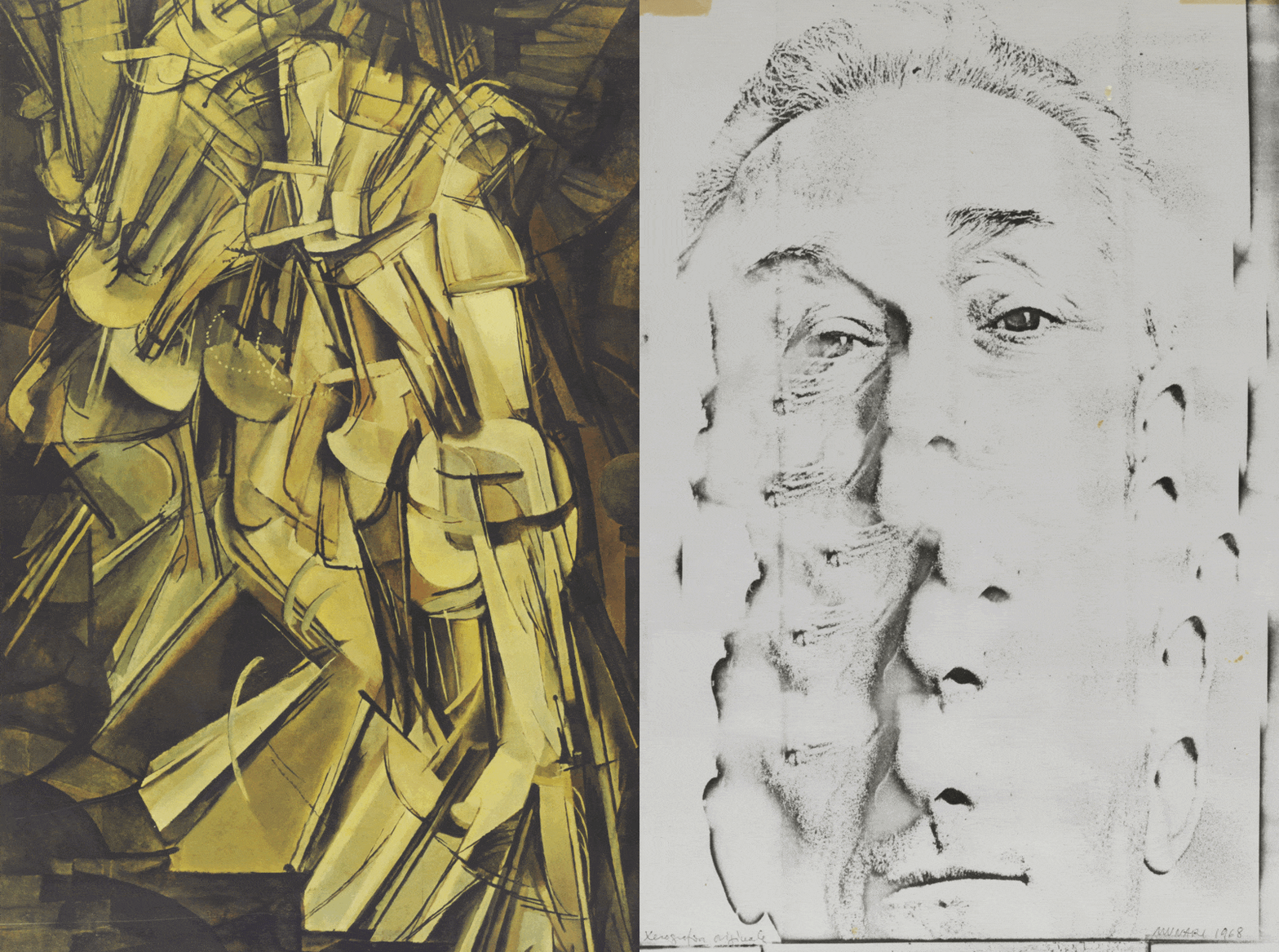
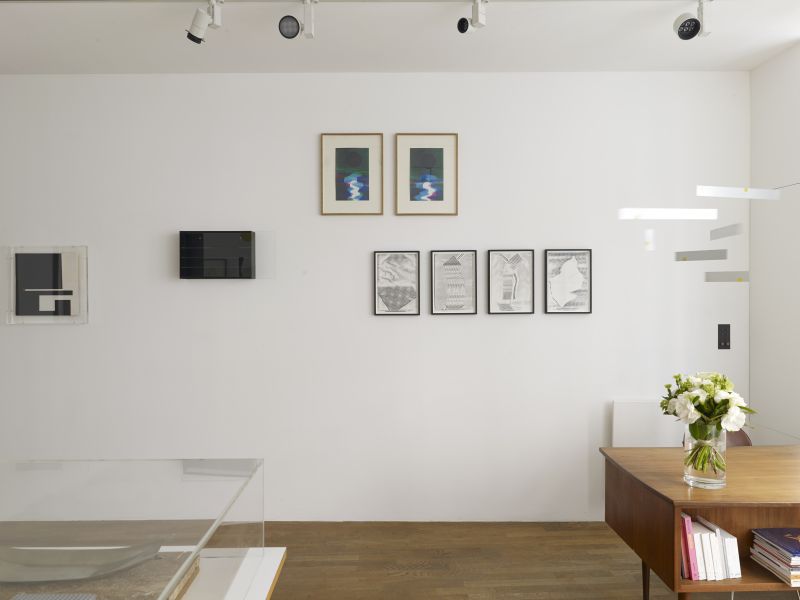
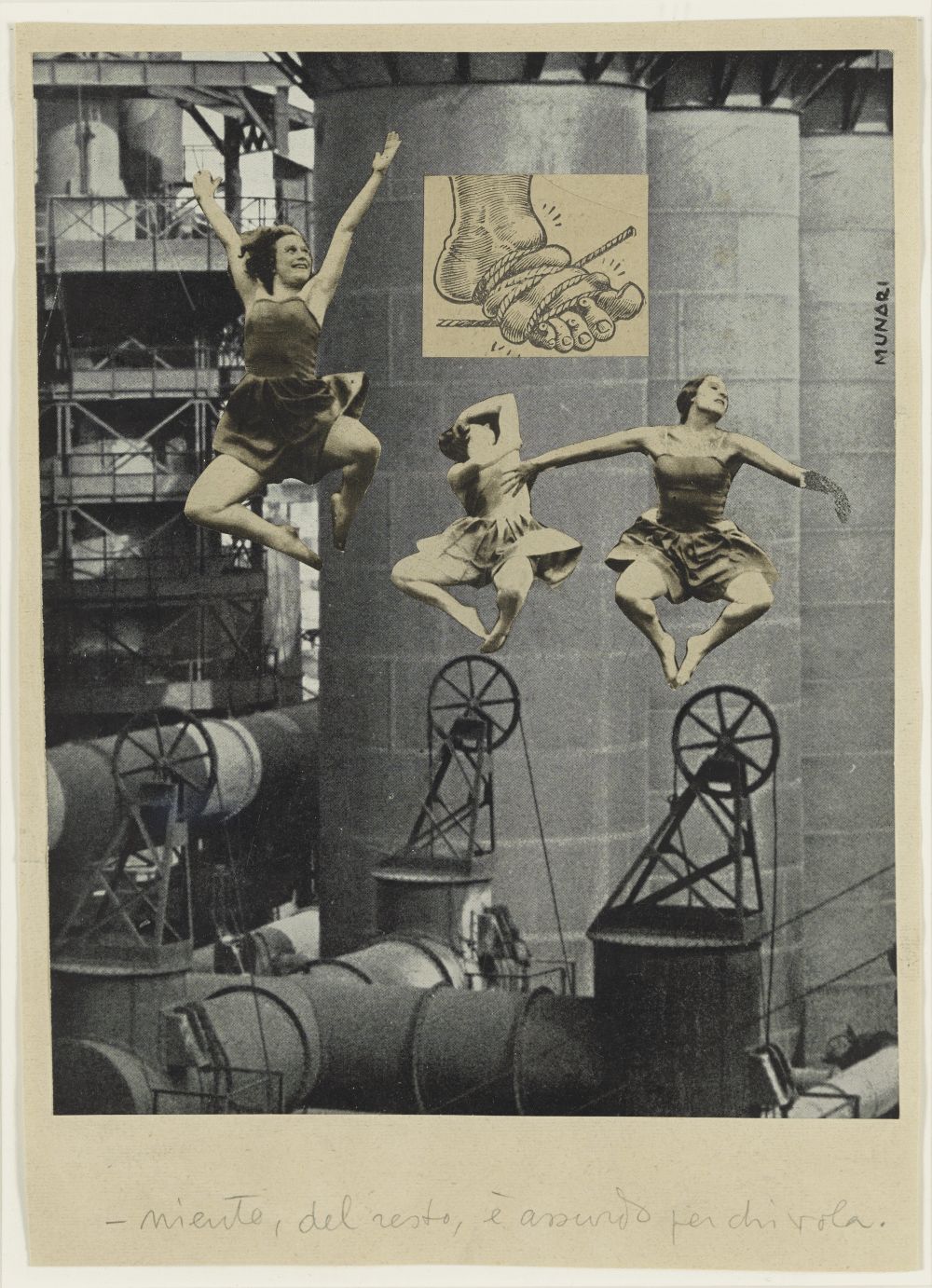
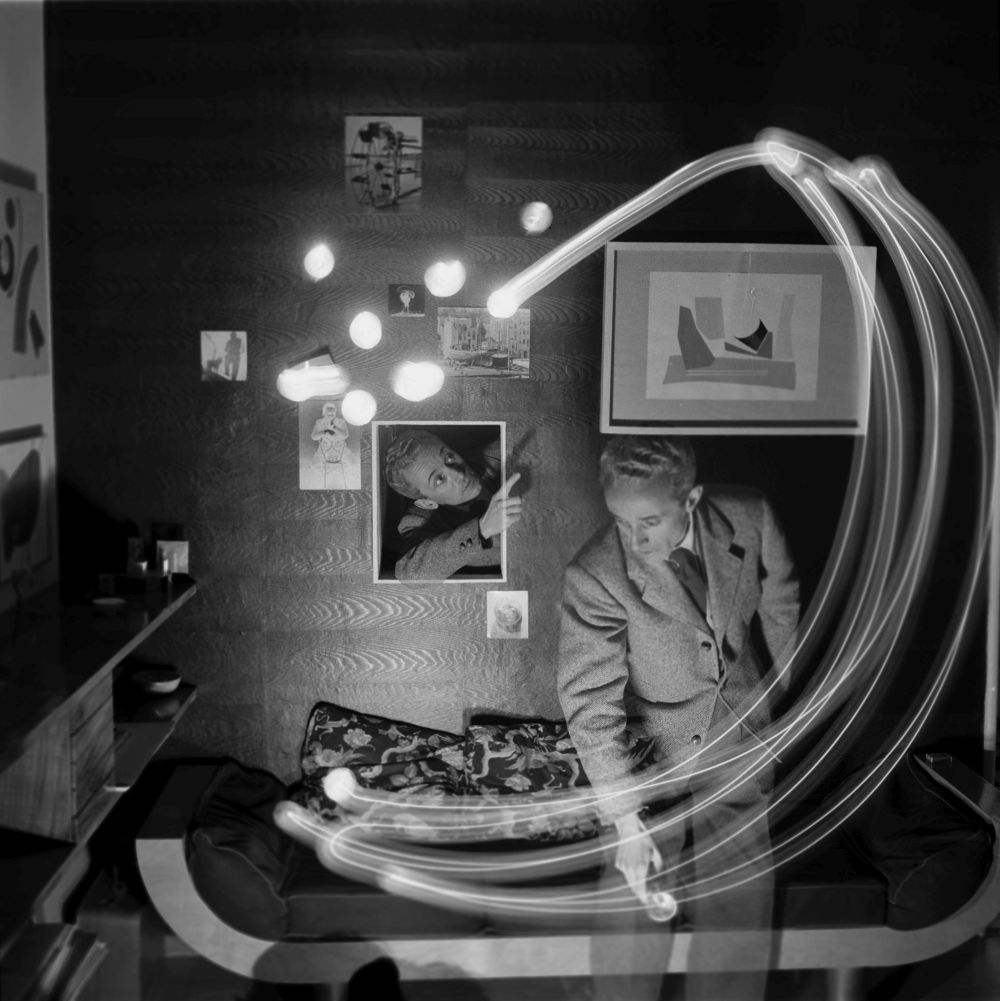
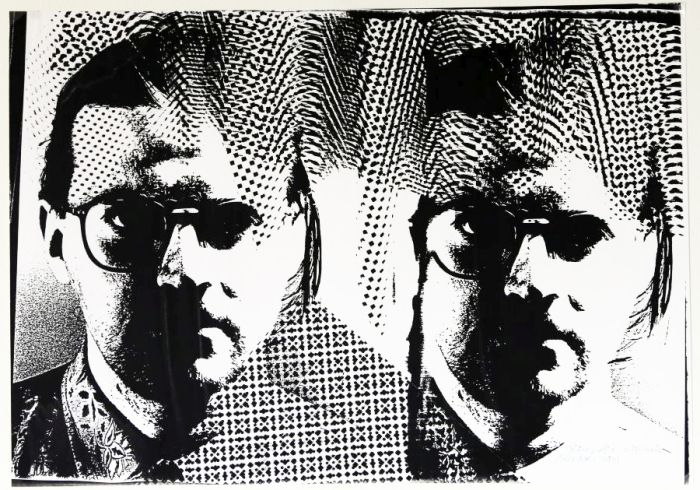
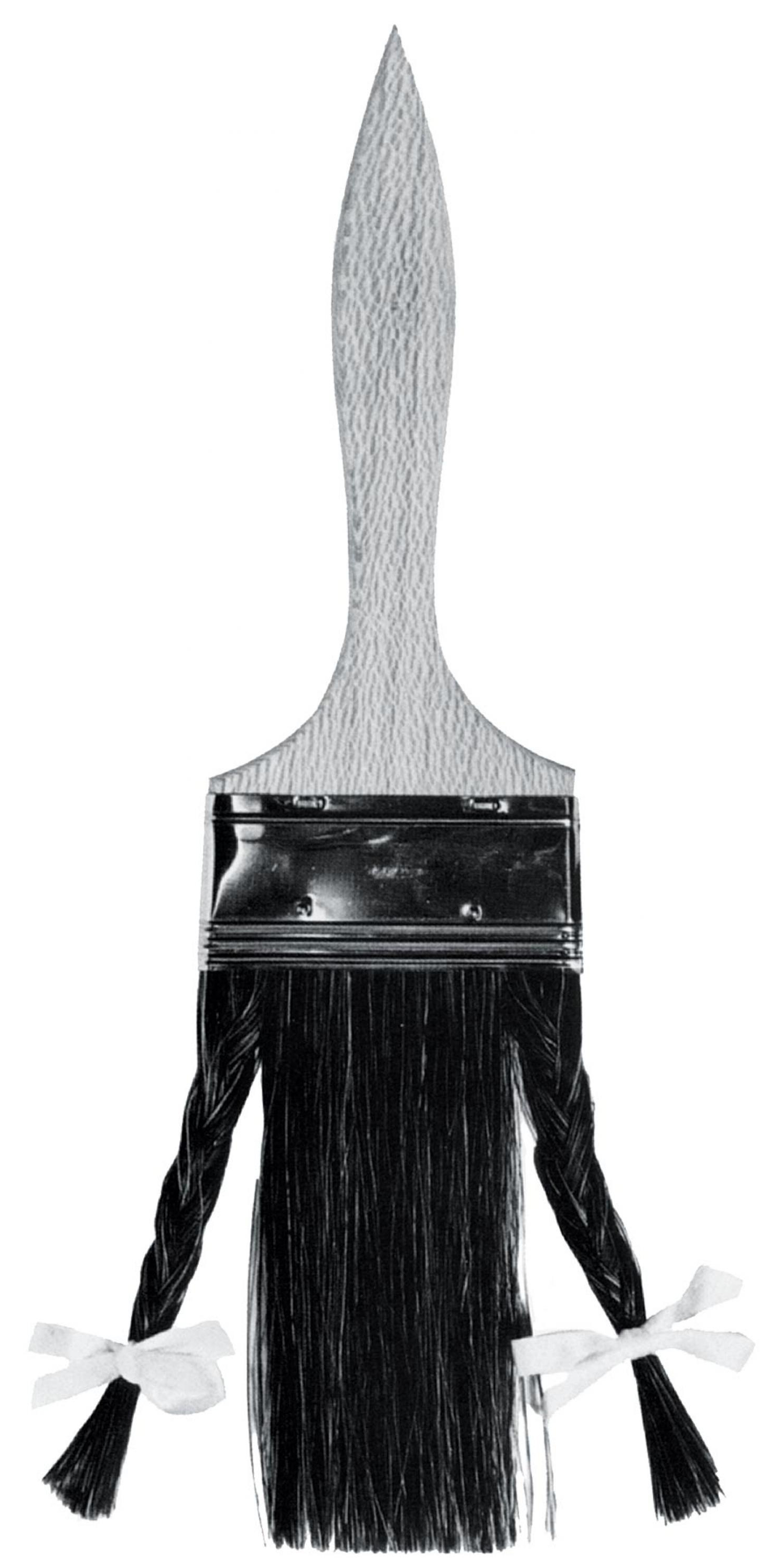
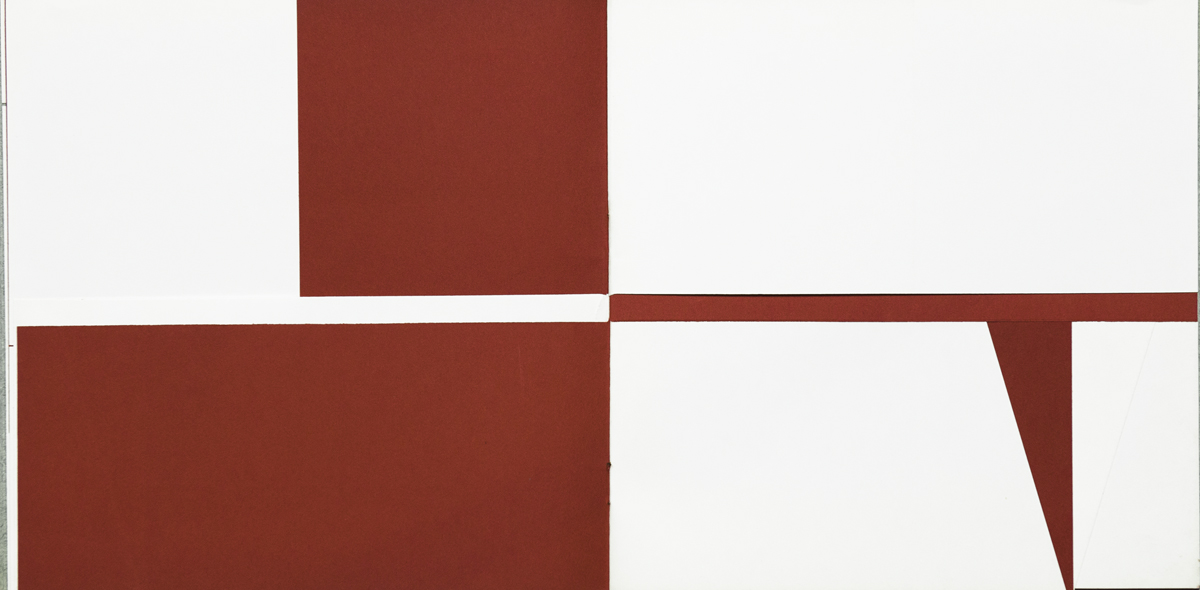
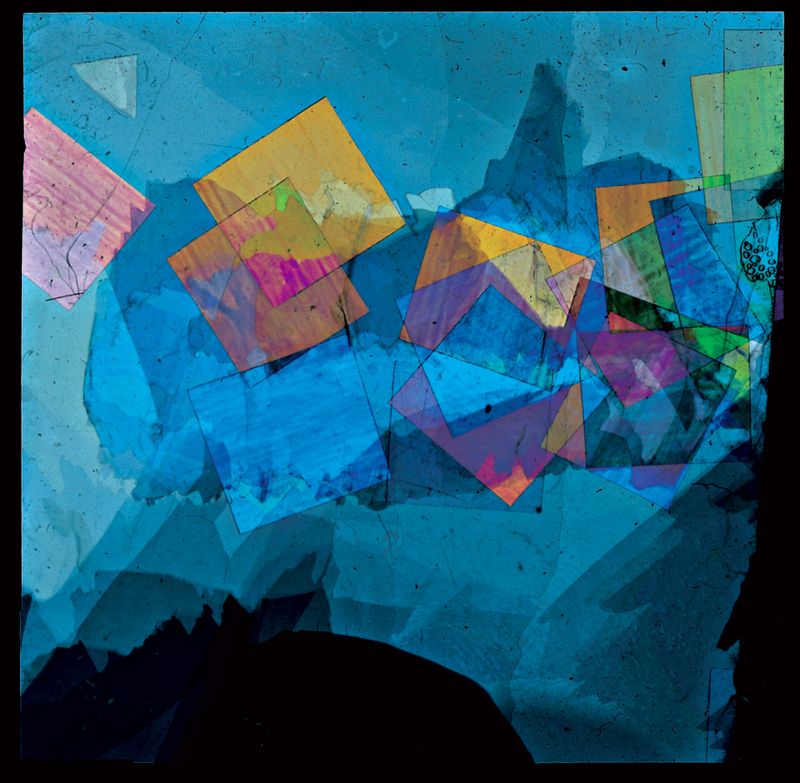
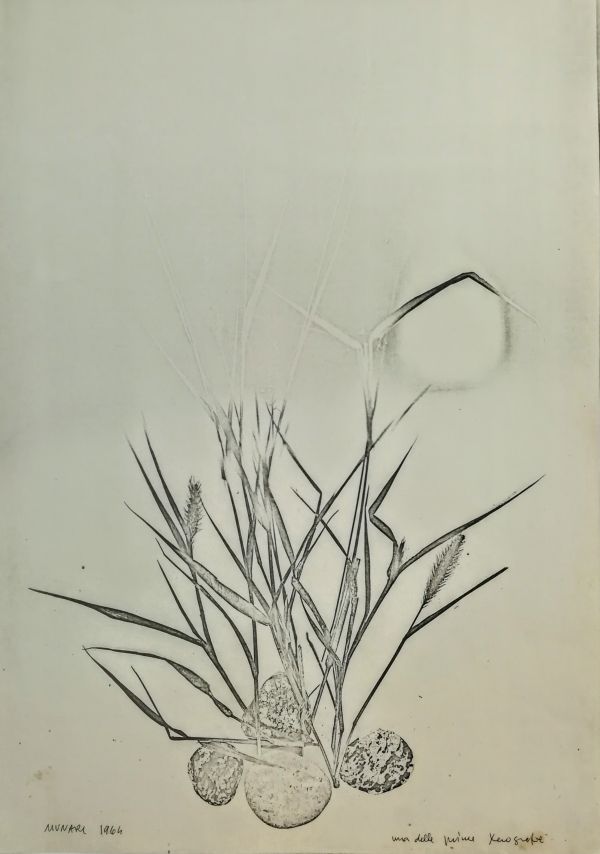
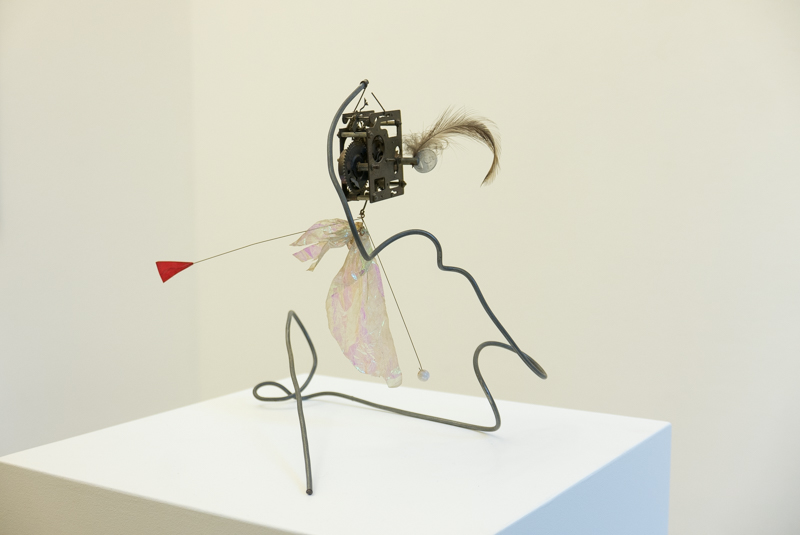
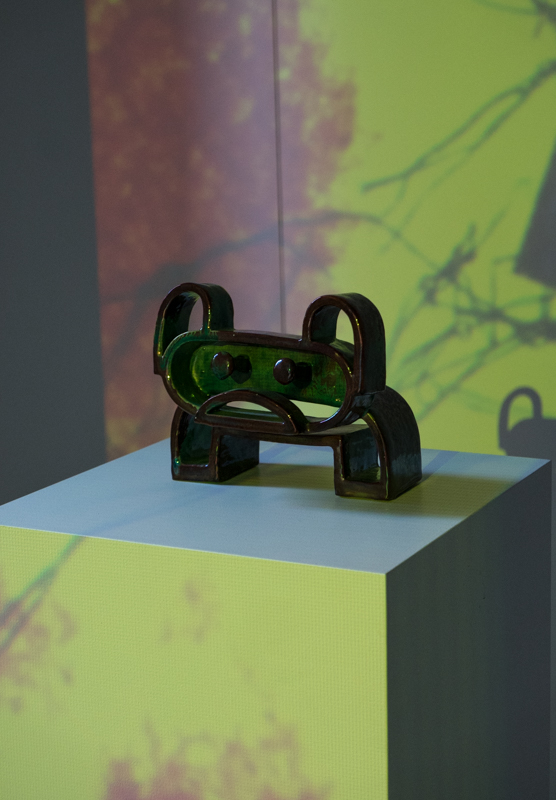
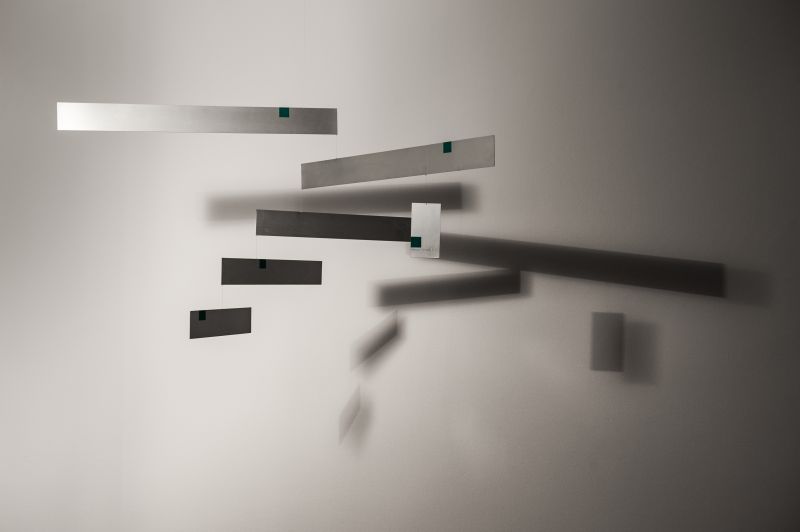
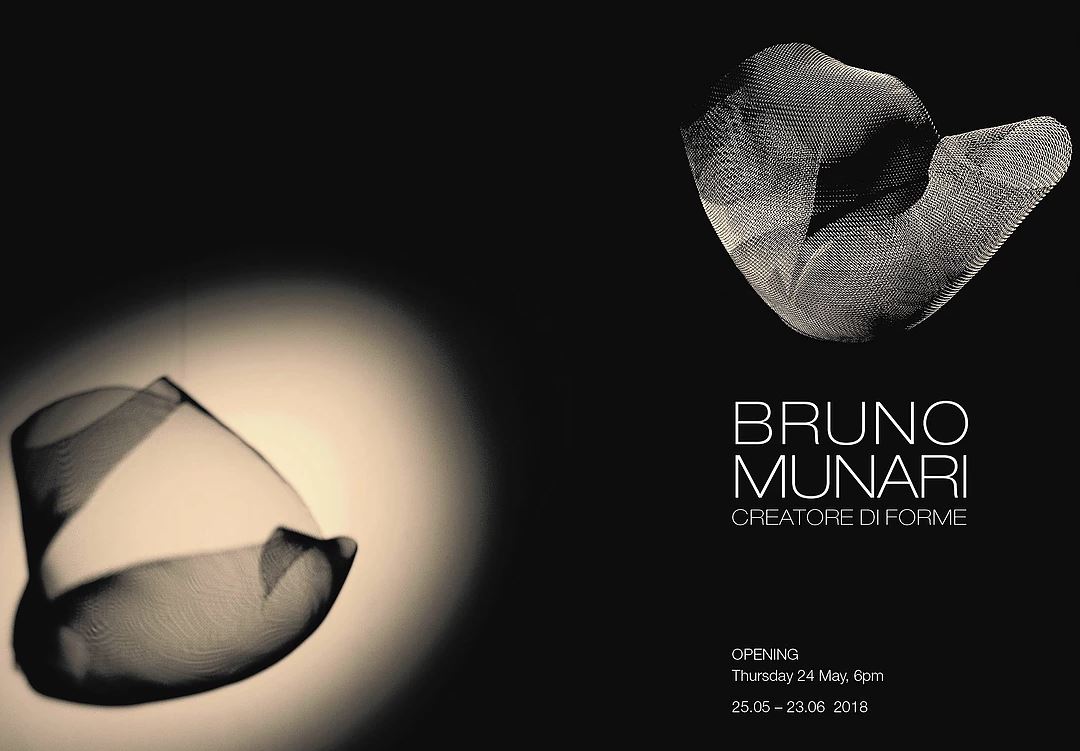
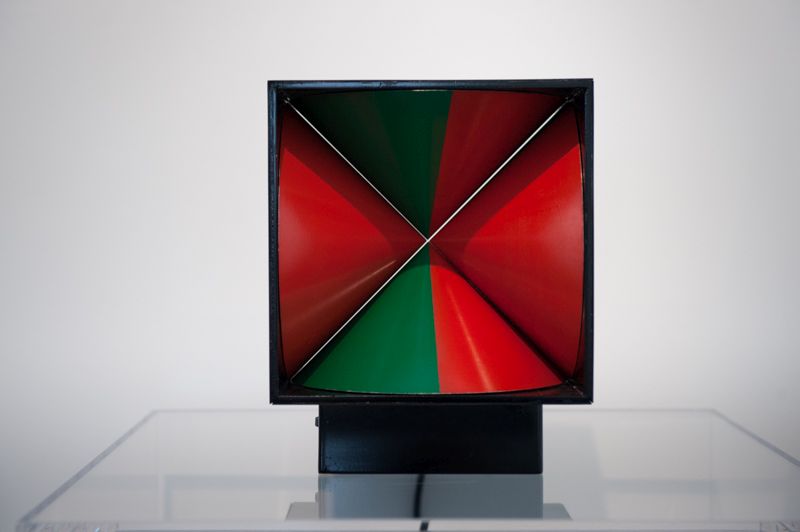
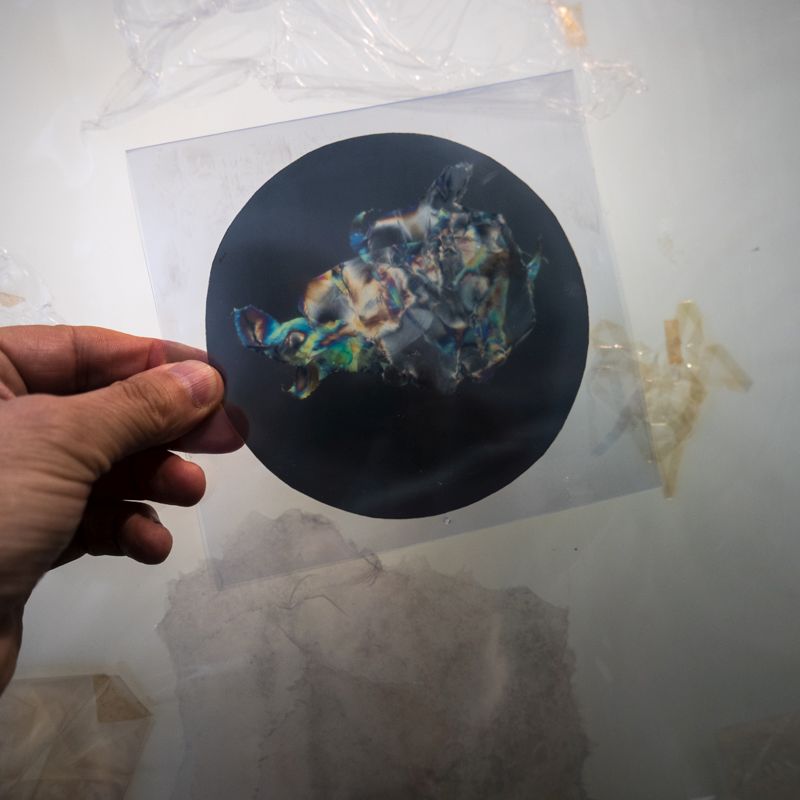
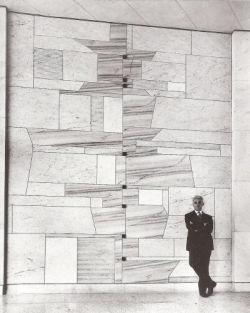
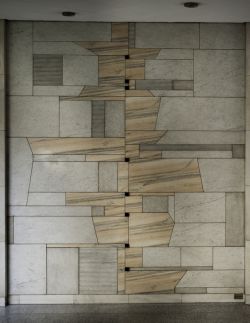
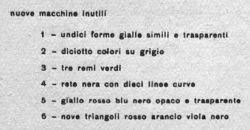
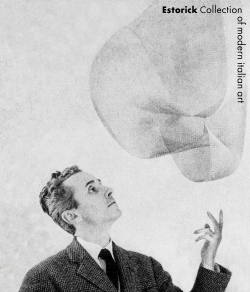
Nel banner particolari di: Xeroritratto di Bruno Munari; Munari 1966, fotografie di Ada Ardessi, Biennale di Venezia courtesy ISISUF Milano; Munari 1950, fotografia di Federico Patellani; Munari con Macchina Inutile 1956, fotografia di Aldo Ballo
Macchine Inutili
Bruno Munari and Jean Tinguely 22.05.2026 – 25.07.2026
Galerie Mueller Rebgasse 46 Basel
Wed-Sat 1-5 pm
Curated by Lucia Pesapane
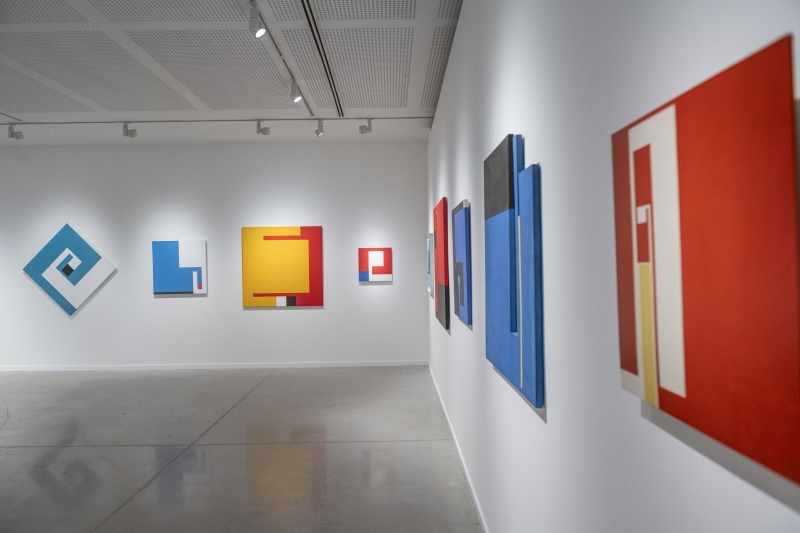
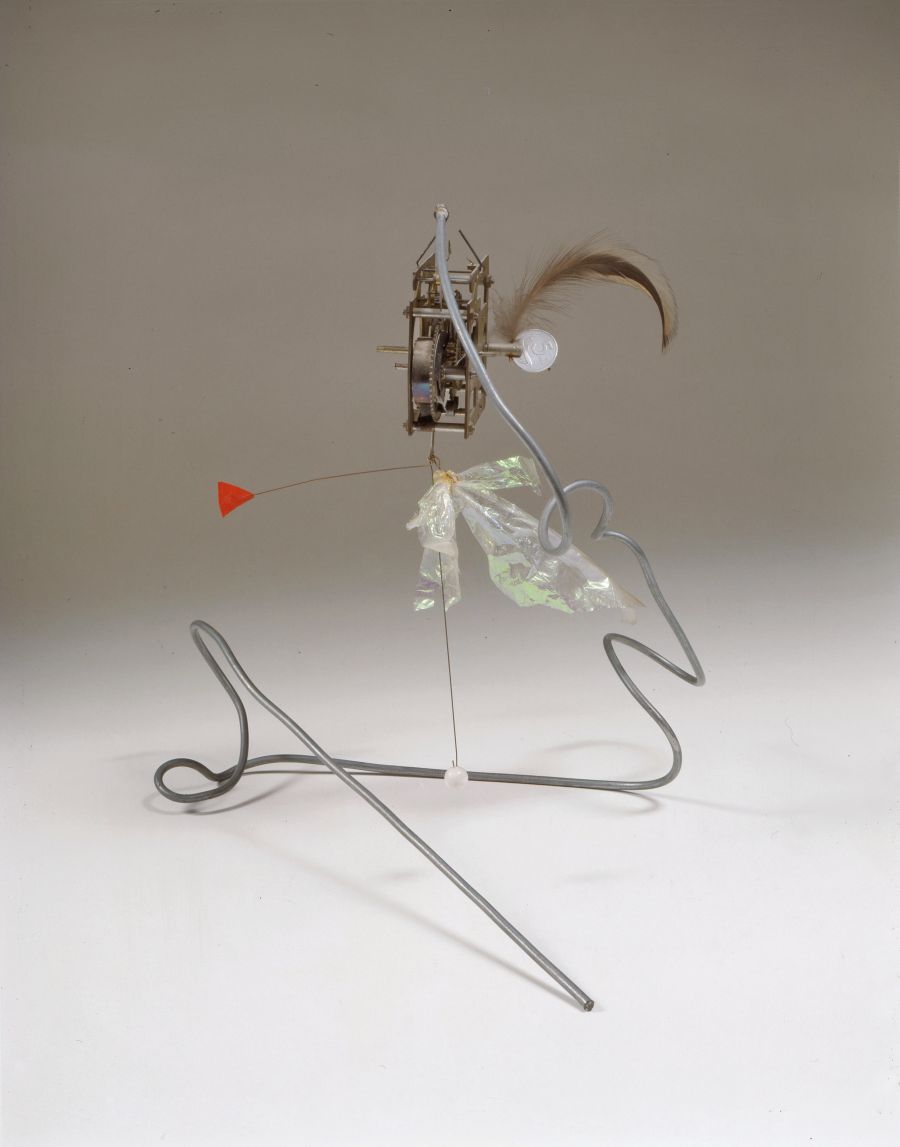
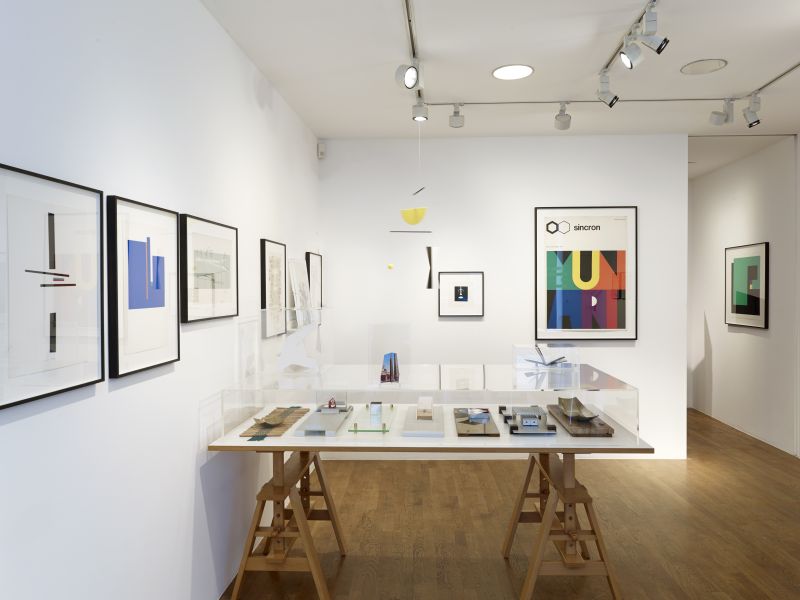
Macchine inutili brings together for the first time a selection of works by Bruno Munari (1907–1998) and Jean Tinguely (1925–1991), spanning from the late 1940s to the early 1970s. At its centre is a dialogue between two artistic positions that fundamentally transformed the conception of art in post-war Europe — two kindred spirits, long before they became colleagues and friends.
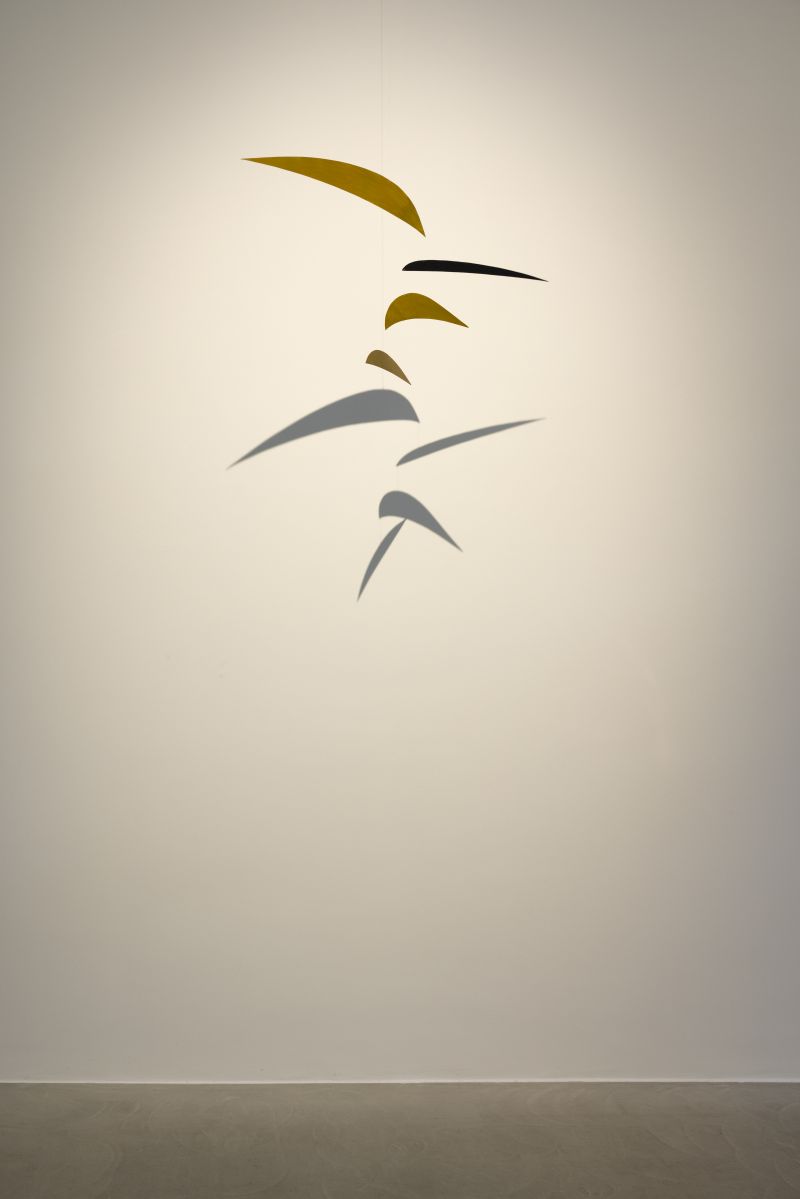
Drawing on Italian Futurism, Munari had already begun developing his Macchine inutili in the 1930s: light, suspended constructions made from simple materials that render movement, light and space tangible. Conceived for everyday life, they sought to democratise art and to move beyond the boundaries of traditional artistic categories.
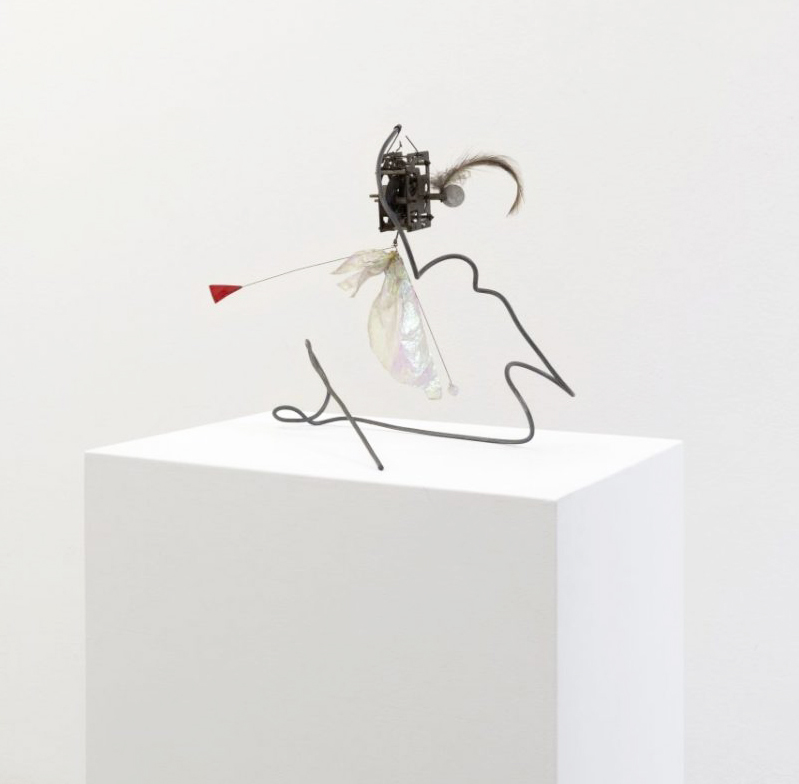
Tinguely took up this idea of form in motion and developed it into his own kinetic works. Often motorised and deliberately purposeless, his machines combine playful lightness with an ironic critique of progress, technology and consumer society. Movement, chance and disruption become central principles of form.
Both artists challenge the notion of art as a static object. Their "useless machines" produce light, sound or movement, without functional purpose, but with great poetic force.
A publication is available free of charge at the gallery.
Macchina Inutile 1947
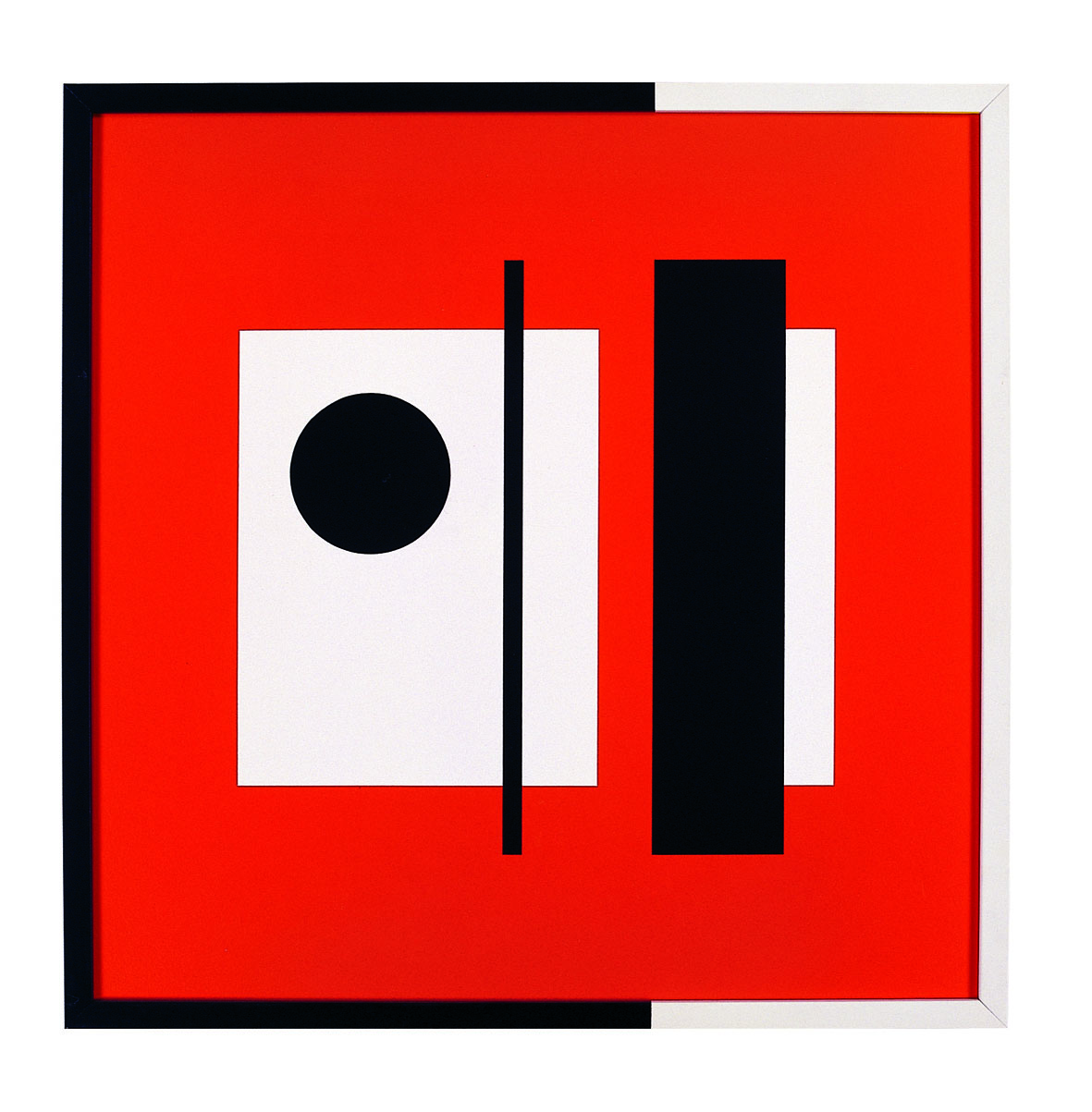
Astratto 1951
Bruno Munari. Useless Machines
New York (kaufmann repetto)
installation view
Bruno Munari. Useless Machines
(1934 - 1987) 4th February 2026 - April 2026
kaufmann repetto gallery 55 walker street New York
tuesday – saturday, 10am – 6pm
kaufmann repetto is pleased to announce Macchine Inutili (Useless Machines) 1934-1987, a solo exhibition dedicated to Bruno Munari’s transdisciplinary and unconventional practice, with a focus on his iconic, self-propelled mobiles.
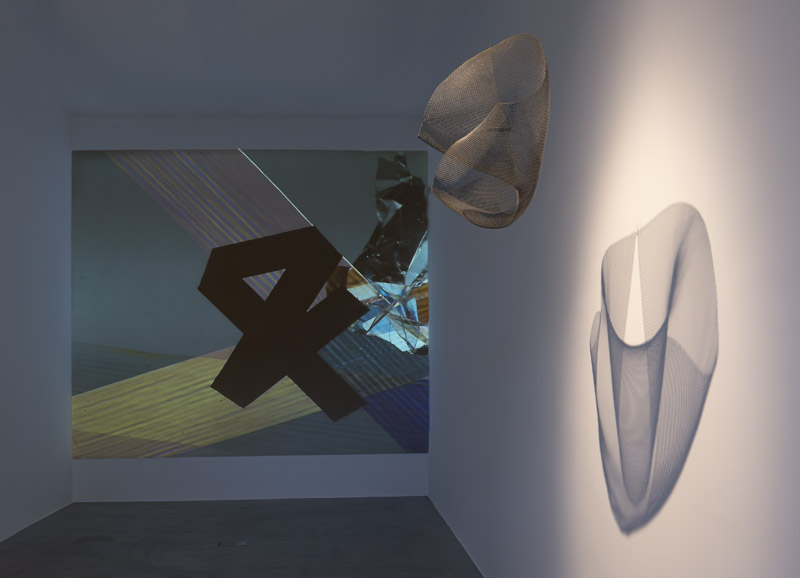
Bruno Munari (1907-1998) was a visionary pioneer who traversed freely art, design, graphic, education, always in tune with the major artistic movements of the 20th century. Since the outset he was interested in new processes of production and the exploration of innovative artistic media and languages. Stimulated by the experimentation of the avant-gardes — from Futurism to the Bauhaus and Neoplasticism — he started to challenge the static character of painting and sculpture. Since the early 1930s, he tackled the concept of abstractionism in space with his Useless Machines. Designed with minimal forms and a limited use of color, these devices employ light and shadow to produce abstract shapes on the walls of the environment. The dynamic encounter between space, movement and form is further explored in Concave-Convex, a series of topological and “planar” sculptures made from a sheet of wire mesh folded inwards at pre-established points that when suitably illuminated produce evanescent images in the space in which the viewer stands.
Bruno Munari. Ambienti Luminosi
Milano (galleria kaufmann repetto)
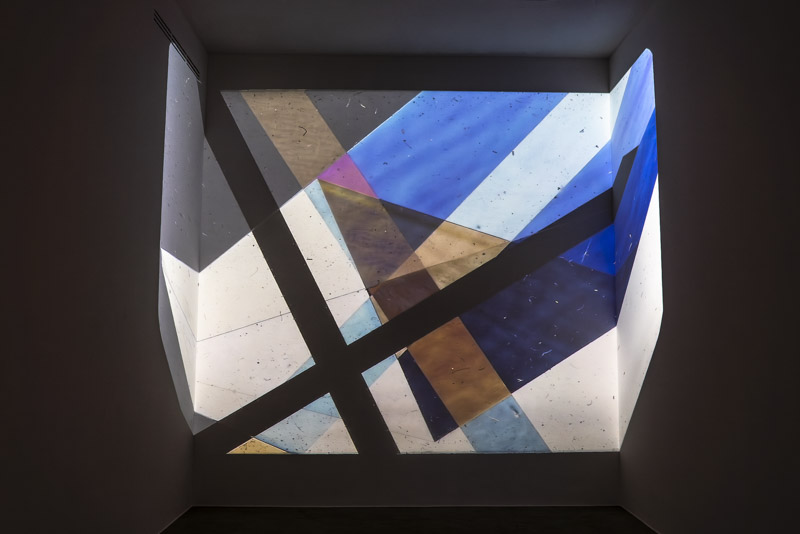
Proiezione polarizzata anni '50
Bruno Munari. Ambienti Luminosi a cura di L. Zaffarano
in collaborazione con Archivi Bruno Munari® 18 settembre 2025 - 11 novembre 2025
kaufmannrepetto gallery via di porta tenaglia 7 milano
mar - sab 10-19
Proiezione polarizzata anni '50
fotografia pierangelo parimbelli
ll progetto espositivo mette in evidenza le più importanti ricerche sperimentali dell’artista, rivelandone l’aspetto spaziale, cinematografico, immersivo e la loro natura anticipatoria.
Sin dai suoi esordi l’interesse di Munari è orientato verso la creazione di interventi ambientali per sperimentare in maniera radicalmente innovativa l’incontro dinamico tra spazio, movimento e forma, tra luce e colore, tra spettatore e opera.
La mostra milanese presenta l’inedito dialogo tra rari esemplari di Macchine Inutili degli anni Trenta e Quaranta e le Proiezioni Dirette e le Proiezioni Polarizzate degli anni Cinquanta, rese disponibili dagli Archivi e raramente esposte prima.
"Il vivere moderno ci ha dato la musica in dischi: ora ci dà la pittura proiettata" [B. Munari, 1954]
Il progetto milanese, che unisce in due grandi ambienti macchine e proiezioni, avvicina quindi lo spettatore all’esperienza auspicata dallo stesso Munari nel 1957: "Il compito dell'artista è quello di comunicare agli altri uomini un messaggio poetico, espresso con forme, con colori, a due o a più dimensioni, con movimento; senza preoccuparsi a priori se quello che verrà fuori sarà pittura o scultura o un'altra cosa ancora (come le macchine inutili o le proiezioni) purché contenga questo messaggio e purché questo messaggio parli, si faccia capire da un minimo di persone." [B. Munari, 1957]
Pubblicato per la prima volta in lingua inglese il famoso libro Fantasia. Edizione tradotta e curata dallo studioso Jeffery Schnapp, professore ad Harvard e direttore del metaLAB(at)Harvard.
Forthcoming this fall with Inventory Books is the first English translation of Bruno Munari’s 1967 volume Fantasy – Invention, Creativity, and Imagination in Visual Communication. Designed by IN-FO.CO, the edition meticulously mirrors the layout and typography of the Italian original – its graphic flavor and texture – and is accompanied by a critical apparatus as well as by an introductory essay. Jeffrey Schnapp is responsible for the translation, the notes, and accompanying essay.
Fantasy is perhaps the richest of the great Milanese designer’s elaborations on his art and design practices as well as abiding commitment to democratize art and design.
Bruno Munari Tutto
Traversetolo (Parma)
Anche la cornice, 1935
Bruno Munari. Tutto a cura di M. Meneguzzo, S. Roffi
16 marzo 2024 - 30 Giugno 2024
Fondazione Magnani-Rocca
Mamiano di Traversetolo (Parma)
mar - ven 10-18
sab - dom 10-19
Nella mostra sono concentrati settant'anni di idee e di lavori in tutti campi della creatività. La rassegna non è suddivisa per tipologie o per cronologia, ma per attitudini e concetti, in modo da poter mostrare i collegamenti e le relazioni progettuali tra oggetti anche apparentemente molto diversi l'uno dall'altro.
"Munari – spiega Marco Meneguzzo curatore della mostra – è una figura molto attuale nella società liquida odierna, nella quale non ci sono limiti fra territori espressivi. È un esempio di flessibilità, di capacità di adattamento dell’uomo all'ambiente. Il suo metodo consiste nello scoprire il limite delle cose che ci circondano e di volerlo ogni volta superare".
Il catalogo edito da Dario Cimorelli Ed. include contributi critici centrati su singoli "casi-studio" oltre alla pubblicazione di tutte le opere esposte.
Bruno Munari El Artista
MACA - Maldonado (Uruguay)
installation view
Bruno Munari. El Artista 5 gennaio 2024 - 10 marzo 2024
MACA
Museo de Arte Contemporaneo Atchugarry
Pablo Atchugarry Foundation
Maldonado (Uruguay)
El Museo de Arte Contemporáneo Atchugarry – MACA vuelve a reafirmar el compromiso de acercar a nuestro país la obra de artistas internacionales de alta influencia en el arte y la cultura de las últimas décadas.
Es un honor exhibir BRUNO MUNARI: EL ARTISTA, muestra concebida por el museo MACA y dedicada al prolífico artista italiano que por primera vez presenta su obra en nuestro país, con curaduría de Marco Meneguzzo, uno de los mayores expertos en el artista.
Acompaña a la exposición un gran catálogo bilingüe —español/inglés— publicado por Corraini, la histórica editorial de Munari, con un extenso texto inédito del comisario, una amplia antología crítica, el aparato científico y, por supuesto, imágenes de todas las obras expuestas.
In rete
Munari e Rodari
Arte Condivisa in Sardegna e la Giornata del Contemporaneo 2023
Pierpaolo Antonello esplora due libri dedicati alla fantasia creativa:
- Gianni Rodari, Grammatica della fantasia, Einaudi, 1973 - Bruno Munari, Fantasia, Laterza, 1977
Pierpaolo Antonello è docente di letteratura italiana contemporanea all’Università di Cambridge (UK). Si interessa inoltre di storia intellettuale, di cinema del secondo Novecento, di teoria critica, nonché del rapporto fra letteratura e scienza e fra letteratura e le arti. Dirige la collana Italian Modernities per Peter Lang, Oxford.
L'Abitacolo al
Centre Pompidou Paris
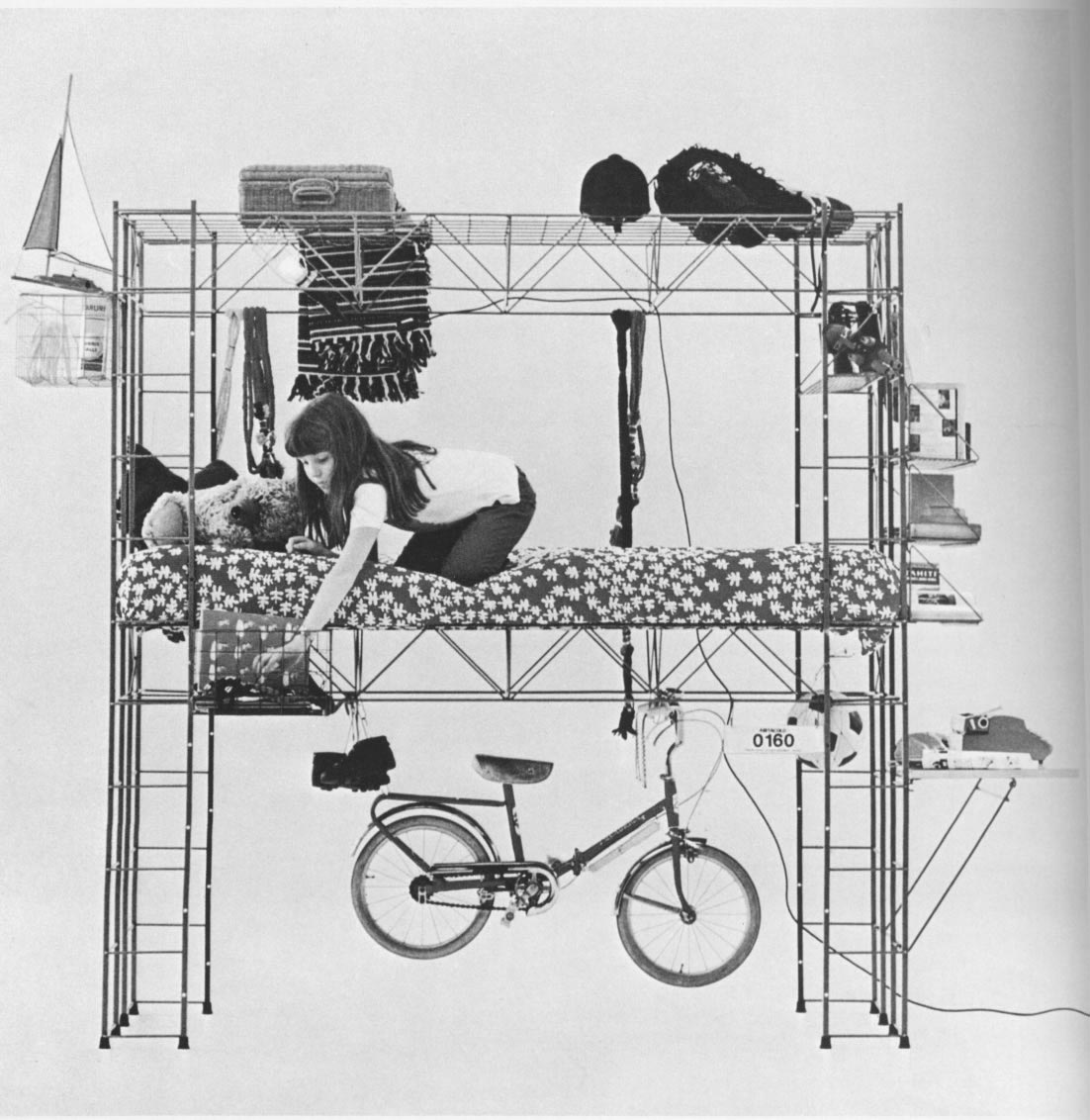
Munari con dei ragazzi sull'Abitacolo 1970
Il Centre Pompidou di Parigi ha acquisito una copia vintage n. 0016 dell'Abitacolo prodotto da Robots e presentato al pubblico per la prima volta con una mostra personale alla Galleria San Fedele di Milano nel 1970.
l'artista solleva l'Abitacolo così come appare prima di essere montato
un esemplare di Abitacolo montato e arredato
Che cos'è un Abitacolo? Negli aerei monoposto è il posto del pilota, contenete comandi e strumenti, spazio che nei grandi aerei diventa la cabina di pilotaggio.
Nelle automobili di ogni tipo è lo spazio che accoglie le persone.
Nelle astronavi è lo spazio che accoglie gli astronauti con tutto il necessario per vivere e controllare la navigazione.
Abitacolo è lo spazio abitabile in misura essenziale. In modo figurativo è anche l'intimo recesso individuale, è il luogo interno dove è situato tutto ciò che forma il proprio mondo. Nelle case degli adulti, non tutti i ragazzi hanno una camera tutta per loro che possono trasformare e arredare a piacere. Molti altri hanno solo un letto, un tavolo, una sedia, un posto per i libri, gli abiti in una valigia come ho avuto io stesso per parecchio tempo.
Non hanno un abitacolo dove potersi isolare, dove poter studiare, meditare, scrivere, leggere, dormire, ascoltare la loro musica, conversare con gli amici.
Da questa esigenza nasce questo Abitacolo, il quale intende risolvere il problema, per ora, sia dal lato strutturale che da quello estetico, e, non meno importante, da quello economico.
[Bruno Munari, dalla presentazione di Abitacolo]
Una Macchina Aritmica al
Centre Pompidou Paris
Macchina Aritmica 1951
assemblata dall'autore nel 1983
Il Centre Pompidou di Parigi ha acquisito una Macchina Aritmica di Munari grazie alla disponibilità di un collezionista italiano. Il museo parigino si arricchisce di un'opera la cui poetica ha ispirato profondamente il lavoro dell'artista svizzero Tinguely. Non a caso la sua prima personale in Italia nel 1954 - quando Tinguely era ancora un giovane promettente sconosciuto - viene organizzata proprio da Bruno Munari nello Studio di Architettura B24 di via Borgonuovo a Milano.
Un altro esemplare di Macchina Aritmica è presente nella collezione del Kunstmuseum di Krefeld, esposta nella mostra del 1960 Multiplizierte Kunstwerkeal e poi nel 1968 al MoMA di New York nella mostra The Machine, as seen at the end of the mechanical age curata da Pontus Hultén.
Le Macchine Aritmiche, grazie all’energia elastica di molle usurate, una volta messe in carica, si muovono di moto incostante, casuale, buffo. Il ruolo della macchina viene sovvertito. I suoi movimenti, sonori e umoristici, hanno qualcosa di antropomorfo. Essa offre uno spettacolo divertente, sobbalza goffamente, si agita in modo quasi vitale fino all’ultimo istante.
Bruno Munari
Fundacion Juan March - Madrid
Munari in studio photo by Ugo Mulas
Bruno Munari 18 feb 2022 - 22 may 2022
Fundacion Juan March
Castelló 77 Madrid
Mon-Sat h.11-20
Sun h.10-14
Primera retrospectiva dedicada en España a Bruno Munari (Milán, 1907-1998) y muestra más completa hasta la fecha fuera de Italia sobre este artista multidisciplinar, especialmente conocido por ser una de las figuras más importantes del diseño y de la comunicación visual del siglo XX. Munari buscaba la esencia del arte y del diseño en el equilibrio entre el rigor y la levedad, sirviéndose siempre del juego, del humor y de la ironía. Esta especie de “muestra colectiva de Bruno Munari” (como él tituló una de sus exposiciones) incluye pinturas, dibujos y esculturas –obras de dos y tres dimensiones, como el artista solía referirse a ellas–, proyecciones y juegos de luz, piezas de diseño gráfico e industrial, ejercicios tipográficos y escritos y libros infantiles, entre otras obras.
La selección abarca desde sus primeros trabajos vinculados al futurismo y al diseño gráfico y hasta sus últimas experimentaciones de los años noventa. La muestra y la publicación que la acompaña están organizadas en ámbitos construidos en torno a los conceptos metodológicos esenciales al trabajo de Munari –el tiempo, el método, la levedad, la experimentación o la contemplación– en los que se presentan cerca de trescientas obras procedentes de colecciones particulares e instituciones públicas y privadas.
Il video rende felici
Roma
studio per film astratto
(oggetti colorati in movimento) Bruno Munari
pubblicato in
Fotografia. Prima rassegna dell'attività in Italia Editoriale Domus, 1943
Galleria d’Arte Moderna
Palazzo delle Esposizioni
Roma Il video rende felici. Videoarte in Italia a cura di Valentina Valentini
La mostra Il video rende felici. Videoarte in Italia si articola in due sedi, il Palazzo delle Esposizioni e la Galleria d’Arte Moderna di Roma, e si snoda attraverso una larga varietà di autori e di formati: video monocanale, installazioni video, installazioni interattive e multimediali. Si tratta della prima ricognizione che sia mai stata realizzata sulla produzione di videoarte e cinema d’artista in Italia, uno dei più interessanti terreni di sperimentazione della ricerca visiva e audiovisiva contemporanea, che si attesta come patrimonio artistico e culturale di notevole consistenza. Nel suo complesso, il progetto conta più di 300 opere video e filmiche, 20 installazioni e il coinvolgimento complessivo di oltre 100 artiste e artisti.
La sala cinema del Palazzo delle Esposizioni ospita rassegne di film e di video realizzati dagli anni '60 a oggi.
Domenica 29 Maggio h 11.00 - 16.00
Lo Studio di Monte Olimpino: il cinema di ricerca di Bruno Munari e Marcello Piccardo a cura di Guido Bartorelli
Lo Studio di Monte Olimpino nasce nel 1962 come laboratorio di cinema di ricerca e rimane in attività fino al 1972, nella località omonima, vicino a Como. La rassegna presenta un’ampia scelta dei film nati dalla collaborazione tra il grande artista, designer e pedagogo Bruno Munari (Milano, 1907 – 1998) e Marcello Piccardo (Genova, 1914 – Como, 1999), inesauribile sperimentatore in ambito filmico e televisivo.
Tale produzione è una pietra miliare del film sperimentale italiano e contribuisce a tessere il retroterra per la successiva videoarte.
Programma della giornata Arte programmata, 1962, 10’, col., son., 16 mm
I colori della luce, 1963, 5’, col., son., 16 mm
Tempo nel tempo, 1964, 3’ 26”, col., son., 16 mm
Sulle scale mobili, 1964, 12’, b/n, son., 16 mm
Lettere, 1965, 17’ 50”, b/n, son., 35 mm
Scacco matto, 1965, 5’, col., son., 35 mm
Omega ricerca n. 2, 1966, 10’, col. son., 16 mm
I fratelli Castiglioni, 1967, 8’, b/n, son., 16 mm
Fiat ricerca n. 1, 1968-1969, 10’, b/n, muto, 16 mm
After Effects, 1969, 3’, col., muto, 35 mm
Engineer, Agitator, Constructor
The Artist Reinvented
"We regarded ourselves as engineers, we maintained that we were building things…we put our works together like fitters." So declared the artist Hannah Höch, describing a radically new approach to artmaking in the 1920s and ’30s. Such wholesale reinvention of the role of the artist and the functions of art took place in lockstep with that era’s shifts in industry, technology, and labor, and amid the profound impact of momentous events: World War I, the Russian Revolution, the collapse of the Austro-Hungarian Empire, and the rise of fascism. Highlighting figures such as Aleksandr Rodchenko, Lyubov Popova, John Heartfield, and Fré Cohen, Engineer, Agitator, Constructor: The Artist Reinvented demonstrates the ways in which artists reimagined their roles to create a dynamic art for a new world.
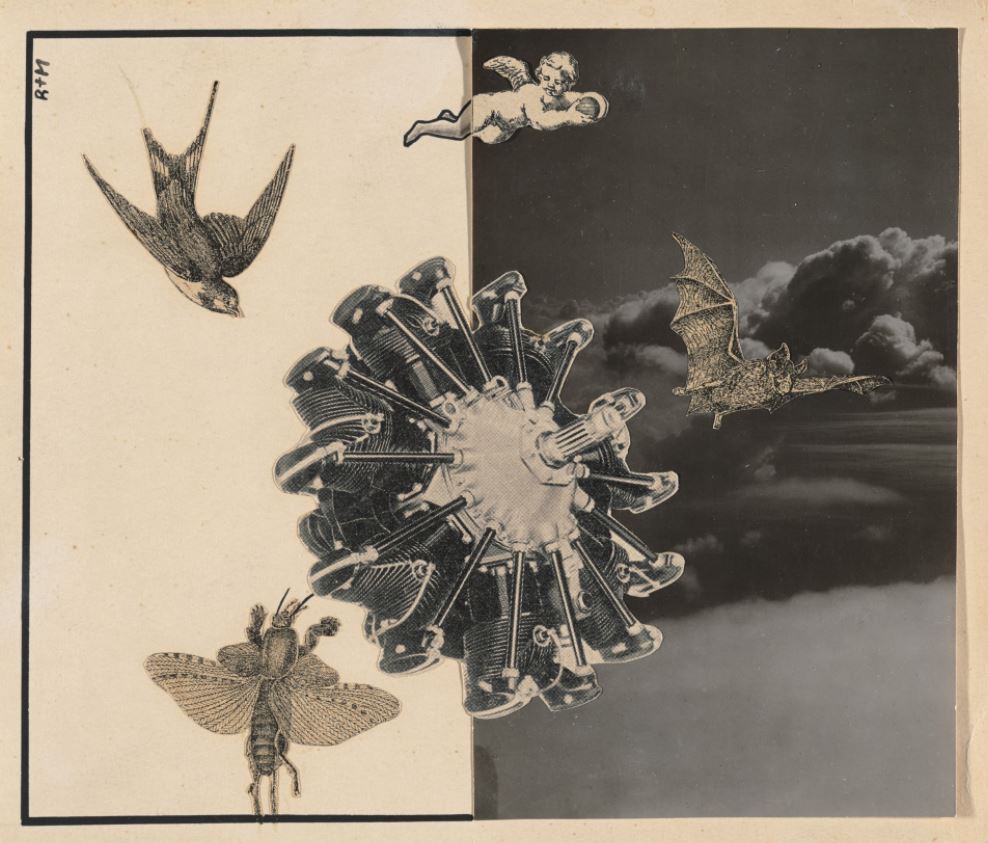
At the Heart of Flight c. 1935
Studio R+M Ricas Munari
MoMA Collection
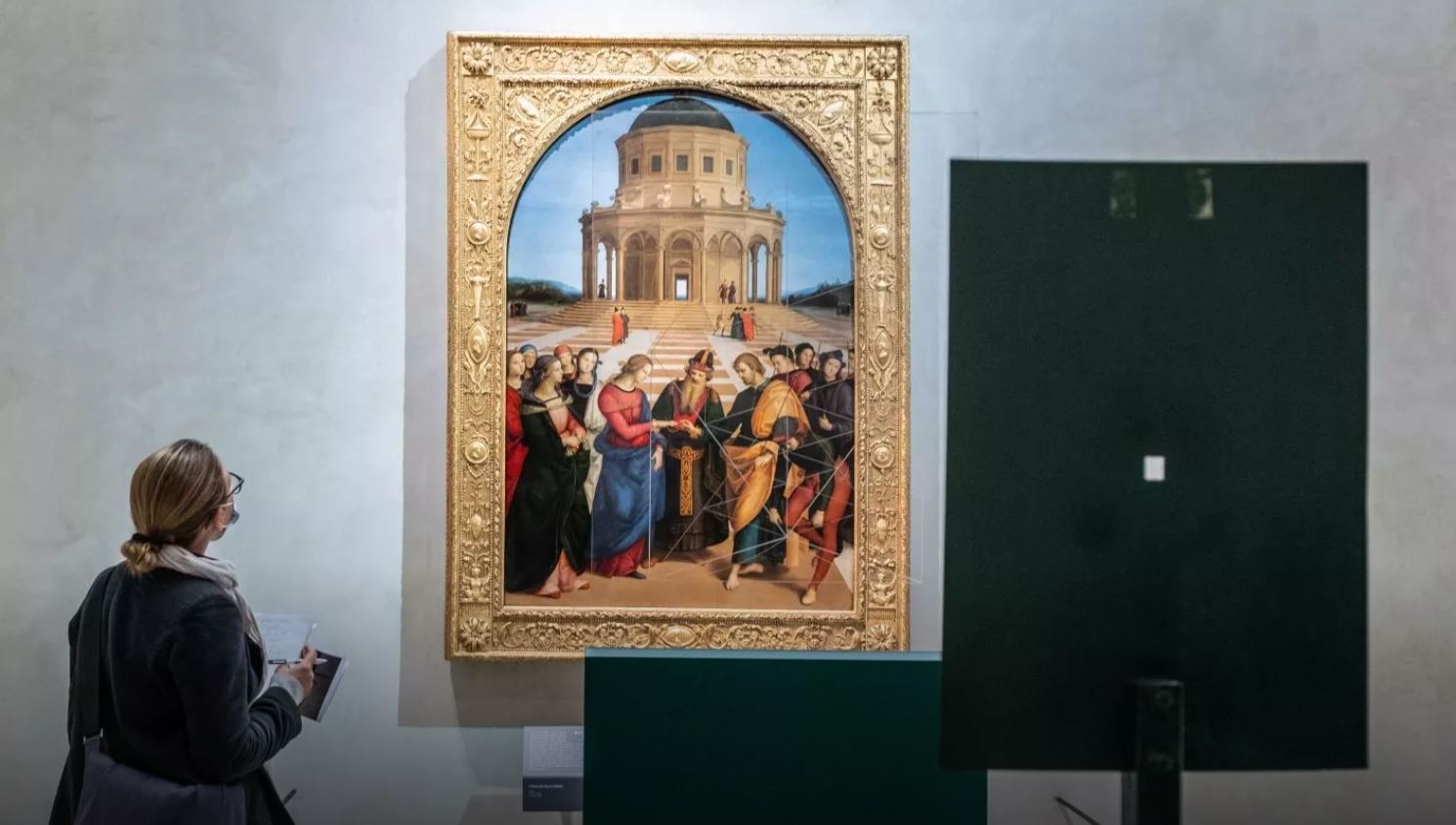
Performing Raffaello
Bruno Munari a Brera
Visualizzazione della struttura armonica
dello Sposalizio della Vergine
di Raffaello, 1976-1977
Riproposto l'allestimento progettato da Munari nel 1976 su richiesta del direttore Franco Russoli per una lettura della struttura armonica dell'opera di Raffaello: davanti al quadro viene posta una lastra verde con un piccolo foro attraverso cui l’occhio del visitatore vede un’altra lastra più grande in plexiglass trasparente su cui sono tracciate delle linee che si vanno a sovrapporre prospetticamente al dipinto di Raffaello.
Questa installazione mostra lo straordinario impianto del dipinto e rivela la sua complessa struttura geometrica, corrispondente allo spirito del tempo, quando si studiavano anche le misure di una città ideale.
Il dialogo, visitabile solo la domenica fino a fine dicembre, prosegue online da novembre con la ricostruzione della storia degli allestimenti dello Sposalizio della Vergine
Multiplied: Edition MAT
St. Louis Missouri
Strutture Continue, 1959
Krefeld Museum
Kemper Art Museum Multiplied: Edition MAT
and the transformable work or art
1959-1965
Washington University
St. Louis, Missouri
curated by Meredith Malone.
Februrary 7, 2020 - Aprile 19 2020
Multiplied: Edition MAT and the Transformable Work of Art, 1959–1965 examines the rise of multiples (three-dimensional objects issued in editions) and the concurrent surge of interest in kinetic art in the post–World War II era. The multiple emerged as an international phenomenon in the 1960s and 1970s, serving as both art object and vehicle for democratizing art through ready distribution. Keyed to an economic and cultural context of mass production, consumption, and disposability, the multiple delineated a strategic position for artists grappling with the shifting socioeconomic conditions of a rapidly expanding consumer culture in Western Europe and the United States.
This exhibition explores the pioneering role played by Edition MAT (multiplication d’art transformable), the first series of multiples to find broad participation and distribution in the postwar period. Including works by an international roster of both established and lesser known artists, this groundbreaking enterprise was an early articulation of the ensuing explosion of interest in the format of the multiple in the 1960s and beyond. The Swiss artist Daniel Spoerri (b. 1930) established Edition MAT in Paris in 1959 with hopes of broadening the notion of art and its role in society, producing domestically scaled, affordable multiples that encouraged viewer participation through touch and optical vibration. With a combined emphasis on movement and multiplication, Spoerri’s project offered to a wide audience accessible and interactive experiences rather than rarefied, static ones.
First MAT edition 1959:
Yaacov Agam
Joseph Albers
BO EK (aka Pontus Hulten)
Pol Bury
Marcel Duchamp
Karl Gerstner
Heinz Mack
Frank Malina
Enzo Mari
Bruno Munari
Man Ray
Dieter Roth
Jesús Raphael Soto
Jean Tinguely
Victor Vasarely
Questo sito è basato sul principio della collaborazione. Dopo averlo commissionato, alcuni amici ci hanno gentilmente proposto questo video che intende spiegare cosa è un Polariscop e cosa sono le Proiezioni Polarizzate progettate da Munari a partire dal 1950.
Gli autori si sono dedicati alla realizzazione di questo filmato con molta passione. Divertendosi molto.
Buona visione.
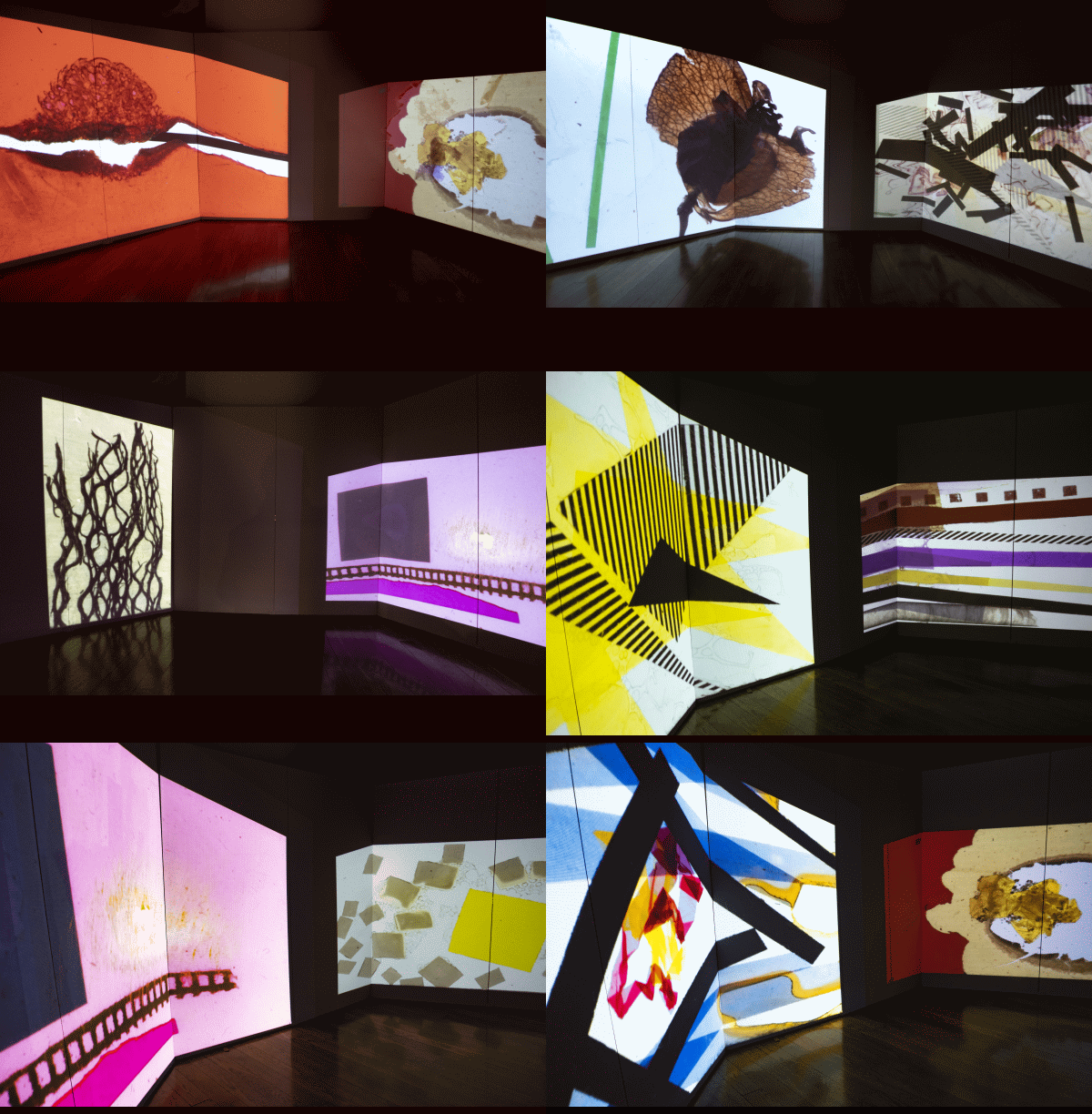
Le Proiezioni si inseriscono in un filone di pensiero che ha due importanti obiettivi: smaterializzare la pittura creando ambienti di luce, e offrire allo spettatore una molteplicità di immagini non più statiche. Le Proiezioni Dirette, create a partire dal 1950 e realizzate con materiali "trasparenti, semitrasparenti e opachi, violentemente colorati o a colori delicatissimi, con materie plastiche tagliate, strappate, bruciate, graffiate, liquefatte, incise, polverizzate; con tessuti animali e vegetali, con fibre artificiali, con soluzioni chimiche" inseriti in piccoli telai per diapositive, sono in diretta relazione con i lavori realizzati alla scuola del Bauhaus.
Si tratta di opere in miniatura che vengono visualizzate attraverso un proiettore. Se il proiettore ha una lampada sufficientemente potente è possibile allestire ambienti luminosi di grandi dimensioni. "Non sono fotografie a colori, sono proiezioni dirette di materie" precisa l'autore nel pieghevole che annuncia la prima presentazione pubblica – che otterrà subito un grande successo - nello Studio di architettura B24 a Milano nell'ottobre del 1953, e poi, in dicembre, nel grande studio hangar di Gio Ponti.
Le Proiezioni Dirette singole o plurime (ovvero più proiezioni dirette in contemporanea) sono solo il primo passo di una ricerca che lo porta, dapprima, alle Proiezioni a fuoco continuo, dove il materiale emerge dal vetrino, permettendo la creazione di immagini differenti a seconda della diversa messa a fuoco e, infine, alle Proiezioni a luce polarizzata, che rappresentano una novità assoluta nel campo delle ricerche cromo-cinetiche.
L’effetto della pellicola Polaroid diventa visibile ponendo del materiale incolore tra un sandwich di filtri; in particolare con il movimento rotatorio di quello più vicino all’osservatore si crea un movimento virtuale della composizione creata dall’artista. Munari progetta sia delle proiezioni con la rotazione del filtro polarizzante davanti alla lente del proiettore, sia dei lightbox con e senza motore, denominati dall’artista Polariscop.
MCB
Sao Paulo (Brasile)
Museu da Casa Brasileira Bruno Munari:
A Mudança é a única constante no universo Bruno Munari:
Il cambiamento è l’unica costante nell’universo
a cura di Alberto Salvadori
dal 4 settembre fino al 10 novembre 2019
Museu da Casa Brasileira (MCB)
Avenida Brigadeiro Faria Lima - Jardim Paulistano
São Paulo, Brasile
orari: da martedì a venerdì h 10–13 / 15–18
sabato h 10–13
O Istituto Italiano de Cultura de São Paulo e o Museu da Casa Brasileira (MCB), instituição da Secretaria de Cultura e Economia Criativa do Estado de São Paulo, trazem para a capital a exposição Bruno Munari: a mudança é a única constante no universo, em cartaz entre 04 de setembro e 10 de novembro. Com curadoria do historiador Alberto Salvadori, a mostra apresenta 117 trabalhos do designer e artista italiano, dando uma visão geral do que foi produzido desde os anos 1930 até o final de sua carreira.
Fondazione Plart
Napoli
vetrino per proiezione polarizzata 1953
Fondazione Plart Bruno Munari
I colori della luce a cura di Miroslava Hajek, Marcello Francolini
29 novembre – 20 marzo 2019
via Giuseppe Martucci 48, Napoli
orari: da martedì a venerdì h 10–13 / 15–18
sabato h 10–13
Grazie alla Fondazione Plart saranno proiettati in specifici ambienti della mostra i vetrini per proiezioni polarizzate degli anni '50 consentendo di portare alla conoscenza del pubblico un particolare aspetto del lavoro di Munari rimasto sconosciuto per molto tempo, colmando i vuoti nella ricostruzione non solo di alcuni aspetti della sua ricerca ma più in generale della storia dell’arte contemporanea, soprattutto nel rapporto arte-tecnologia.
Complesso Santa Caterina
Finalborgo
Complesso Monumentale
Santa Caterina
Bruno Munari
Artista a 360 gradi a cura di Riccardo Zelatore
inaugurazione 19 gennaio h. 18
19 gennaio – 9 marzo 2019
Finalborgo, Finale Ligure (Savona)
P.za Santa Caterina
orari: h 15–20
lunedì chiuso
In mostra un nucleo importante di lavori provenienti soprattutto da collezioni private che evidenziano il particolarissimo metodo progettuale, vero denominatore comune della sua multiforme attività. L’esposizione sottolinea alcuni aspetti peculiari dell'opera di Munari, tra cui il rapporto con il mondo della didattica e la sua collaborazione praticamente ininterrotta con molte delle riviste italiane dedicate al progetto, alla comunicazione e all'arte.
Suspension
London | Paris
Suspension – A History of Abstract Hanging Sculpture 1918 – 2018, will present more than 50 works related to this sculptural genre, produced by 30 artists, across two exhibitions. The exhibition will be presented for two months at Olivier Malingue in London, and for two weeks in the 1500m2 space of the Palais d’Iéna in Paris.
Olivier Malingue, London A History of Abstract Hanging Sculpture 1918–2018 Curator: Mathieu Poirier
Vernissage/Preview
Thursday 4 Oct., 6–8 pm
143 New Bond Street, First ?oor, London, W1S 2TP
1 Oct.–15 Dec. 2018
Mon–Fri, 10 am–6 pm
With works by Max Bill, Yves Klein, Artur Lescher, Man Ray, François Morellet, Bruno Munari, Alexander Rodtchenko, Tomás Saraceno, Joel Shapiro, Jesús Rafael Soto, Takis and Xavier Veilhan.
Palais d’Iéna, Paris
A History of Abstract Hanging Sculpture 1918–2018 Curator: Mathieu Poirier
Vernissage/Preview
Monday 15 oct., 6–9 pm
9, place d’Iéna 75016 Paris
16–28 oct. 2018
12–7 pm
With works by Leonor Antunes, Ruth Asawa, Max Bill, Louise Bourgeois, Daniel Buren, Alexander Calder, Lynn Chadwick, Carlos Cruz-Diez, Marcel Duchamp, Olafur Eliasson, Gego, Antony Gormley, Hans Haacke, Yves Klein, Julio Le Parc, Artur Lescher, Sol LeWitt, Man Ray, Christian Megert, François Morellet, Robert Morris, Bruno Munari, Ernesto Neto, Hélio Oiticica, Alexander Rodchenko, Tomás Saraceno, Joel Shapiro, Jesús Rafael Soto, Georges Vantongerloo, Xavier Veilhan, Cerith Wyn Evans and Haegue Yang.
on show in London
Useless Machine per Bill 1951 (1993)
photo by Pierangelo Parimbelli
on show in Paris
Concave-Convex 1960s
photo by Pierangelo Parimbelli
on show in Paris
Useless Machine 1945 (1977)
Courtesy Kaufmann Repetto, Milan
photo by Andrea Rossetti
Bruno Munari. Works 1930 - 1996
New York
In studio with Useless Machines 40s
Andrew Kreps Gallery Bruno Munari
Works: 1930 - 1996 curated by Alberto Salvadori
May 17 – June 29, 2018
537/535 W. 22nd Street
New York, NY 10011
Tuesday through Saturday
10:00 am to 6:00 pm
Andrew Kreps Gallery, in collaboration with Kaufmann Repetto and Repetto Gallery London, is pleased to announce the first survey exhibition in the United States of Bruno Munari's (b. 1907, Milan, d. 1998, Milan) work, curated by Alberto Salvadori.
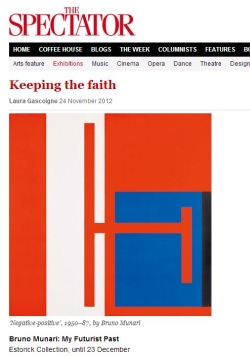
Negative-Positive 1993
Bruno Munari described himself as an "artist, writer, inventor, designer, architect, and illustrator", a list that is nowhere near exhaustive. He began his career at an early age during the second wave of Italian Futurists, exhibiting his work for the first time in 1927 at Galleria Pesaro, Milan. Simultaneously he pursued activities as an art-director, curator, and illustrator. In the years following, he progressively moved away from the influence of Futurism, developing an extremely personal and singular project over the course of 60 years. In 1930, he produced the "Aerial Machine", from which came his "Macchine Inutili / Useless Machines", anticipating his interest in the deconstruction of the traditional work of art. Much of Munari’s work is characterized by a pedagogic interest and a radical vision of expanding man’s understanding of the world through the development of new forms of visual communication. Prolific in output throughout his life, and tirelessly inventive, his work includes some of the earliest experiments in what Munari himself would term "programmed art", as well as light art, installation art, projection-based art, and photocopy art. Throughout his work, Munari viewed technology as a democratizing force within Art, citing the potential for an "art by all", and the destabilization of the idea of the singular artistic genius.
Travel Sculpture 1958
The exhibition, which will occupy both the gallery's 537 and 535 West 22nd Street locations, will include seminal works from key moments within Munari's oeuvre. Beginning with his turn to abstraction, and "Macchine Inutili" in the 1930s, the exhibition will highlight themes that remained constant throughout his career. These include his interest in dynamism or the study of the fluidity of signs and shapes that first brought Munari to programmed art; his engagement with the machine, displayed through his use of the photocopier, experiments with light, and the creation of fossils for the future; and poetics and wit through his use of found objects, research into language and the human face, and theoretical reconstructions of imaginary objects. The majority of the works to be exhibited have not previously been shown in the United States.
Theoretical Reconstruction of Imaginary Objects 1970
Original Xerograph 1970
Installation views (click on to enlarge)
Images courtesy of
Andrew Kreps Gallery New York
Kaufmann Repetto Milan New York
Photo Dawn Blackman
Also the London based Repetto Gallery cooperated in the organization of the exhibition.
Il Centre Pompidou di Parigi ha acquisito una Macchina Inutile di Munari, grazie alla disponibilità di un collezionista italiano rappresentato dalla Galleria Francesco Clivio (Parma, Milano).
L'opera pubblicata sul volume Far vedere l'aria (Lars Muller Ed.) ed esposta a Zurigo nella retrospettiva del 1995 è stata a lungo appesa nella cucina di casa dell'artista.
Ora volteggia nelle sale di un museo.
L'opera è esposta al quinto piano nella collezione permanente (sala "spazialismo").
Si tratta della seconda Macchina Inutile acquisita da un museo estero, dopo quella del 1952, proveniente dalla collezione dello storico dell'arte Pontus Hulten, presente nella collezione del Moderna Museet di Stoccolma.
La stessa Macchina Inutile in una foto storica di Ada Ardessi
Courtesy ISISUF Milano
I Libri Einaudi
Milano
Primo Levi, Se questo è un uomo, Einaudi
copertina di Bruno Munari, 1958
Galleria del Credito Valtellinese I libri Einaudi 1933-1983
Collezione Claudio Pavese 30 marzo - 23 aprile 2016
Corso Magenta 56, Milano
Martedì-Sabato 13.00/19.30
Chiuso Domenica e Lunedi
Ingresso Libero
La casa editrice torinese è protagonista di una mostra in cui trecento libri, da una collezione di tremila raccolta dal bibliofilo Claudio Pavese, raccontano concretamente l'attività dell'azienda fondata a Torino nel 1933 dal ventunenne Giulio Einaudi.
La casa editrice fu costretta fin dall'inizio ad affrontare molte difficoltà come il rapporto con il fascismo o la guerra. È proprio partendo da queste vicende che Claudio Pavese ha iniziato la collezione: "Mi ha sempre colpito il fatto che fosse un’avventura di giovani — racconta il collezionista torinese, 67 anni, formatosi nella grafica — e non dobbiamo dimenticarci che componevano e traducevano libri incredibili mentre cadevano le bombe".
Oltre a raccontare la storia della casa editrice la collezione mostra anche un pezzo di storia dell’arte e della grafica italiana, con le copertine disegnate da alcuni dei più importanti illustratori italiani e internazionali, tra cui Bruno Munari, Max Huber e Albe Steiner.
Annota il curatore Andrea Tomasetig nella presentazione in catalogo: "Oltre alla mente, esposti sui banchi delle librerie o negli scaffali di casa, hanno educato l’occhio e il gusto di due generazioni e le infinite copertine con le riproduzioni della migliore arte moderna e contemporanea molto probabilmente hanno esercitato un’influenza sotterranea superiore a quella delle mostre d’arte".
Il diario di Anna Frank, Einaudi
copertina di Bruno Munari, 1954
Siamo nel 1958. Sei linee in movimento è il titolo di questo libro illeggibile.
Qualche anno prima, nel 1956 Munari crea il primo multiplo d'arte, una Macchina Inutile in 20 esemplari che pubblica su Domus nel numero di dicembre.
Osservando una macchina inutile dall'alto si leggono gli spostamenti dei suoi elementi, proprio come le linee in movimento di questo libro.
Macchina Inutile e Libro Illeggibile diventanto due espressioni estetiche dello stessa ricerca artistica.
Sul Futurismo
Dicembre 1932
se si dovesse mettere una marca a tutto ciò che è futurista ben pochi si salverebbero poiché tutti hanno preso, chi più e chi meno, chi camuffando e chi attenuando, dal futurismo che è stato, è e sarà sempre un potentissimo distributore gratuito e disinteressato di idee a chi ne ha bisogno
[...]
il futurismo italiano è il più completo movimento artistico mondiale, esso è l'unico che abbia influenzato tutti i vasti campi dell'arte pura, decorativa, architettura, cinema, teatro, letteratura, musica, cucina, abbigliamento, ecc.
Bruno Munari, tratto da uno scritto pubblicato su Pagine Futuriste, inserto della rivista Orpheus, Anno I Numero 1 dicembre 1932
Libro illeggibile bianco, nero, giallo prototipo del 1956
edizione fuori commercio
Giorgio Lucini Editore 2011
Fotografia di Pierangelo Parimbelli
Laboratorio di Beba Restelli i Munari stampati dai Lucini 15 ottobre - 12 dicembre 2015
Via Bonaventura Cavalieri 6
Milano
La mostra è aperta ogni giovedì e sabato dalle 16,30 alle 19 oppure su prenotazione
La mostra presenta stampe sconosciute o poco note, nate da settant’anni di collaborazione e amicizia di Munari con i Lucini.
Giorgio, solo su appuntamento, racconterà fatti e misfatti.
Beba Restelli: Quale è stato l’insegnamento di Munari più importante per te?
Giorgio Lucini: Munari, che attraversò appunto tutti e tre i Lucini, fu per me importantissimo; appena entrai mio padre mi assegnò tre clienti da seguire, Scheiwiller, Munari e Buzzati. Con Munari la prima volta mi disse "Ha telefonato Munari, vai e fatti spiegare bene, fatti ripetere se non capisci, torni e mi fai vedere". Munari mi spiega, mi dà un foglio 21 x 21, quattro lembi, 42 x 42, dove inserire alcuni suoi negativi-positivi in proporzione per riempire tutto il foglio in una griglia di base che mi consiglia lui. Torno, faccio le proporzioni, ci metto un po’ di tempo perché non ne ero capace, e riempio il foglio incollando gli stamponi come si usava allora e torno a farglielo vedere. Munari era in piedi che lavorava come al solito al suo tavolo alto, lo osserva e fa: "Bene, bene", poi con il dito ne toglie uno, lo appallottola e lo butta nel cestino. Io a Munari davo del tu, ma ero lì per lavoro, avevo diciannove anni ed ero molto timoroso, così al momento non riesco a dire nulla. Lui mi dice: "Vedi, prima ti ho fatto fare la regola, abbiamo riempito tutte le caselle, ma la regola è monotonia visiva. Adesso abbiamo creato una frattura nella regola, e abbiamo ottenuto tensione visiva; ogni stampato deve essere tensione visiva."
Quando poi mi sono occupato del design sui libri, circa la metà di quelli che abbiamo fatto, questo suo insegnamento è sempre stato molto presente in me, come tante altre cose che ho imparato da lui.
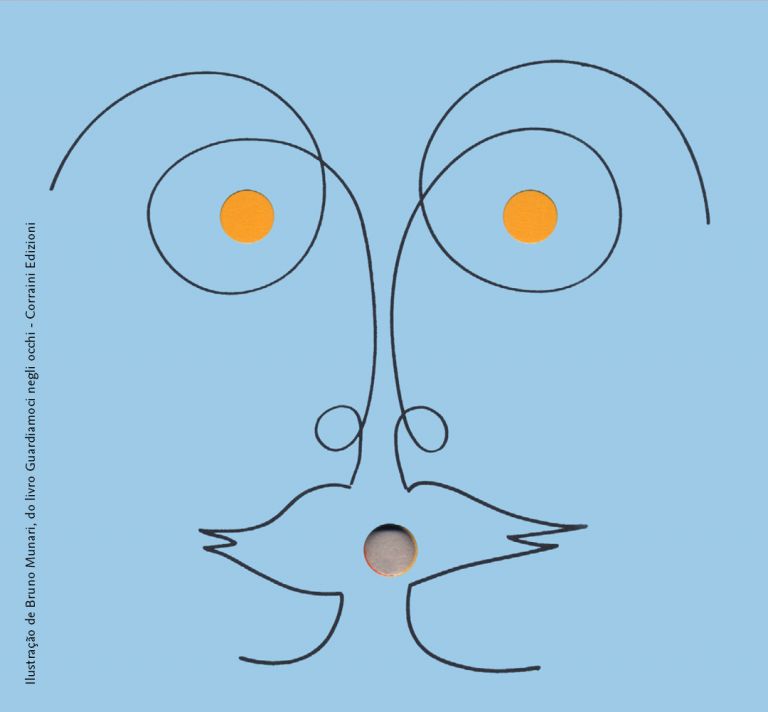
[...] Come editori abbiamo pubblicato Los Àlamos (1958), Guardiamoci negli occhi (1970), Alfabeto Lucini progettato da Bruno Munari (1987), e il Libro illeggibile bianco, nero, giallo (2011), tutti in edizioni fuori commercio fatte "per il piacere nostro".
Tratto da: Beba Restelli, I bambini autori di libri. Il gioco delle pieghe secondo il Metodo Bruno Munari®, Franco Angeli, 2013.
Foto Performance
Galleria Sozzani Milano
Bruno Munari
Foto Performance 1938
Archivio 3M Milano
Galleria Carla Sozzani
Fotografia Futurista 10 giugno - 1 novembre 2015
Corso Como, 10 Milano
Tutti i giorni, ore 10.30-19.30
Mercoledì e giovedì, ore 10.30-21.00
Ingresso libero
La Galleria Sozzani di Milano festeggia i 25 anni di attività con una mostra a cura di Giovanni Lista sulla Fotografia Futurista con oltre 100 fotografie. Munari è presente con le foto-performance degli anni '30, custodite oggi nell'archivio 3M di Milano.
Scrive Lista in catalogo: "Il secondo, [Munari, ndr] preferisce la posa in costume, anticipando le ricerche simili che faranno Jannis Kounellis e Pino Pascali all'inizio dell'Arte Povera. In questa serie di immagini stranianti e performative, da un lato Munari esibisce l'apparato e la funzione tecnica dell'occhio meccanico dell'apparecchio, dall'altro produce un contesto immaginario eterodosso e bizzarro, che contraddice la tradizionale asettica funzione mimetica del mezzo fotografico."
Artribune
Collezione Giancarlo Baccoli
Bruno Munari Polariscop anni '60
Lightbox con fitro Polaroid
Courtesy Andrew Kreps New York, Repetto Kaufmann Milano, Repetto Gallery Londra
Ginevra Bria pubblica su Artribune una lunga intervista ad uno più importanti collezionisti di Bruno Munari. Il corpus delle opere raccolte in modo ragionato offre un punto di vista unico sul lavoro editoriale e sull'opera artistica di Bruno Munari.
Torino
Spazio Giovanni Bordino
Bruno Munari Ambienti di luce 1950
Courtesy Fondazione JVBD Milano
Fotografia di Pierangelo Parimbelli
Venerdì 12 dicembre 2014 nello Spazio Giovanni Bordino una serata evento dedicato a Bruno Munari. Intervengono Claudio Pavese della Fondazione Giulio Einaudi di Torino su Munari e la forma del libro Einaudi e Luca Zaffarano su Munari e i suoi Ambienti di Luce con la proiezione della serie dei vetrini conservati presso la Fondazione JVBD di Milano.
Bruno Munari Ambienti di luce 1950
Courtesy Fondazione JVBD Milano
Fotografia di Pierangelo Parimbelli
"Sono qui vicino alla Scultura pieghevole gialla del 1951" messaggia veloce una visitatrice.
La scultura, cm 100x150, è una delle opere storiche in mostra.
Museo del 900
Firenze
Bruno Munari Macchina Inutile 1951
Nella collezione del Museo del 900 di Firenze, inaugurato il 24 giugno 2014, Bruno Munari è presente con una Macchina Inutile del 1951, esposta nella mostra personale tenutasi nella storica galleria Bergamini di Milano nel 1952 e pubblicata sulla rivista Domus nel numero 273 del settembre dello stesso anno.
New York
Microscope Gallery
Bruno Munari Untitled 1952
projection of a slide for multi-focal projection
mixed media on slide 2 x 2 x 1 inches
Courtesy Fondazione JVBD Milano
Microscope Gallery New York Slide Slide Slide Lary 7, Bradley Eros, Sandra Gibson & Luis Recoder, Barbara Hammer, Jeanne Liotta, Bruno Munari, Luther Price, Joel Schlemowitz, Michael Snow
September 5 – October 6 2014
Microscope Gallery is very pleased to announce the opening of the doors at its new location with Slide Slide Slide, an exhibition dedicated to the art of the projection slide. The exhibit assumes as its inspirational starting point the works and words of Italian artist Bruno Munari who in the early 1950s was actively and extensively realizing the new possibilities of the slide as an art object and exhibiting his works including at the Museum of Modern Art in 1954.
MAGA
Gallarate
Bruno Munari Quadrato a tre dimensioni Variazione Prima 1985
Al Maga di Gallarate arriva un’opera di Bruno Munari realizzata nel 1985. La scultura, collocata nel giardino del museo, è stata donata all’istituzione dal Lions Club di Gallarate. Si tratta di una scultura in ferro e acciaio di grandi dimensioni, con forme sintetiche ed essenziali, appartenente al ciclo delle Sculture da viaggio.
8 maggio 2014 Conversazione con Nicoletta Ossanna Cavadini e Heinz Waibl Sala Fontana
dalle ore 17:00
14 maggio 2014 Conversazione con Ines Mosconi, Carla Pellegrino e Gianmaria Tramontana Sala conferenze
dalle ore 17:30
19 maggio 2014 Munari: reload publishing con Andrea Dall’Asta, Silvia Botti e Massimo Torrigiani Expo Gate
dalle ore 18:00
26 maggio 2014 Munari e Milano con Atto Belloli Ardessi e Ginevra Bria Expo Gate
dalle ore 18:00
28 maggio 2014
Conversazione con Bruno Lorenzelli Sala Arte Povera
dalle ore 17:30
3 giugno 2014 Giornata internazionale di studi su Bruno Munari Una produzione di Massimo e Sonia Cirulli Archive New York in collaborazione con il Museo del Novecento.
Partecipano: Pierpaolo Antonello (Univ. di Cambridge, UK), Carlo Branzaglia (Accademia Bologna, IT), Anna Mazzanti (Politecnico Milano, IT), Matilde Nardelli (UCL London, UK), Maria Antonella Pelizzari (NY Hunter School, USA), Jeffrey Schnapp (MetaLAB, Harvard, USA), Margherita Zanoletti (Univ. Cattolica Milano, IT), Marina Pugliese (direttrice Museo del 900), Giovanni Rubino (Univ. Udine, IT) e Marco Sammicheli (curatori della mostra).
Sala Fontana
dalle ore 10:00
Sala conferenze "Proiezioni dirette" a cura di Luca Zaffarano e Roberto Marossi dalle ore 16.00
11 giugno 2014 Conversazione con Giovanni Anceschi, Matteo De Vecchi e Grazia Varisco Sala conferenze
dalle ore 17:30
13 giugno 2014 Conversazione con Giorgio Lucini Sala Arte Povera
dalle ore 17:30
18 giugno 2014 Conversazione con Manuela Grignani e Uberto Sirtoli Sala conferenze
dalle ore 17:30
25 giugno 2014 Conversazione con Ada Ardessi e Atto Sala conferenze
dalle ore 17:30
Note d'archivio Munari Perelà
Giovanni Anceschi
Munari Perelà
Giovanni Anceschi, esponente del "Gruppo T" ricorda in questo modo Bruno Munari:
Nei primi anni ’60, che sono stati gli anni della prima pioneristica fase della rivoluzione informatica – prima di Silicon Valley, per intenderci -, mentre in Germania un estetologo dell’informazione come Max Bense parlava di Programmierung des Schönen [Programmazione del bello], Bruno Munari battezzò quel movimento artistico, che si consolidò in una grande mostra sponsorizzata dalla Olivetti – e questo, si badi bene, prima di Cybernetic Serendipity di Jasia Reichard e prima del famoso numero della rivista IBM dedicato alla computer art -, con il nome profetico di Arte Programmata. Un movimento che rappresentò l’ultima occasione in cui la cultura europea abbia anticipato gli sviluppi artistici planetari. Poi sempre con la regia di Munari, ci fu il fondamentale Almanacco Bompiani dedicato all’Arte Programmata. È questa parola – "Programmata" -, indubbiamente anticipatrice di tutta l’arte elettronica e multimediale che non sta bene nel portrait di un Munari tutto creativista e irrazionalista, plasmato ad usum di una certa linea culturale e propagandistica.
Questa richiesta, che un tempo aveva un significato assurdo, oggi è diventata possibile e, in attesa della luna vera, ognuno può avere sulla parete o sul soffitto di casa sua queste grandi lune a colori.
Nel 1959 la Luna grazie ai progressi dell'esplorazione spaziale sembra sempre più raggiungibile. Munari realizza una serigrafia che la riproduce fedelmente.
Il Museo del Novecento inaugura la nuova sala Bruno Munari con opere che provengono dalla Fondazione Vodoz Danese di Milano. Si consolida il rapporto tra le due istituzioni teso a valorizzare l'opera dell'artista milanese.
The Museum of Modern Art Library is frequented by artists who use the collection for research and inspiration. For this exhibition, a group of artists were asked to select a favorite item from the library collection and respond to a questionnaire written by library staff.
What is your favorite item in the MoMA Library Collection? Why? 1. I like all Bruno Munari's Illegible Books. Laced with string, delicate papers, shapes die-cut, they operate as puzzles. Trinie Dalton
Bruno Munari is present also with the book "Xerografia", published in 1970 by the Rank Xerox and presented in the XXXV Venice Biennale during the same year.
Aperture
Editor's Note Italian polymath Bruno Munari—who began his artistic career as a Futurist painter in the 1920s—also worked as an illustrator, designer, and inventor, and brought all these talents to bear upon his photographs, which are performative, inventive, and unabashedly fun.
La Biennale 2013
Venezia
Padiglione Brasile
Inside/Outside
Bruno Munari, Lygia Clark, Max Bill, Hélio Fervenza, Odires Mlászho
a cura di Luis Perez-Oramas
Bruno Munari Concavo-Convesso (1948)
messo a confronto con opere di Lygya Clark e Max Bill, installazione presso l'Istituto Tomie Ohtake San Paolo del Brasile 2013
MiArt 2013
Milano
Milano MiArt domenica 7 aprile 2013
18:30 – 19:30
Bruno Munari: le ragioni di un’attualità
Relatori:
Paola Antonelli, Capo Curatrice per l’Architettura e il Design e Direttrice della Ricerca e dello Sviluppo, The Museum of Modern Art, New York
Paola Nicolin, Storica dell’arte Contemporanea, Università Bocconi, Milano
Bruno Munari
negativo-positivo 1978
collage su tavola cm 60x60
coll. priv.
Su Artribune un breve estratto video della conferenza.
Great Review
Frieze Magazine
Sul numero 153 di marzo 2013 la rivista inglese dedica una bella recensione a firma di Nicole Yip della mostra Bruno Munari. My Futurist Past tenutasi alla Estorick Collection of Italian Modern Art di Londra.
Museo del 900 Negozio Olivetti Programmare l'arte
Olivetti e le avanguardie cinetiche 9 novembre 2012 – 3 marzo 2013
A cura di M. Meneguzzo, E. Morteo, A. Saibene
Piazza San Marco - Venezia
La mostra riprende, a cinquant'anni di distanza, l'esposizione che ebbe luogo nel Negozio Olivetti di Milano e poi in quello di piazza San Marco a Venezia nel 1962, curata al tempo da Bruno Munari.
Gli artisti in mostra sono quelli del Gruppo T e del Gruppo N oltre a Munari, Mari e Alviani. Filmati e documenti esposti testimoniano inoltre il successo di una mostra che fece epoca.
La mostra verrà riproposta da Museo del 900 a Milano dal 9 novembre al 3 marzo 2013.
Menguzzo: Come è nato il titolo e la definizione di Arte programmata?
Munari: L'ho trovato io. Naturalmente ci sono ancora dei legami con i principi futuristi della velocità e del movimento, ma anche della fissità e della variazione.
Intervista in catalogo edito da Johan & Levi Ed.
La colonna a 6 sfere di Bruno Munari tratta dal film Arte Programmata Archivio Olivetti.
C'è una trasformazione cruciale, nell'arte italiana della prima metà del novecento, rappresentata da alcuni eventi che segnano il passaggio, ampiamente teorizzato dal movimento futurista, dalla terza alla quarta dimensione, per mezzo di ambienti in cui lo spettatore partecipa, fisicamente e percettivamente, in modi più coinvolgenti del passato, all'opera d'arte:
Bruno Munari
Macchine inutili 1930 Costruite a partire dal 1930
presentate nel 1934 alla
Galleria delle 3 Arti, Milano
Bruno Munari
Ambiente Concavo-convesso 1946 Costruito ed esposto nel 1946
al Salon des Realites Nouvelles di Parigi
presentato nel 1948 in Italia
nella personale alla
Galleria Borromini, Milano
Lucio Fontana
Ambiente nero con luci di Wood 1949 Galleria Naviglio, Milano
Bruno Munari
Proiezioni dirette 1950 Realizzate a partire dal 1950
presentate per la prima volta nel 1953 allo
Studio B24 (Milano)
e nel 1955 nella mostra
Two Graphic Designer al
MoMA di New York.
Lucio Fontana
Ambiente al neon 1951 Triennale di Milano
Bruno Munari
Proiezioni polarizzate 1953 Presentate per la prima volta nel 1953 allo
Studio B24, Milano
Pubblichiamo il Catalogo della mostra alla Galleria Borromini del 1948 dove Bruno Munari presenta macchine inutili, concavo-convesso ed altre pitture che sono in relazione con questa ricerca.
Nel frontespizio l'opera due forme rosse rimanda ad Arp - una delle influenze più riconosciute da Munari - ma anche alle forme delle nuvole disegnate dal concavo-convesso ed anche alla instabilità percettiva tra figura e sfondo caratteristica dei negativi-positivi.
Rese disponibili online le schede di molte opere acquisiti dal museo.
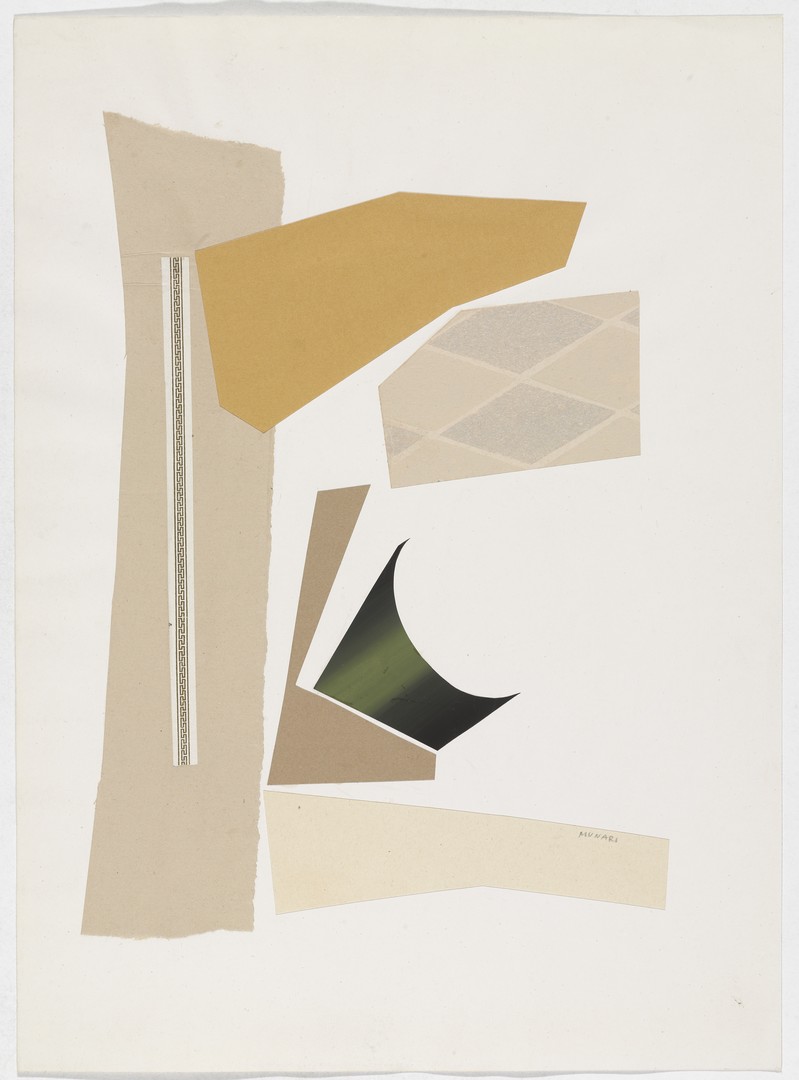
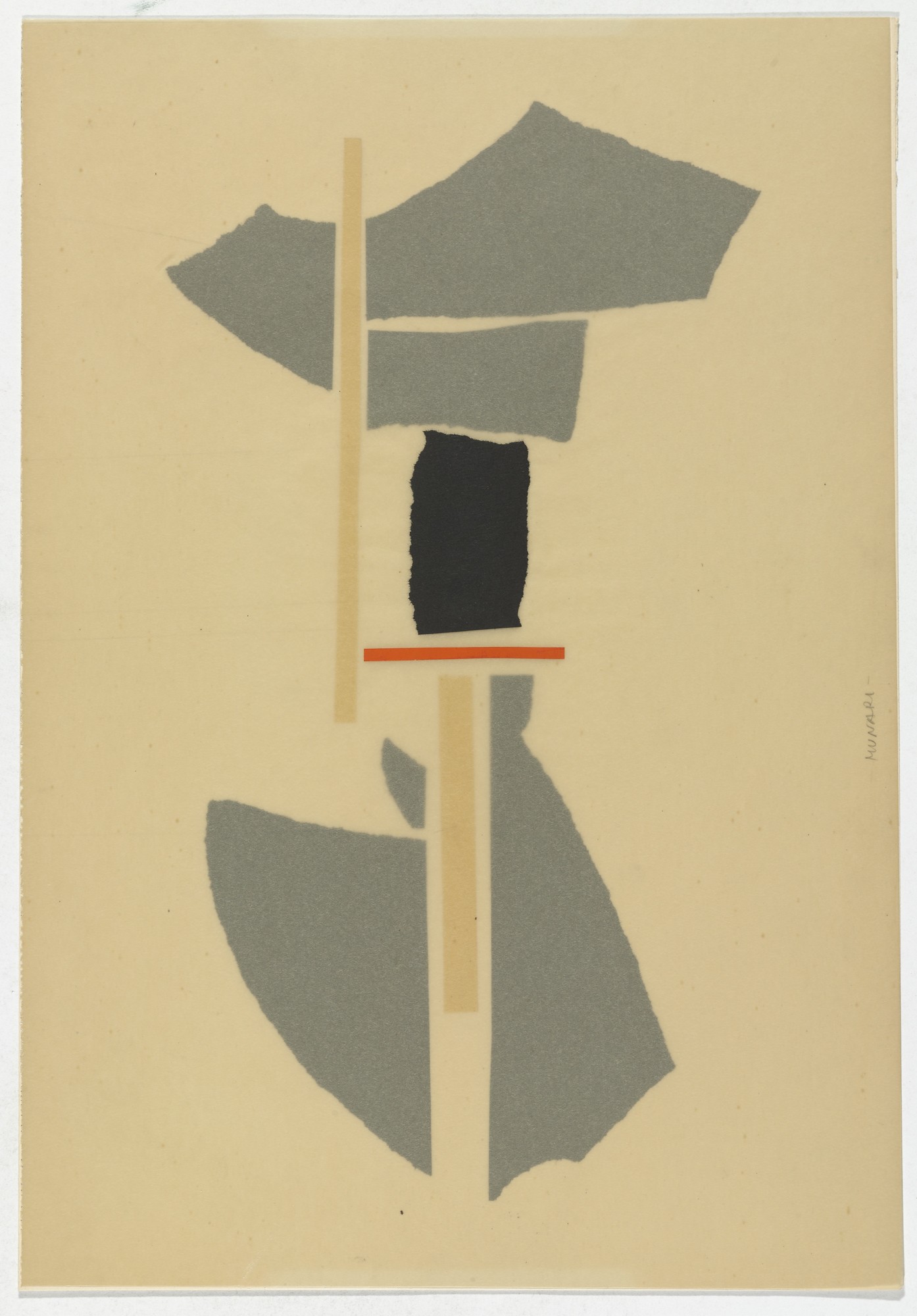
collage 1951 ca.
collage 1951 ca.
Bruno Munari collage 1951 ca.
collage 1951 ca.
collage 1951 ca.
collage 1951 ca.
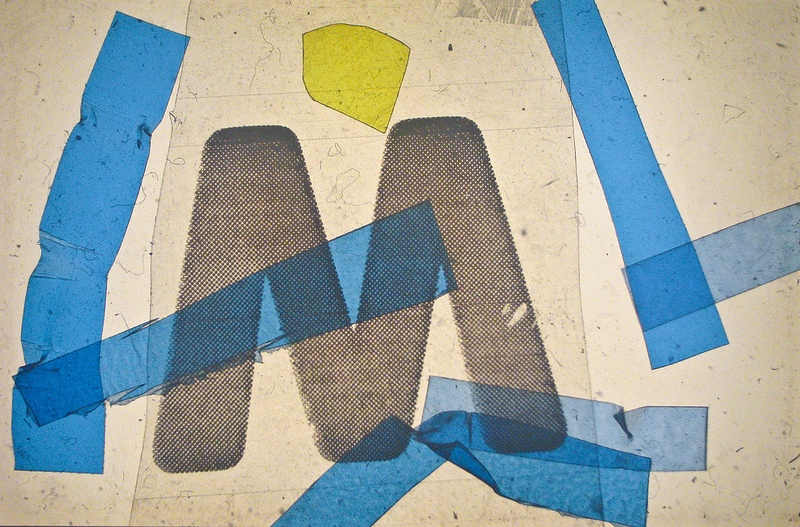
Slide for projection 1950s
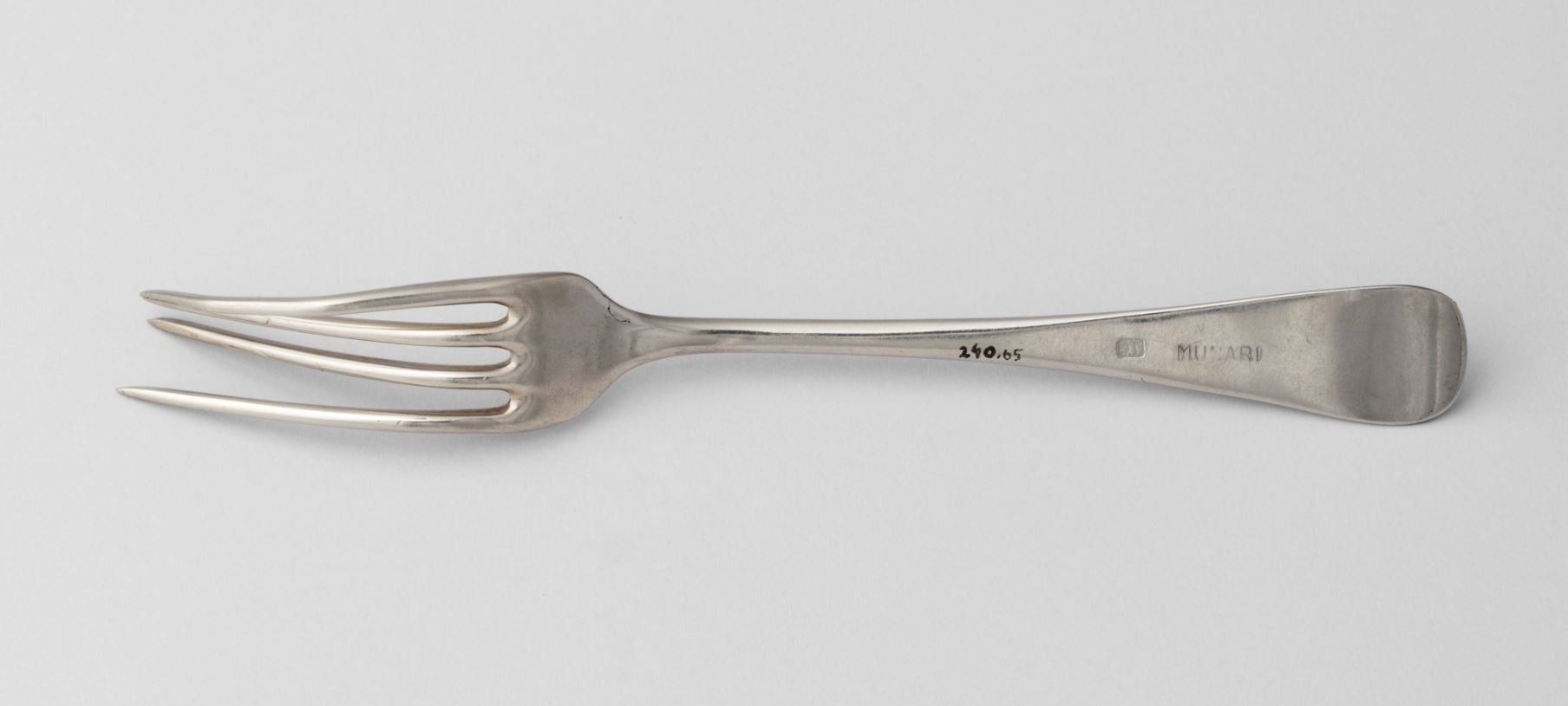
Fork Trés chic 1958
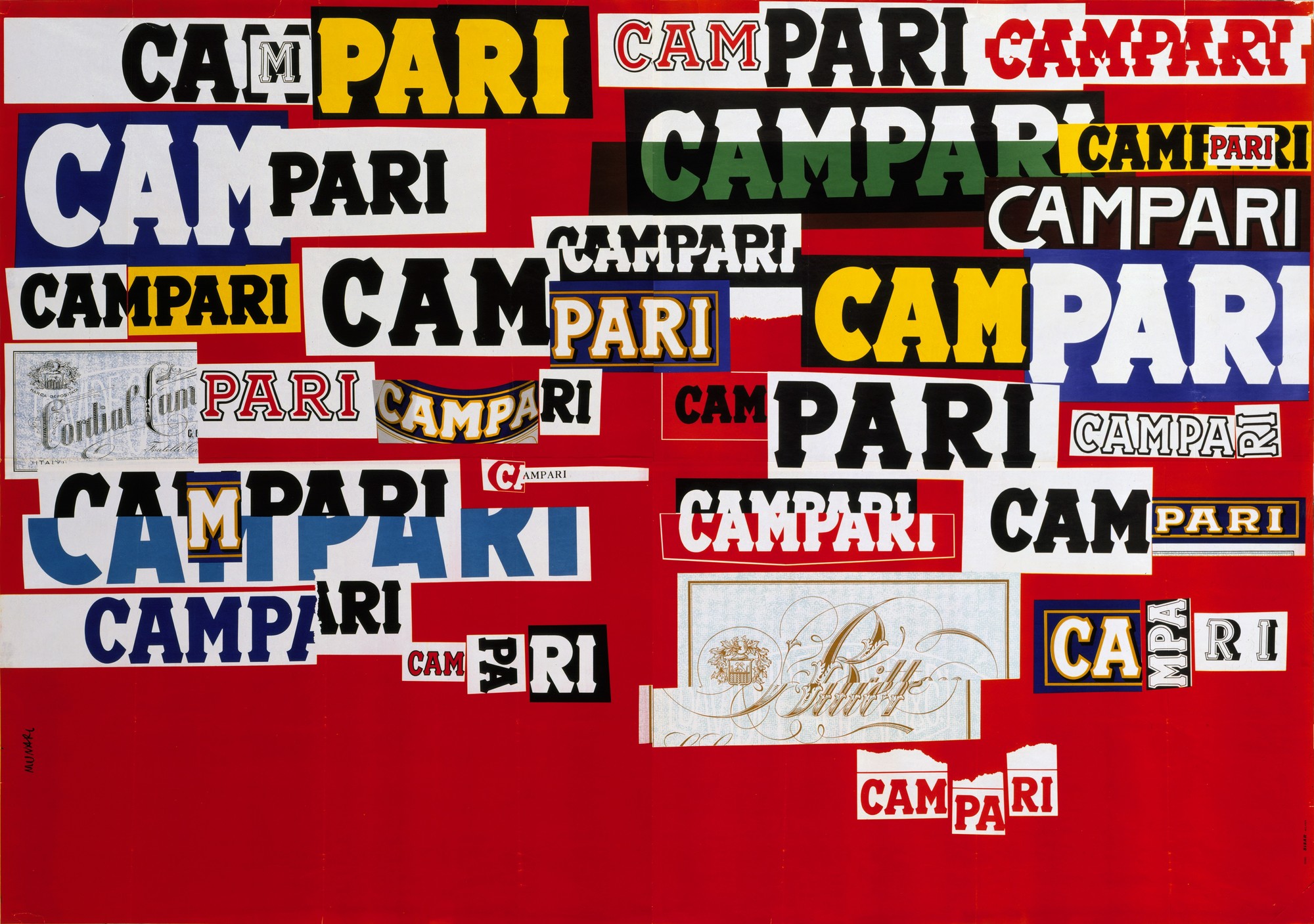
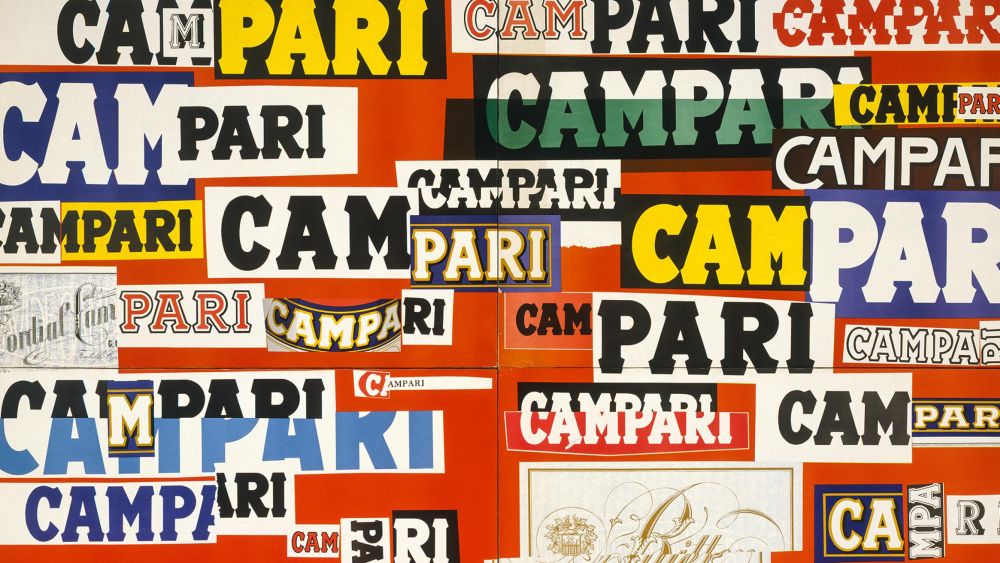
Manifesto Campari 1965
Bruno Munari. Xerografia
Brussels (Saint-Martin Bookshop)
Bruno Munari. Xerografia Saint-Martin Bookshop 22 April - 13 June 2026
Rue de flandre 114 Vlaamsestwg
Brussels - Belgium
Tue-Sat, 11am-7pm
Curated by N. Lavollay & G. Zalapi
For the first time, a unique and carefully curated selection of Munari’s Xerografia will be presented to the public — and available for acquisition.
This rare showcase offers an intimate look into Munari’s groundbreaking experimentation with the Xerox machine, where technology becomes a tool for poetic and visual exploration.
Alongside the works, visitors will discover original documents, photographs, and personal correspondence from the Archives Bruno Munari, providing deeper insight into Munari’s creative process and artistic vision.
On this special occasion, the original Xerografia book will also be republished to celebrate the innovative spirit and timeless creativity of Bruno Munari.
Bruno Munari Xeroportrait
Les Cahiers
Paris (MNAM)
Editions Centre Pompidou Les Cahiers du MNAM n. 175 Spring 2026
Xérographies
Cover: Original Xerograph Bruno Munari 1976
Les Cahiers du Musée national d'art moderne publishes 4 issues a year, featuring unpublished essays by established authors, works by young researchers, and texts of historical importance that were previously inaccessible, on the analysis of international art news and that of the Musée national d'art moderne: every three months, this magazine provides French readers with the best of what is being developed in the field of the history and theory of modern and contemporary art.
This special issue presents, for the first time, contributions from international researchers devoted to overlooked works, whether published or not, created using the photocopier.
Inside this issue:
Jeffrey Schnapp, Les démonstrations xérographiques de Bruno Munari
Bruno Munari. Vedere l'aria
Milano (Museo del 900)
Bruno Munari. Vedere l'aria Museo del 900
Focus900 V piano
dal 9 aprile
Milano
La mostra Focus esplora alcuni lavori dell'artista mettendo in luce la sua capacità di attraversare il linguaggio dell’arte in direzioni inaspettate, dove l’aria – elemento dinamico e sfuggente – consente di integrare casaualità, tempo e movimento.
Fulcro del percorso è la performance Far vedere l’aria del 1969, realizzata a Como nell’ambito della mostra collettiva Campo Urbano.Interventi estetici nella dimensione collettiva urbana, documentata dalle fotografie di Ugo Mulas.
Con la nascita degli Archivi Bruno Munari® inizia una nuova fase per lo studio e la promozione dell’opera di Munari.
Creato su iniziativa degli eredi Valeria Munari, Bruno Munari Jr. (deceduto nel gennaio 2025) e suo figlio Matteo Munari, il nuovo ente è orientato a valorizzare e tutelare il patrimonio culturale dell’artista, oltre a costituirsi come unico riferimento ufficiale, con linee guida di rigore scientifico e archivistico.
"È con estremo piacere, orgoglio e responsabilità, che abbiamo intrapreso questo progetto. Ringraziamo fin da ora professionisti, collezionisti, amici e sostenitori, per la loro necessaria collaborazione affinché gli Archivi Bruno Munari® diventino una piattaforma di scambio, uno strumento vivo e in continua crescita, un luogo di memoria e custodia" commentano Valeria e Matteo Munari.
A seguito della scomparsa nel 2021 del prof. Alberto Munari, figlio dell’artista, gli attuali eredi hanno iniziato, insieme a un gruppo ristretto di professionisti, l’archiviazione dell’opera artistica e progettuale di Bruno Munari, includendo ogni tipo di materiale presente nello studio dell’artista.
Questa raccolta bibliografica, documentaria, fotografica e progettuale consentirà agli Archivi Bruno Munari® di promuovere studi, pubblicazioni e progetti curatoriali orientati alla valorizzazione storica della produzione dell’artista, offrendo tale impegno verso ogni istituzione museale pubblica o privata, italiana o internazionale.
Conservare lo spirito dell'infanzia dentro di sé per tutta la vita, vuol dire conservare la curiosità di conoscere, il piacere di capire, la voglia di comunicare
Cinque volumi per esplorare i mondi della fantasia di uno dei più grandi artisti e designer.
Sperimentatore e figura fondamentale nella storia del design italiano e internazionale: Bruno Munari è un intellettuale che è sfuggito alle categorie interpretando pienamente il Novecento. In questi volumi ha raccontato la sua personalissima visione, restituendoci dei documenti ancora oggi preziosi per tutti gli appassionati di arte e comunicazione.
La collana è composta da 5 uscite.
Bruno Munari. La leggerezza dell'arte
Acqui Terme (Alessandria)
Bruno Munari
La leggerezza dell'arte 4 maggio 2024 - 28 luglio 2024
Palazzo Robellini
Piazza Levi
Acqui Terme
a cura di A. Salvadori e L. Zaffarano
Lun-Ven h.10-13,16-20
Sab-Dom h.10-13,15-20
La mostra allestita all’interno degli spazi di Palazzo Robellini (Acqui Terme) ripercorre le principali sperimentazioni di un artista.
Un’attenzione particolare viene rivolta all’utilizzo della luce, grazie alla quale l’artista riesce a creare ambienti ed elementi scultorei in grado di definire l’intero spazio architettonico dato.
Alcune sale saranno dedicate a questo tipo di ricerca documentata da varie opere: le Macchine Inutili degli anni ’30 che assolvono la funzione di dispositivi mobili per la generazione, attraverso le ombre e il movimento casuale degli elementi della macchina, di film astratti; l’uso di una minimale rete metallica piegata, il Concavo-Convesso del 1947, per la costruzione di ambienti in semi-oscurità in cui le rifrazioni sulle pareti si contorcono in continue metamorfosi; le Proiezioni dirette del 1950 dove, grazie a composizioni pittoriche realizzate con vari materiali posizionati dentro i telai di una diapositiva, l’artista riesce a ideare ambienti immersivi e spettacolari, anticipando di alcuni anni molte tendenze artistiche legate ai nuovi media.
Bruno Munari
La leggerezza dell'arte 12 ottobre 2023 - 31 marzo 2024
Eataly Art House
via Santa Teresa, 12
Verona
a cura di A. Salvadori e L. Zaffarano
Mer-Dom h.12-20
ingresso gratuito
Il progetto espositivo di Bruno Munari. La leggerezza dell'arte ripercorre le tappe fondamentali della carriera di Bruno Munari, artista che ha attraversato l'intero Novecento, e fornisce una chiara lettura dei processi creativi alla base della poetica di Munari e delle forme spettacolari e giocose.
Il percorso espositivo è organizzato in sezioni tematiche dedicate ad alcuni ambiti di indagine che hanno caratterizzato il lavoro di Bruno Munari sin dalle primissime opere: lo studio del dinamismo di una forma di matrice futurista; l’equilibrio tra regola e caso di ispirazione dadaista; la percezione ambigua di forme e colori sperimentata in vari contesti; l’ideazione di una forma scultorea economica e trasportabile; la produzione ibrida, tra arte e design, di oggetti a funzione estetica; il lavoro fondamentale nell’editoria e nella grafica.
Durante il periodo di apertura verranno proposti alle scuole dell’infanzia e primaria, diversi laboratori educativi dedicati al pensiero progettuale creativo dell’artista, sintetizzato nel celebre Metodo Munari, curati dall’Associazione Bruno Munari e progettati da Silvana Sperati.
Un catalogo, edito da Edizioni E.ART.H., ricco di apparati iconografici accompagnati da brevi testi dello stesso Bruno Munari, offrirà al lettore un utile strumento per proseguire la scoperta dell’opera e dell’attività teorica dell’artista.
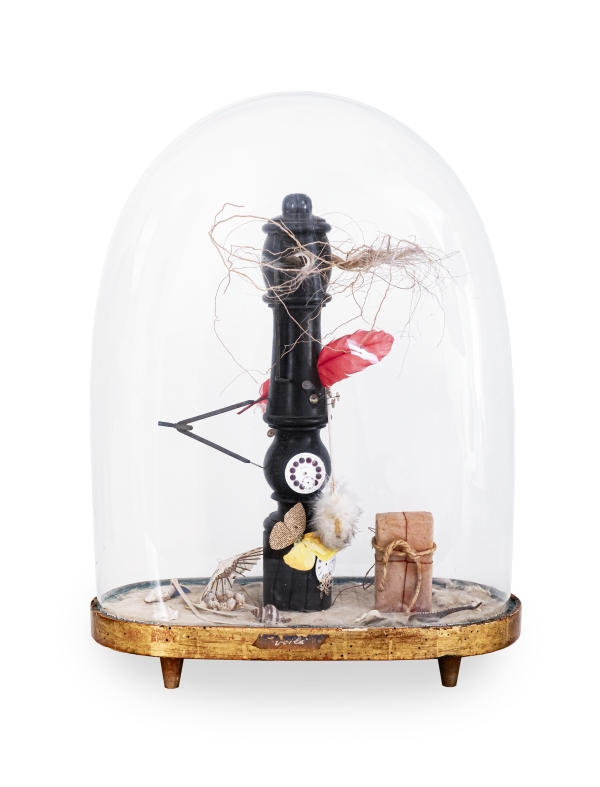
voilà anni '40 coll. priv.
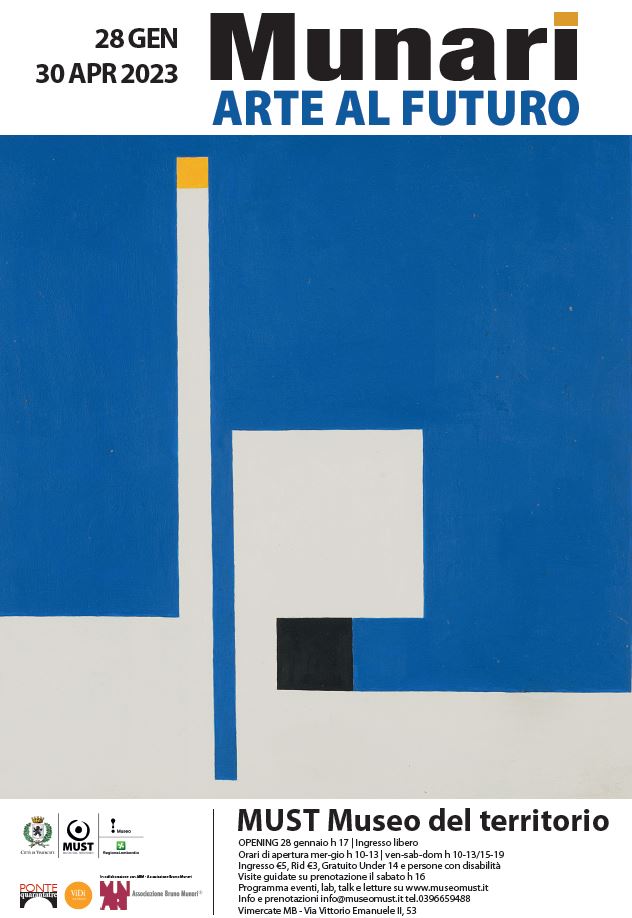
Bruno Munari. Arte al Futuro
Vimercate (Milano)
Munari
Arte al Futuro 28 gennaio 2023 - 30 aprile 2023
Museo MUST
Vimercate
a cura di Simona Bartolena
Mer-gio h.10-13
Ven-Dom h.10-13,15-19
Lun-Mar chiuso
La mostra Munari, Arte al futuro racconta la ricerca artistica di Bruno Munari attraverso una selezione di circa cinquanta opere provenienti da collezioni private italiane e straniere mettendo in evidenza la sua straordinaria importanza nel panorama artistico internazionale e il ruolo di grande precursore di tendenze e ricerche. Dal futurismo alle macchine inutili, dall’astrazione concreta alla pittura con la luce, non mancano esempi celebri dell’interazione di Munari con il mondo della comunicazione come il grande manifesto rosso per Campari. Il percorso in mostra procede per sezioni, con approfondimenti sui principali motivi di riflessione dell’artista: dal dinamismo allo studio della percezione, dalla trasformazione dell’idea di pittura all’impiego della tecnologia, dal concetto di "arte concreta" alla sperimentazione di nuovi materiali.
Una sala è dedicata alle Proiezioni dirette dei primi anni '50 presenti nella collezione della Fondazione JVBD di Milano.
Fotografie dell'allestimento di Pierangelo Parimbelli
Tra gli eventi collaterali un ricco calendario di incontri presso la biblioteca, visite guidate con la curatrice, conferenze di approfondimento e laboratori di sperimentazione con il Metodo Bruno Munari su progettazione, formazione e supervisione dell'Associazione Bruno Munari (ABM) curati scientificamente da Silvana Sperati.
Bruno Munari
Palma
Bruno Munari 18 ottobre 2022 - 4 febbraio 2023
Museu Fundacion Juan March de Palma
Palma, Illes Balears
Lun-Vien h.10-18.30
Sab 10.30-14.00
Dom closed
Una adaptación de la primera retrospectiva dedicada en España a Bruno Munari (Milán, 1907-1998) tras su inauguración en la sede de la Fundación Juan March de Madrid y de su itinerancia al Museo de Arte Contemporáneo de Alicante. Es la muestra más completa hasta la fecha fuera de Italia sobre este artista multidisciplinar que se podrá visitar en los próximos meses tanto en el Museu Fundación Juan March de Palma como en el Museo de Arte Abstracto Español de Cuenca.
Bruno Munari
Galleria Cadaques
Bruno Munari 24 agosto - 18 settembre 2022
Galleria Cadaques
Cadaques
horta d'en sanés 7
h 18.30 - 21.30
Nella storica galleria di Cadaques, aperta nel 1973 dall'architetto italiano Lanfranco Bombelli Tiravanti in una piccola località di mare frequentata a lungo da artisti come Salvador Dalì, Marcel Duchamp, Pablo Picasso, si inaugura una nuova personale di Bruno Munari che segue le recenti mostre di Madrid (Fundacion Juan March) e Alicante (MACA).
La galleria, storicamente rilevante, è stata la prima ad esporre in Spagna artisti come Marcel Duchamp, Richard Hamilton, Joseph Beuys, John Cage, Max Bill, David Hockney, Man Ray, Jasper Johns, Frank Stella e molti altri. Nel 1975 Bruno Munari espose in una personale le sue Scritture Illeggibili.
xerografia originale 1977
Bruno Munari
MACA - Alicante
Bruno Munari luglio - settembre 2022
Museo de Arte Contemporàneo
de Alicante
Alicante
Lun-Ven h.9-14
El Museo de Arte Contemporáneo de Alicante presenta en Alicante una versión adaptada a sus espacios de la primera exposición dedicada a Bruno Munari en nuestro país, que tuvo lugar en Madrid entre febrero y mayo de este año. Coorganizada con la Fundación Juan March, la muestra itinera al MACA para continuar en el Museu Fundación Juan March en Palma y el Museo de Arte Abstracto Español en Cuenca gracias al acuerdo entre estas instituciones.
Marcel Duchamp / Bruno Munari
Parisgi Galleria Loeve&Co Marais
Marcel Duchamp / Bruno Munari Loeve&Co Marais
9 aprile - 4 giugno 2022
16 rue de Montmorency Parigi
Inaugurazione sabato 9 aprile dalle 14 alle 21
Orari: martedì-sabato h.14-19
Un nuovo spazio espositivo nel Marais e una mostra dedicata ai legami tra il lavoro di uno degli artisti più influenti del XX secolo e quello dell'artista e designer di culto Bruno Munari.
Separati da una generazione, entrambi sono stati influenzati dal movimento futurista. Più in generale, le loro opere hanno in comune le stesse preoccupazioni estetiche e teoriche e le loro strade si sono incrociate in molte occasioni. Alla fine degli anni '50 entrambi sono stati un punto di riferimento per una nuova generazione di artisti, come Daniel Spoerri e Jean Tinguely o il curatore Pontus Hultén.
Per un decennio hanno esposto insieme in collettive dedicate al cinema sperimentale, ai multipli d'artista, al cinetismo o al tema della macchina, in Europa e negli Stati Uniti, in particolare al MoMA di New York.
Per la prima volta, una mostra e un libro esplorano la relazione tra le opere di Marcel Duchamp e Bruno Munari.
In catalogo specialisti di entrambi gli artisti: Pierpaolo Antonello (Università di Cambridge,UK), Bernard Marcadé (critico e storico dell'arte), Didier Ottinger (Musée national d'art moderne), Camille Paulhan (storico dell'arte, École des Beaux-Arts de Lyon), Matthieu Poirier (storico dell'arte e curatore indipendente), Luca Zaffarano (studioso e ideatore di munart.org).
Tra le principali mostre in cui i due artisti si sono confrontati ricordiamo:
1958 - Avant-garde Film Festival Moderna Museet di Stoccolma
1967 - Slow Motion: Exhibition of Kinetic Art Douglas College, Rutgers, The State University, New Brunswick, New Jersey
1968 - The Machine as Seen at the end of the Mechanical Age MoMA di New York
Dans la seconde moitié du siècle qui s’achève, l’influence de Bruno Munari équivaut presque celle de Marcel Duchamp. À l'instar de Duchamp, l'artiste milanais a exalté l'importance de l'objet trouvé et ce n'est pas par hasard que l'on retrouve son influence dans certaines formes d'art actuelles qui ne sont pas liées à la peinture et à la sculpture traditionnelles, mais plutôt à l'installation et à l'utilisation de l'objet.
In the second half of the century that is now ending, Bruno Munari's influence almost equals that of Marcel Duchamp. Like Duchamp, the Milanese artist exalted the importance of the found object, and it is no coincidence that his influence can be found in some of today's art forms that are not related to traditional painting and sculpture, but rather to installation and the use of the object.
Mostra antologica di Bruno Munari a Palazzo Reale, Milano 1986
La mostra antologica che la città di Milano dedicò al lavoro di Bruno Munari (a Palazzo Reale nel 1986) la si deve principalmente all'iniziativa dell'amico e collega Enrico Baj, il quale si prodigò nel concretizzare, con la collaborazione di Bruno Munari, un progetto curatoriale poi approvato dall'allora Assessore alla Cultura di Milano Guido Aghina e dal Consiglio Comunale.
La mostra fu un successo di pubblico e venne prolungata e spostata, due anni dopo, al Museo di Jerusalem.
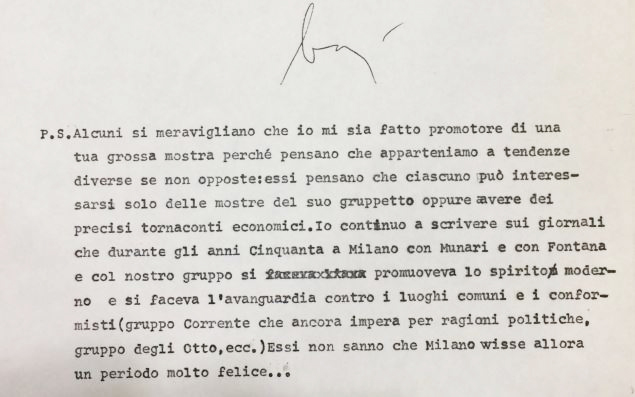
Riprendiamo un carteggio tra Enrico Baj, Guido Ghidina e Bruno Munari attraverso il quale possiamo capire come nacque la mostra e con quale progetto curatoriale.
se avanzo seguitemi
se indietreggio spingetemi
se mi sospingono fermatemi
se mi fermo spingetemi
se fuggo inseguitemi
se mi inseguono aiutateli
se cado sostituitemi
se mi sostituiscono imprigionatemi
ecc.
Da una lettera alla zia Maria, 6 settembre 1943, Arona, Redazione Tempo.
Un evidente presa in giro del proclama mussoliniano: "Se avanzo seguitemi, se indietreggio uccidetemi, se mi uccidono vendicatemi".
In mostra lavori di: Archizoom associati, Mario Bellini, Cini Boeri, Achille e Piergiacomo Castiglioni, Enzo Mari, Alessandro Mendini, Roberto Menghi, Bruno Munari, Alberto Rosselli, Roberto Sambonet, Ettore Sottsass.
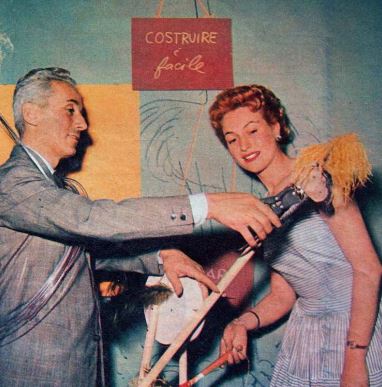
Didattica d'artista in tv (1956)
Webzine Sciami
Bruno Munari con la presentatrice della RAI Maria Teresa Ruta 1956
Didattica d'artista in tv:
Costruire è facile di Bruno Munari Guido Bartorelli
Università di Padova
Riceviamo e pubblichiamo un contributo per la rivista online di Teatro Video e Suono, n. 8 ottobre 2020
Abstract: Attraverso lo spoglio dei vecchi numeri del «Radiocorriere», il contributo misura l’ampiezza di un intervento d’artista in tv quanto mai prolungato e strutturato: la trasmissione a puntate Costruire è facile, ideata e condotta da Bruno Munari (Milano, 1907-1998). Andata in onda lungo tutto il 1956 sul programma nazionale della Rai, la trasmissione vale all’artista/designer una certa fama anche come presentatore televisivo. Ancora poco indagato, il lavoro di Munari per la televisione risponde a uno dei principali compiti che egli intende propri dell’artista nella società di massa: disvelare i “segreti del mestiere” per costruire un futuro in cui all’arte di pochi possa subentrare un’arte liberamente fatta da tutti. Ovviamente bisogna imparare a essere creativi, e per questo gli artisti devono mettersi a insegnare. Il capolavoro che la società si aspetta da loro ha natura didattica, e per veicolarlo la televisione si rivela uno strumento efficacissimo.
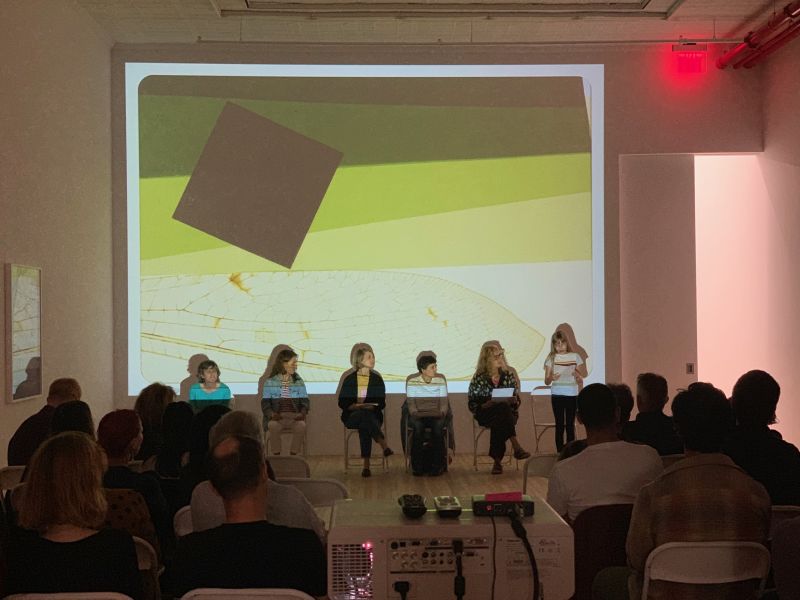
The Serving Library Andrew Kreps Gallery Book Launch
The Serving Library Annual 2019/20
Bruno Munari: Obvious Code Andrew Kreps Gallery
22 Cortlandt Alley
New York, NY 10013
September 18 at 7 pm
For the launch of The Serving Library Annual 2019/20Bruno Munari, Obvious code.
The issue launches with a staging of Munari's Direct Projections from 1950 at Andrew Kreps Gallery's new Tribeca space. The light show will be accompanied by readings performed by a constellation of issue contributors. Munari describes the Direct Projections in Obvious Code as original artworks created by visual operators.
This issue is entirely devoted to Italian designer, artist, inventor and polymath Bruno Munari. It comprises the first English translation of Codice Ovvio [Obvious Code], a 1971 collection of Munari's writings, sketches and poems that together amount to a very particular monograph.
The translation was produced together with the cooperation of Corraini Edizioni (Mantova) and is published with Roma Publications (Amsterdam).
The book launch event @Kreps gallery Tribeca
The core of the 2019/20 issue of The Serving Library Annual is the first English translation of Obvious Code, the 1971 collection of Munari’s own writings, sketches and poems about his own work. It includes iconic design objects such as the Abitacolo, ground-breaking artworks such as his 1952 series of hand-made projection slides, and little known rhymes about the art market, as well as an original piece from his "unreadable books" series.
In the margins, dozens of artists, designers, writers and curators have been invited to annotate Munari’s texts as a testament to the depth of the influence exerted on international art by an often underacknowledged pioneer, whose visual experiments were so iconic as to become a selfevident part of visual culture, an anonymous invention: an obvious code.
Edited by Francesca Bertolotti-Bailey, Stuart Bertolotti-Bailey, Vincenzo Latronico, and David Reinfurt.
The book launch event @Kreps gallery Tribeca
Marginalia is provided by: Giovanni Anceschi, Thom Andersen, Paola Antonelli, Leonor Antunes, Justin Beal, Eugenia Bell, Stuart Bertolotti-Bailey, Robert Bresson, Barbara Casavecchia, Céline Condorelli, Matali Crasset, Michael Crowe, Valerie Da Costa, Umberto Eco, Morgan Fisher, Davide Fornari, Jason Fulford, Rob Giampietro, Shannon Harvey & Adam Michaels, Anthony Huberman, Jenny Jaskey, Emily King, James Langdon, Louis Lathi, Lauren Mackler, Marco Meneguzzo, Laszo Moholy-Nagy, Jenny Monick, Rosalind Nashashibi, Julie Peeters, Arturo Carlo Quintavalle, David Reinfurt, Joao Ribas, Elodie Royer & Yoann Gourmel, Giovanni Rubino, Alberto Salvadori, Tamara Shopsin, Saul Steinberg, Franciszka & Stefan Themerson, Joseph Weizenbaum, Orson Welles, Luca Zaffarano, and Olimpia Zagnoli.
The issue is supported by Nouveau Musèe National de Monaco, and also by Andrew Kreps Gallery, New York, kaufmann repetto, Milan and New York, and Repetto Gallery, London. Direct Projections (1959) image courtesy Andrew Kreps Gallery and Fondazione Jacqueline Vodoz e Bruno Danese.
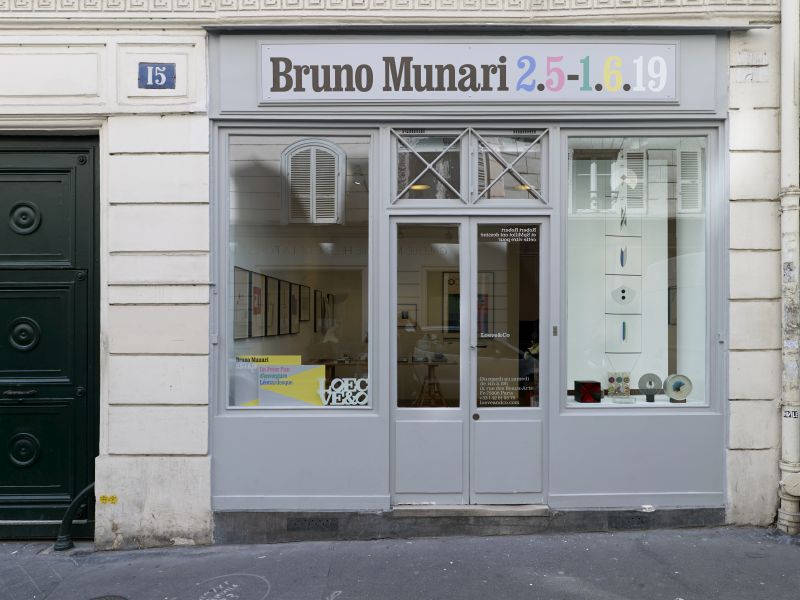
Loeve&Co
Paris
Loeve&Co Gallery Bruno Munari:
un Peter Pan d'envergure Léonardesque May 2 - June 1, 2019
from 6:00 – 8:00 PM
15 Rue des Beaux Arts
Paris France
Bruno Munari (1907-1998) était peut-être le Léonard de Vinci du XXe siècle... Pablo Picasso l’avait, paraît-il, surnommé ainsi, et le critique Pierre Restany titra pour sa part Un Peter Pan à l’envergure Léonardesque l’article nécrologique qu’il lui consacra dans le magazine Domus. Il est indiscutable, en tout cas, qu’il a marqué de son empreinte légère et profonde de nombreux domaines de la création contemporaine. Simultanément (plus que tour à tour) peintre, sculpteur, designer, illustrateur, graphiste, écrivain, cinéaste et pédagogue, il a pleinement participé à la vie artistique de son temps, en intégrant dès 1927 la seconde génération des futuristes aux côtés de Marinetti et de Balla, puis en créant le Mouvement d’Art Concret (MAC, 1948).
Cette première présentation monographique explore l’ensemble de la production de Bruno Munari (art, graphisme, pédagogie, design...) sous le prisme de l’esprit de géométrie et de l’esprit de fnesse qu’il a réussi à concilier comme nul autre, ainsi que le soulignait Restany. Comme l’ont montré ses ouvrages consacrés dans les années 1960 aux formes géométriques essentielles, cercle, carré, triangle, les jeux avec la géométrie peuvent en effet permettre de stimuler simultanément les capacités d’analyse et d’imagination, pour parvenir à une forme universelle de créativité.
Italian Cultural Institute Italian Types: Graphic Designers from Italy in America March 21 - May 2, 2019
from 6:00 – 8:00 PM
686 Park Avenue (68th Street)
New York
The Italian influences on American culture are far-reaching and well-documented. Yet, with a few exceptions of some key figures chronicled in Italian and American graphic design histories, the work by Italian graphic designers published in America is less well known. From Fortunato Depero’s move to New York City in 1928 to Unimark International’s work of the 1960s and 1970s, Italian graphic designers were living and publishing important work in the U.S. The sixteen designers featured (Italian-born and a few "adopted" Italians) contributed commercial graphic design in America during the pre and post World War II eras from approximately 1928 until 1980. With over seventy original works, the exhibition aims to bring more attention to this prolific network of collaborators who, with their unique achievements, played a significant role in coalescing modern graphic design in America.
The publication Italian Types: Graphic Designers from Italy in America (Corraini Edizioni, 2019) will be for sale at the opening. Essays by Steven Heller, Alessandro Colizzi, Alexander Tochilovsky, and curators Patricia Belen, Greg D’Onofrio, and Melania Gazzotti.
The Man Who Made the Useless Machines
Setagaya Tokyo
Bruno Munari:
The Man Who Made the Useless Machines
His work as a painter, designer, and a prolific writer of picture books, the Italian artist Bruno Munari (1907-1998) devoted himself to children’s art education. Although it is difficult to sum up his wide-ranging activities in a few words, regardless of the genre, Munari’s works are based on a simple idea and are immediately appealing to anyone of any age. In this exhibition, we look back at Munari’s career, which began with the Italian Futurists, by examining approximately 300 works.
Installation view Projections 1950s
Polariscope details
La mostra itinerante in quattro musei giapponesi si chiuderà a Tokyo (distretto di Setagaya) in novembre ed è organizzata dai musei ospitanti, dal principale giornale giapponese The Yomiuri Shimbun, dalla Japan Association of Art Museums, con il patricinio dell'Ambasciata d'Italia a Tokyo e dell'Istituto di cultura italiana. In mostra più di 300 lavori, organizzati in varie sezioni, consentono di esplorare ad ampio spettro, l'arte e la poetica di Bruno Munari.
Installation view Concave-Convex Photo by Pierangelo Parimbelli
drawing for the book Little Green Riding Hood
Cittadella (Padova)
Palazzo Pretorio
Proiezioni 1950
Courtesy Fondazione JVBD Milano
Fotografia della installazione di Pierangelo Parimbelli
Palazzo Pretorio Bruno Munari: Aria | Terra a cura di Guido Bartorelli
Via Marconi, 30
Cittadella (Pd)
9 aprile 2017 - 10 gennaio 2018
L'arte di Bruno Munari viene analizzata come un insieme di processi volti a far conoscere allo spettatore adulto la realtà con occhi diversi (attraverso lo sguardo poetico dell'artista) e a proporre ai bambini, per mezzo di laboratori operativi, un metodo per coltivare fantasia e creatività.
Munari ha sempre interpretato il ruolo sociale dell'artista (anticonsumistico, rispettoso della natura, non convezionale e creativo) come un tentativo non solo artistico ma anche come stimolo educativo verso un pubblico ancora troppo vincolato da schemi, classificazioni, sterotipi di ogni tipo. Accortosi, verso la fine degli anni '60 delle resistenze mentali di molta parte del pubblico dell'arte si è rivolto, in modo speciale, verso il pubblico dei cittadini del futuro: i bambini.
Munari ha diretto e realizzato molti laboratori anticipando un certo modo di essere, caratterizzato da un atteggiamento aperto verso gli stimoli di ogni tipo, scevro da preconcetti, flessibile e creativo.
Le sue opere d'arte sono il risultato storico e documentale di processi creativi che essendo spiegati in ogni minimo dettaglio possono essere replicati, sperimentati, appresi, proprio come un gioco (metodologicamente) creativo.
A margine della mostra sono in programma alcuni incontri:
sabato 7 ottobre, presentazione del catalogo della mostra
intervengono Luca Zaffarano e Roberto Zeni assieme agli autori dei testi
giovedì 12 ottobre, Cristina Grazioli conversa con Piero Castiglioni sul teatro di Bruno Munari
giovedì 19 ottobre, Aldo Tanchis e Fernando Miglietta raccontano il "loro" Bruno Munari
Tutti gli incontri si terranno presso Palazzo Pretorio di Cittadella (via Marconi, 30), sede della mostra, alle ore 18
Installazione di un Concavo-Convesso Palazzo Pretorio Cittadella
Il catalogo, a cura di Guido Bartorelli, edito da Corraini, contiene i saggi:
Alberto Cibin, Bruno Munari alle Biennali veneziane tra le due guerre
Giovanni Bianchi, Bruno Munari, un "creatore di forme" a Venezia, tra Biennali e altre occasioni espositive Cristina Grazioli, Bruno Munari: per un teatro inutile
Marco Bellano, Una nota informativa: tangenze di Bruno Munari con l'animazione
Alessandro Faccioli, Gli schermi di Bruno Munari
Federica Stevanin, Fantasia e fotografia: Bruno Munari davanti all'obiettivo fotografico Giulietta Fara, Bruno Munari. Il gioco tra design e anti-design Mariana Mendez-Gallardo, Bruno Munari e Mathias Goeritz: una lettura comparata
Note d'archivio
In studio con Gyula Kosice 1958 circa
Nel 1959 l'artista Gyula Kosice, uno dei principali esponenti dell'arte astratta argentina, cofondatore assieme a Carmelo Arden Quin e Rhod Rothfuss del gruppo Madì, il primo ad utilizzare, nel 1946, il neon in un'opera d'arte, alla fine degli anni '50 pubblica un libro raccolta di interviste sui protagonisti dell'arte mondiale.
Con la presentazione di Herbert Read l'autore incontra: Arp, Aragon, Bill, Bloc, Cassou, S. Delaunay, Domela, Fontana, Gilioli, Guéguen, Herbin, Le Corbusier, Mortensen, Munari, Pasmore, Pevsner, D. René, Schoffer, Seghers, Seuphor, Tzara, Vantongerloo, Varèse, Vasarely.
Raggiunge Munari a Milano per approfondire la sua conoscenza delle Macchine Inutili, del Concavo-Convesso, dei Negativi-positivi e delle sue Proiezioni.
Munari in studio mostra al collega le sue proiezioni polarizzate.
Fotografia pubblicata sul volume: Geocultura del la Europa de hoy, Ed. Losange, Buenos Aires 1959
Grazie alla gentilezza di un collezionista un gatto Romeo del 1949 in gomma piuma Pirelli, con l'anima di filo di acciaio pieghevole, bianco sporco come la lana grezza, e con gli occhioni imploranti, è venuto a trovarci.
Per anni è stato rinchiuso in una scatola, oggi, perfettamente conservato ed integro, assapora finalmente un po' di libertà.
Un'altra realizzazione di Munari per la Pirelli è l'indiano penna e ossa del 1953.
Macchina Inutile 1949 (recuperata)
Omaggio a Calder
Macchina Inutile 1949
filo di ferro, filo di nylon, forme in celluloide ed una in alluminio
collezione privata
Bruno Munari negli anni '30 e '40 costruisce oltre un centinaio di Macchine Inutili, ma a differenza dell'americano Calder non riesce a venderle e nemmeno ad esporle nelle gallerie milanesi.
Molti di questi esemplari vengono donati dall'artista agli amici e ai colleghi che nella maggior parte dei casi trattano queste opere con molta supponenza.
"Ma come ridevano i miei amici, anche quelli che stimavo di più per l'impegno che mettevano nel loro lavoro. Quasi tutti ebbero in casa loro una mia macchina inutile che tenevano però in camera dei bambini, proprio perché era una cosa ridicola e da poco" [da Arte come mestiere, Laterza, Bari, 1966]
La macchina inutile qui riprodotta, oggi appartenente ad una collezione privata, proviene dalla collezione di Atanasio Soldati, cofondatore con Munari nel 1948 del Movimento Arte Concreta (MAC). Il pittore parmense, a riprova di quanto scritto da Munari, la utilizzava per tenere chiuso un armadietto legando tra loro, con il filo di nylon, le maniglie delle due ante.
La macchina inutile si è fortunatamente conservata intatta ed oggi da il meglio di sè libera di fluttuare nello spazio.
La Macchina, presentata nell'aprile del 1949 alla 27esima Fiera di Milano nel padiglione Montecatini, è chiaramente legata alla modernità delle materie plastiche del tempo, come i prodotti di celluloide che consentono alle foglie della macchina munariana una trasparenza del tutto assente dai mobiles di Calder.
Per sovrapposizione le foglie generano nuovi colori e nuove sfumature non prevedibili.
Il titolo dell'opera "Omaggio a Calder" è sia un riconoscimento, privo di alcuna rivalità, nei confronti del lavoro (parallelo e contemporaneo) del collega americano, sia un esplicito richiamo alle intenzioni di esercizio formale attraverso la struttura "a foglie" tipica dei mobiles di Calder. Si tratta però di un esperimento capace di sfruttare anche le caratteristiche dei nuovi prodotti industriali, come la trasparenza delle plastiche.
Macchina Inutile 1949
particolare
Fiera di Milano, Padiglione Montecatini, 1949
Domus n. 240 1949
L'Italia
è un paese di furbi
L'Italia è un paese di furbi che cercano sempre di approfittare degli altri.
Se non cambiamo la mentalità dei bambini, se non gli insegniamo che essere furbi è una scelta arida, non riusciremo ad aprire una via verso la civiltà.
Bruno Munari, novembre 1998
Munari Politecnico
Nomos Edizioni
Munari Politecnico Fare dell'arte con qualunque mezzo A cura di
Marco Sammicheli e Giovanni Rubino Nomos Edizioni, 14.90 euro
Dopo la presentazione in anteprima al Museo del 900 arriva in libreria una raccolta di interventi critici di accademici provenienti dalle più prestigiose università (Harvard MA USA, Cambridge UK, UCL London UK, Hunter CUNY New York USA, Politecnico di Milano IT).
Gli studiosi, che si sono confrontati nel giugno del 2014 al Museo del 900 durante una Giornata di Studi Internazionale su Bruno Munari, un evento collaterale alla mostra da cui prende il titolo il volume, analizzano da diversi punti di vista, con approccio scientifico ma con stile divulgativo, la complessità del lavoro dell'artista.
Il libro rappresenta una importante frattura teorica rispetto alle interpretazioni del passato, troppo semplicistiche e classificatorie, inadatte a spiegare la natura poliedrica del pensiero e della poetica dell'autore.
Come spiega il Prof. Pierpaolo Antonello "la sua arte continuerà a parlarci e a divertirci ancora per molto tempo".
Galleria Bonelli Bruno Munari. Ritratto di una collezione a cura di Riccardo Zelatore
Via Porro Lambertenghi 6
Milano
24 settembre - 24 ottobre 2015
La mostra si basa sul ricco patrimonio di opere di Munari conservate presso la Fondazione Casaperlarte, nata a Cantù nel 2004 su iniziativa dell'artista Paolo Minoli.
Curata da Riccardo Zelatore la mostra offre al pubblico una campionatura dei principali periodi dell’attività dell’artista. Viene proposto un corpus importante di opere, tra loro anche molto eterogenee, che permette di cogliere il vero filo conduttore dell’attività di Munari: il metodo progettuale.
Castiglioncello (Livorno)
Galleria Granelli
La regola e il caso collage 1982
coll. priv.
Galleria Granelli Bruno Munari. La genialità tra regola e caso
Opere dal Futurismo fino agli anni '90 Via Marconi 1/D int. A
Castiglioncello (Li)
Inaugurazione 30 maggio 2015 ore 18,00
30 maggio - 30 giugno 2015
"Il caso è dunque una condizione per molti aspetti indispensabile perché è fuori dalla logica. Con la logica, e quindi con la tecnologia, si può provare qualche cosa che già si pensa che ci sia, mentre con l'intuizione, con la fantasia e con la creatività, grazie anche a questa casualità che gli orientali chiamano zen, c'è un contatto con la realtà diverso che permette di scoprire altre qualità che non portano ad un risultato pratico ma conoscitivo"
I manifesti Campari
Sesto S. Giovanni (Milano)
Momenti dinamici di un logotipo 1985
Giovedì 20 novembre alle 18.30 Luca Massimo Barbero, curatore associato della Collezione Peggy Guggenheim di Venezia terrà una conferenza alla Galleria Campari di Sesto S. Giovanni (Milano) sul manifesto Declinazione grafica del nome Campari, opera realizzata nel 1964 da Bruno Munari.
L’opera, realizzata in occasione dell’inaugurazione della prima linea della metropolitana di Milano, sarà il punto di partenza per avviare una conversazione su arte, design e advertising, per capire quali siano i rapporti che governano questi tre mondi e come siano evoluti.
Nel museo del Gruppo Campari fino al 10 gennaio saranno esposte tre opere di Bruno Munari, realizzate tra il 1984 e il 1985, che rappresentano l’evoluzione grafica e compositiva del famoso manifesto.
La serata è a ingresso gratuito previa prenotazione obbligatoria via e-mail: galleria@campari.com.
Bruno Munari
Manifesto Campari1964 Collezione MoMa New York
Cinquant'anni fa, il 1 novembre 1964, alle ore 10.41, i primi due vagoni della metropolitana M1, la Rossa, attraversarono la città di Milano, da Piazzale Lotto a Sesto Marelli, lungo 21 stazioni per 12,5 Km di percorso. Il primo poster pubblicitario attaccato in metrò, il giorno dell'inaugurazione della M1, quello disegnato da Bruno Munari per Campari (oggi nella collezione del MoMa di New York), torna nelle stazioni di Conciliazione, San Babila, Duomo e Cairoli fino a metà novembre.
Munari
Google Art Project
Grazie ad un accordo con Google alcuni musei italiani come la Galleria nazionale d'Arte Moderna di Roma, il Mart di Rovereto o il MAGA di Gallarate mettono a disposizione centinaia di immagini scelte tra i capolavori delle proprie collezioni.
La piattaforma Google Art Project raccoglie le immagini ad alta e altissima risoluzione di alcune opere esposte nei maggiori musei di tutto il mondo. Progettata dal Google Cultural Institute, la piattaforma online consente anche di effettuare visite virtuali a musei e istituzioni internazionali, utilizzando la stessa tecnologia di Google Street View.
Il progetto prevede il coinvolgimento dei più importanti Musei del mondo tra cui la Tate Gallery di Londra, il Metropolitan Museum of Art di New York, il Museum of modern art di New York, gli Uffizi di Firenze e i Musei Capitolini di Roma continuando nella strada della condivisione aperta delle informazioni e delle fonti.
La direttrice del Museo del 900, il museo di arte contemporanea più visitato in Italia, ha recentemente rilasciato a myword.it questa dichiarazione che ripercorre l'incredibile vicenda di una fallita acquisizione e di una follia burocratica.
Marina Pugliese: "Abbiamo bisogno di un Ministero diverso. Le faccio un esempio, credevamo di poter acquistare la collezione di Bruno Munari che è proprietà della fondazione Vodoz-Danese, e avevamo avuto incredibilmente i soldi con un fondo di bilancio. Invece la Sovrintendenza ci ha impedito l’acquisizione, ritenendo che il Fondo Munari faccia parte di un insieme che è dato dall’intero patrimonio della Fondazione e che è stato vincolato come un unicuum. Attraverso questo vincolo si è impedito a uno dei più importanti musei italiani sul Novecento di dotarsi del più prestigioso fondo al mondo di Munari, creando un danno irreparabile non solo al museo ma anche alla città e alla storia di Milano".
Dr. Margherita Zanoletti (Università Cattolica, Milan) is speaking on
Bruno Munari's Creativity in Theory and Practice
My paper aims to provide an exploration of Bruno Munari’s written production in relation to the theme of creativity, analysing the intense relationship between his visual work and the written word. Munari was not only one of the most important and innovative artists and designers of the 20th century, but also one of the most sophisticated and original thinkers on modern art and design in this period. In his books Fantasia (1977) e Da cosa nasce cosa (1981), in particular, he explains how invention, creativity and imagination interact. As materialised not only in his (art) books but also in his visual production, Munari's creative process intentionally merged a multiplicity of ideas, techniques and materials. All of his works involve an approach that is never sequential, and hence difficult to describe through linear explanations or reductive definitions, but is rooted in a parallel perspective that manifests itself through the reworking of an idea a kaleidoscope of forms.
Margherita Zanoletti obtained her PhD from the University of Sydney with a thesis on the interrelation between images and words in the work of the Australian artist Brett Whiteley. Her research looks at the interrelation between literature and the other visual arts and media, and she has just published (with Francesca di Blasio) a book entitled: Oodgeroo.
Munari Polytechnic
The New York Times
L'articolo Italy’s Economic Design in Times of Crisis a cura di Alice Rawsthorn dedica un ampio articolo alle due mostre in programma a Milano (Museo del 900 e Triennale) parlando diffusamente di Bruno Munari:
"The exhibitions coincide with a resurgence of interest in Mr. Munari. Curated by Marco Sammicheli and Giovanni Rubino, "Munari Polytechnic" paints an engaging picture of a man who relished putting his Constructivist principles into practice by transforming rudimentary materials — wire, paper, bamboo and broken electrical components — into objects that were eloquent, witty and useful, like his nifty visor. Not for nothing did Mr. Munari claim that his name meant "making something out of nothing" in Japanese. It wasn’t entirely true, but the sentiment reflected the guiding principles of his work and of the show at the Triennale Design Museum.".
L'articolo a cura di Paola Nicolin analizza l'omaggio del Museo del 900 di Milano ad un uomo che sapeva far dialogare i saperi.
La sua pratica, corroborata da una fiducia indiscussa nell'immagine e dall'interesse per la semantica, diventa un manifesto del dialogo tra i saperi. [...] la mostra "Munari Politecnico" s'inserisce nel novero delle iniziative che guardano al Munari artista - una fra tutte la rassegna nel 2012 all'Estorick Collection di Londra "Bruno Munari. My Futurist Past".
8 settembre 2013 - 10 novembre 2013
a cura di Michelle Cotton
Bruno Munari Xerografia Originale Copertina del libro Bruno Munari Xerografia. Documentazione sull’uso creativo delle macchine Rank Xerox Rank Xerox 1970
coll. priv. Rovereto
Download del documento 14 Mb
Settancinque anni fa nel 1938 a New York l'avvocato Chester Carlson realizza la prima fotocopia. Nel 1949 viene commercializzata con grande successo la prima macchina Xerox, il Modello A.
La prima macchina completamente automatizzata, la Xerox 914, compare sul mercato nel 1959.
Munari utilizza, a partire dai primi anni '60, questa tecnologia per realizzare opere d'arte originali.
Durante il tempo della scansione mette in movimento delle immagini, dei pattern o delle texture ottenendo in questo modo opere uniche, riuscendo nell’intento di costringere la macchina a fare l’esatto opposto di quello per cui è stata inventata.
Bruno Munari Xerografia Originale 1968
Coll. Giancarlo Baccoli Brescia
Le iniziali realizzazioni artistiche sono datate 1963 e 1964 (opere presenti nelle collezioni: Archivio CSAC Università di Parma, Fondazione Vodoz-Danese Milano), la prima esposizione pubblica a Tokyo nel 1965 (documentazione fotografica della performance in Bruno Munari, Xerografia, Rank Xerox 1970), la prima segnalazione della stampa nel 1968 (Le Xerografie Originali di Bruno Munari, Domus n.459 febbario 1968).
Munari è presente in mostra con 20 Xerografie Originali provenienti dalla collezione Giancarlo Baccoli realizzate nei primi anni '60 con la macchina Xerox 914.
Le opere sono tutte pubblicate sul volume presentato alla Biennale di Venezia del 1970 ed edito dalla Xerox con il titolo "Bruno Munari Xerografia. Documentazione sull’uso creativo delle macchine Rank Xerox".
Molti gli artisti in mostra, tra questi: Carl Andre, Nobuyoshi Araki, Mel Bochner, Alighiero Boetti, Hanne Darboven, David Hockney, Jenny Holzer, Ray Johnson, Sol LeWitt, Sarah Lucas, Daido Moriyama, Bruno Munari, Raymond Pettibon, Sigmar Polke, Barbara T. Smith, Rosemarie Trockel ed altri.
Bruno Munari Xerografia Originale 1969
coll. priv. Rovereto
75 years after the first photocopy was made, firstsite’s autumn exhibition celebrates the role that this technology has played within contemporary art. Featuring over 125 works by 39 artists and artist groups from 10 countries, it is our largest exhibition to date.
On the 22nd of October 1938 in New York Chester Carlson and his assistant Otto Kornei succeeded in making the first photocopy, a xerographic image of the date and their location. Carlson spent the next two decades working to develop the first photocopy machine. The first commercial, manually operated photocopier, Xerox Model A, was introduced the following year and the Xerox 914, the first fully automated copier, followed ten years later in 1959. The process invented by Carlson, known as ‘xerography’, is still used in most photocopying machines today.
This major international and historical survey encompasses photography, sculpture, video and works on paper installed across the galleries at firstsite. It includes some of the earliest examples of artists using the photocopier in ‘copy art’, ‘mail art’ and conceptual projects from the 1960s and 70s. These will be presented alongside works on loan from collections in Australia, Canada, France, Germany, Italy, Japan, the UK and the United States, and new works by Wolfgang Breuer, Willem Oorebeek and Josh Smith.
A new publication featuring a selection of texts on the subject of xerography and an extended essay by firstsite’s Senior Curator, Michelle Cotton, will accompany the exhibition.
Bruno Munari Xerografia Originale 1968
Coll. Giancarlo Baccoli Brescia
Novecento mai visto
Brescia
Collezione Daimler-Mercedes
Novecento mai visto.
From Albers to Warhol to (now).
Collezione Musei Civici e collezioni private.
Novecento mai visto.
Opere dalle collezioni bresciane.
Museo di Santa Giulia
7 marzo – 30 giugno 2013
Negativo-positivo 1967
olio su tavola, cm 80x80
coll. priv.
Nella mostra Novecento mai visto. From Albers to Warhol to (now) saranno esposti a Brescia Città delle Mille Miglia, in Santa Giulia, per iniziativa del Comune di Brescia e di Mercedes-Benz Italia opere dalla collezione tedesca.
In contemporanea con la mostra Novecento mai visto. Opere dalle collezioni bresciane verrà proposto un percorso nella storia dell'arte italiana del Novecento attraverso le opere conservate nei depositi dei Civici Musei di Brescia e nelle collezioni private bresciane.
Con un omaggio particolare a Guglielmo Achille Cavellini (1914-1990), artista e collezionista d’eccezione, figura rappresentativa del clima culturale della Brescia degli anni '60 e '70.
In mostra tra gli altri: Gino Severini, Romolo Romani, Julius Evola, Fortunato Depero, Giorgio de Chirico, Giorgio Morandi, Emilio Vedova, Mario Ballocco, Giuseppe Capogrossi, Alfredo Chighine, Piero Manzoni, Lucio Fontana, Roberto Crippa, Enrico Castellani, Paolo Scheggi, Bruno Munari, Arturo Vermi, Fausto Melotti, Mimmo Rotella, Guglielmo Achille Cavellini.
Documenti storici 1957
Il perfettissimo e lo spaziale
18 Opere dalle Collezioni private di Bruno Munari e Lucio Fontana
Galleria Blu Milano
maggio 1957
Nel'aprile del 1957 apre a Milano la Galleria Blu.
Dopo la mostra di apertura vengono presentate le collezioni private dei due principali protagonisti della scena milanese: Lucio Fontana - lo spaziale - e Bruno Munari - il perfettissimo.
I nomi degli artisti presenti nelle due collezioni ci ricordano come sulla scena milanese fossero proficui i rapporti e gli scambi internazionali.
Per Fontana: Baj Burri Bergolli Bellegarde Bemporad Calder Cerchiari Capogrossi Crippa Dangelo De Luigi Dova Klein Licini Nando Peverelli Scanavino Zagni
Per Munari: Arp Balla Dorazio Donati Huber Kandinsky Krampen Magnelli Mari Melani Mesciulam Munari Prampolini Schawinsky Soldati Sottsass Tinguely Veronesi
Nelle sale del nostro Circolo, completamente trasformate e mutate in uno stile modernissimo, si è svolta la prima grande serata d'inaugurazione. L'intervento di S. E. Marinetti, ha attirato da tutte le parti della città non solo i soci ma pubblico numeroso e scelto.
Dopo una breve chiarificazione panoramica dei nuovi orientamenti della pittura futurista, S. E. Marinetti assieme al pittore Munari ha dato inizio al dibattito sulle opere, ed in special modo sui polimaterici, al quale partecipò animatamente tutto il pubblico. Munari con parola pronta, scoppiettante, colorita rivelò e spiegò il congegno motore dei polimaterici e delle macchine sensibili. Le persone contraddicenti poi, furono sconfitte risolutamente dalle parole pronte potenti e fortissime del Capo del Futurismo Italiano, cosicché gran parte dei convenuti alla serata per solo scopo oppositivo ad ogni costo, si dimostrò all'ultimo, se non consenziente, tuttavia più riverente al Movimento Futurista.
[tratto da Il Mare Nostro bollettino del Circolo Nazario Sauro di Milano]
Pagina Rivista Internazionale della Grafica Contemporanea Milano
Numero 1 Novembre 1962
L'intervento di Munari Appunti per una esplorazione del moirè prosegue le ricerche di Concavo-convesso e anticipa quelle con le texture elaborate nelle Xerografie originali.
Al primo numero partecipano con contributi: Munari, Boggeri, Huber, Steiner, Pintori ed altri.
Progetto alternativo per il primo libro di Bruno Munari
Copertina a collage, 16 pagine complessive
cm 12,5 x 34,5 x 1
All'interno: schizzi e appunti a matita, penna a sfera, pastelli e collage su cartoncino colorato
Le macchine di Munari1941 particolare
(Sopra) Realizzazione su sfondo nero alternativa a quella su sfondo rosso (basso) in formato 21,5 x 28,5 cm utilizzata in stampa da Einuadi.
Lo sperimentalismo estremo del Futurismo viene graficamente rielaborato da Munari negli anni '40.
Le soluzioni proposte ricordano le parole in liberta, si ricollegano al libro prescolastico Alfabetiere del 1960 e al manifesto Campari realizzato nel 1965, anticipando molte sperimentazioni grafiche anche recenti, come quelle dell'inglese Jamie Reid, inventore delle copertine degli album per i Sex Pistols.
Tipografia, articolo illustrato e scritto da Munari per la rivista La Lettura, n.5
maggio 1937.
Bruno Munari
Copertina del libro Alfabetiere1960
Munari tutto di carta
Milano (Libreria Pontremoli)
libro illeggibile 1951
Munari tutto di carta Libreria Pontremoli martedì 26 maggio ore 18.30
Libreria Antiquaria Pontremoli
via Cesare Balbo 4 Milano
Presentazione del volume:
Munari tutto di carta Il giornalista Stefano Salis conversa con Giacomo Coronelli, curatore del catalogo, e Federico Montecchi, collezionista.
In esposizione una selezione delle opere in catalogo.
Grafico, disegnatore, pittore, scultore, grafico editoriale, pedagogo, inventore, instancabile sognatore. Impossibile da circoscrivere in un perimetro definito, Bruno Munari è stato tante cose, e tutte insieme.
A lui dedichiamo un lavoro pluriennale, nella forma di un catalogo bibliografico ragionato, che copre tutto l’arco della vita artistica dell’autore dagli anni venti fino alla fine del secolo.
Oltre al tradizionale censimento bibliografico fino ad oggi utilizzato, abbiamo cercato (e ancora cercato) di includere tutti i libri, le riviste, i cataloghi, le copertine illustrate, disegnate o impaginate dall’artista e tutti i cataloghi di mostre personali e collettive a cui l’artista abbia partecipato. Così facendo, in più di 600 pagine, ci siamo trovati ad attraversare, a braccetto con Munari, la storia artistica e culturale d’Italia del secolo scorso.
Felici di condividere questo viaggio, ci auguriamo che sia per voi tanto piacevole e sorprendente quanto lo è stato per noi.
Futurismo Palazzo della Meridiana 19 marzo - 12 luglio 2026
Palazzo della Meridiana
Genova
Curata da S. Bartolena
in collaborazione con A. Fettolini
La mostra a Palazzo della Meridiana indaga la seconda fase del movimento di Marinetti, prestando particolare attenzione a due aspetti: da una parte alla sua natura poliedrica (approfondendo la straordinaria attività del gruppo nelle più diverse discipline); dall’altra alla sua diffusione in Liguria (indagando l’evoluzione e la presenza delle istanze futuriste nel territorio).
Grazie alla collaborazione della Galleria d’Arte Moderna di Genova, della Wolfsoniana, del Museo Campari, degli archivi degli artisti e di importanti collezioni private la mostra indaga aspetti del movimento futurista ben poco raccontati, proponendo opere inconsuete, capaci di aprire nuove prospettive di lettura sul movimento.
bulldog ceramica anni '30
Bruno Munari
Documenti
Biennale di Venezia 1966
Biennale di Venezia 1966, con Polariscop fotografia di Paolo Di Paolo
Palazzo Ducale Paolo Di Paolo, fotografie ritrovate 23 ottobre - 6 aprile 2026
Palazzo Ducale, Sottoporticato
Genova
Curata da G. Calvenzi e S. Di Paolo
Nella mostra dedicata al fotografo Paolo Di Paolo, tra i collaboratori principali del Mondo di Mario Pannunzio, del Tempo e di altre riviste, è presente una sezione dedicata ai ritratti di artisti, attori, registi, poeti e scrittori.
Living in the age of machine
New York (MoMA)
eccomi, in breve 1936
MoMA Coll.
MoMA Living in the Age of Machine 21 november 2025 - 8 march 2026
MoMA, Level 5, 505
Collection Gallery 1880s-1940s
New York
Curated by Anne Umland with Rachel Remick
"Viviamo nell'era della macchina", osservò Paul Haviland , fotografo, scrittore e critico d'arte newyorkese, nel 1915, l'anno dopo l'inizio della Prima guerra mondiale. Artisti in Europa, Russia e Stati Uniti reagirono in vari modi alla crescente meccanizzazione, all'industrializzazione e alla consapevolezza pubblica del potenziale distruttivo della macchina in questo periodo.
Alcuni utilizzarono gli strumenti di disegnatori o ingegneri per costruire immagini precise e dai contorni netti, senza traccia della mano dell'artista. Altri adottarono la macchina fotografica o sfruttarono il potere della riproduzione fotomeccanica. Altri ancora crearono opere a partire da oggetti realizzati a macchina, ridefinendo l'atto creativo principalmente come una questione di selezione, non di artigianalità. In gioco non era solo il ruolo dell'artista, ma lo status esistenziale del soggetto umano, tormentato dal timore di poter essere presto sostituito o reso irrilevante – un timore che risuona ancora oggi nella nostra era di intelligenza artificiale e tecnologie in rapida accelerazione.
In mostra opere di: Balla, Duchamp, Ernst, Lissitzky, Man Ray, Moholy Nagy, Munari, Picabia, Schwitters, Strnd, Taeuber-Arp, ecc.
The Childhood of Design.
A Century of Furniture for Children
Parigi (Centre Pompidou)
Abitacolo 1970
on show
coll. Pompidou
The Childhood of Design.
A Century of Furniture for Children 25 april 2024 - 12 August 2024
Centre Pompidou
Paris
The history of 20th century design is run through with the creation of furniture for children. The greatest designers developed an interest in designing objects for children. Far from being a miniaturisation of furniture items for adults, furniture for children quickly acquired a real autonomy and developed its own specific character.
Presenting a hundred-odd works, the exhibition explores the revival of design through the prism of these "small objects", leading to new typologies of delightful aesthetic objects and amusing learning tools that pave the way to creativity.
La giornata di studi sarà dedicata all'approfondimento delle tappe fondamentali della carriera di Munari e ai processi creativi alla base della poetica dell'artista.
Il confronto vedrà in dialogo professori di diverse Università italiane:
- Pierpaolo Antonello, University of Cambridge Le macchine di Munari
- Guido Bartorelli, Università di Padova Munari e il film: da proiettare in sala o esporre in mostra?
- Luca Bochicchio, Università di Verona Munari futurista mediterraneo
- Antonella Camarda, Università di Sassari Trovati, immaginati, ricostruiti: gli oggetti di Munari tra Surrealismo, flanerie e bricolage
- Alberto Cibin, Università di Padova Munari: Fu-turista per caso
- Giulia Zompa, Università di Milano Diffusione, rifrazione e polarizzazione di luce: intorno al Polariscop di Bruno Munari
Magazzino
Roma
Bruno Munari, Gianni Colombo 24 novembre 2023 - 28 febbraio 2024
Magazzino
via dei prefetti 17
Roma
a cura di M. Scotini
Le opere esposte, tra le quali Negativo-Positivo di Munari e Spazio Elastico di Colombo, hanno l’obiettivo di riprendere le fila di un dialogo aperto tra i due artisti: un dialogo che si aprì già nel 1960 con la prima mostra del Gruppo T (di cui Colombo fa parte), dal titolo Miriorama 1, nella quale Munari viene riconosciuto come un precedente immediato (assieme a Fontana, Tinguely, Manzoni e Baj) e che proseguirà poi nel 1962 quando lo stesso Munari incluse il Gruppo nella mostra miliare Arte Programmata al negozio Olivetti di Milano.
Emancipandosi dai confini stretti di pittura, scultura ed architettura, le opere di Colombo e Munari trovano un terreno comune nell'idea di instabilità percettiva: la percezione dello spettatore è modificata e lo spazio diventa partecipato ed elemento principale dell’opera.
Bruno Munari e Gianni Colombo sono due innovatori e pionieri, fautori di un nuovo linguaggio che ancora oggi mantiene intatta tutta la sua contemporaneità.
Spazio Munari
Milano
Spazio Munari Cappuccetto Giallo e le Xerografie Originali 30 novembre 2023 - 10 febbraio 2024
via Savona 17/5
Milano
Una mostra con materiali inediti e disegni originali dedicata a Cappuccetto Giallo e al processo creativo alla base della seconda reinterpretazione di Munari della favola di Cappucetto Rosso: la Xerografia.
Come nota lo studioso del MetaLab di Harvard Jeffrey Schnapp: "La storia viene messa in scena grazie alla stratificazione di fotocopie manipolate o ritagliate, disegnate o sovrapposte, alcune colorate di giallo o arancione, in quella che diventa materializzazione della metafora della densità urbana, del dinamismo e della velocità"
Bruno Munari: The Child Within
Center for Italian Modern Art
New York
Bruno Munari 1950
photo Federico Patellani
Bruno Munari:
The Child Within 6 oct. 2022 – 14 jan. 2023
curated by Steven Guarnaccia
Center for Italian Modern Art
421 Broome st., 4th floor
New York
The Fall-Winter exhibition for CIMA’s 2022 season is Bruno Munari: The Child Within. It will focus on his children’s books and demonstrate how his experimental and commercially produced publications expressed his wide-ranging ideas about the possibilities offered by art to communicate visually. Play is at the heart of even Munari’s most serious production, and his work across genres, formats, and disciplines is all of a piece.
Bruno Munari was an artist, inventor, graphic designer, and a designer of objects. The totality of his work can perhaps be best understood through the lens of the children’s books he wrote, designed, and illustrated. These books bring together his ideas regarding art, design, and pedagogy in an accessible form. It was Munari’s goal to develop a purely visual language, one not reliant on verbal or textual meaning, that fostered new modes of communication. In the 1940s he started to create his series of "unreadable books", completely devoid of text, but full of tactile and visual expression. From these, he removed the elements readers traditionally identify with books: title, author name, title and copyright pages, table of contents, running text, etc. His goal was to emphasize the grammar of the book as object, through its form, color, proportions, and rhythm. The "unreadable books" featured a wide variety of colored pages, paper stocks, textures, formats, and shapes. They might be pierced by threads and marked with spots or lines or create a kinetic illusion through transparent or overlapping pages. These books were not designed just to be seen, but as objects with which to interact playfully and imaginatively.
Between 1945 and 1968 Munari produced a remarkable array of books that exemplify the ideas and achievements of his broader career: an unerring graphic sensibility, elements of surprise and humor, and a fluency with the mechanics of book-flaps and holes within pages, which contribute to the narrative qualities of these publications as much as their words or images.
Munari’s books for children weave together all the threads of his theoretical and creative practice, thus, the show at CIMA will underscore the artist’s various areas of activity through these works. For a contextual framework, the exhibition will also feature modern artist’s books from other cultures, including Russian revolutionary children’s books that played a role in Munari’s own formation and approach to the genre. Furthermore, the presentation will include artworks and design objects by Munari that share themes—as well as visual and formal connections—with his children’s books.
It’s no knock on this prolific Italian designer and artist to suggest that the endlessly inventive graphic adventures he called “unreadable books,” which form the centerpiece of this exhibition, might have been his greatest achievement. New York Times, 8 sept 2022
Events in conjunction with the exhibition
Looking for Munari A talk by Paola Antonelli Senior Curator
Dept. of Architecture & Design
MoMA New York
25 October 2022
06.00 - 07.00 pm
Bruno Munari Study Day Keynote speaker
Pierpaolo Antonello Cambridge University
December 9, 2022
10am - 6.30pm
The conference will take place in person at the Center for Italian Modern Art. Besides the keynote address and two scholarly panels, a group of designers and design historians will also gather for a special roundtable session dedicated to a direct analysis of some of the books and objects in the exhibition, a return to primary sources that will provide a firsthand opportunity to inspect the innovations at play in Munari’s work.
Partecipants: P. Antonello, K. Birks, N. Cipani, P. Diaz-Dickson, A. Immel, N. Lucchi, M.A. Pelizzari, D. Reinfurt, I. Roxas, M. Scarborough, L. Zaffarano, G. Zompa.
Along with his multifaceted accomplishments in the fields of painting, sculpture, graphic design and children’s literature, Bruno Munari also developed a deep relationship with the world of experimental music. In this event, music historian and composer Luciano Chessa will guide us through the listening and understanding of the ways in which Munari’s work intersected with the music of Luciano Berio, John Cage, Toru Takemitsu and Alexander Scriabin.
Fare per crescere - Il Metodo Munari
Corriere della Sera
CorriereStore Fare per crescere
Il Metodo Munari Una collana composta da 35 volumi
Curata da Silvana Sperati, Presidente dell’associazione Bruno Munari
Il Corriere della Sera pubblica una collana inedita che ripercorre il pensiero di Bruno Munari e guida i bambini a vedere diversamente, a fare con creatività, a esprimersi liberamente.
Con i laboratori per l’infanzia Bruno Munari invita i bambini a sviluppare la propria capacità espressiva in un percorso che, attraverso il fare e l’agire, permette loro di appropriarsi degli strumenti per scoprire la realtà.
Così i bambini possono avvicinarsi all’arte arricchendo la propria capacità immaginativa tramite il fare concreto.
"Non esiste in Europa una figura come Bruno Munari (1907-1998) che, dagli anni Trenta in poi, ha sempre proposto, per tre generazioni, nuovi modelli, nuove idee, ampliando la ricerca dall’arte al design alla progettazione. Munari, inoltre, ha elaborato una ricerca teorica raffinata sul tema della creazione e ha ridisegnato parallelamente, geniale grafico, l’immagine di gran parte della editoria italiana proponendo poi, fin dal primo dopoguerra, un progetto rivoluzionario di educazione all’immagine dei bambini." (Arturo Carlo Quintavalle, Corriere della Sera, 27 agosto 2021)
Réflexion autour d'une des propriétés principales – sinon la première – de la photographie : la reproduction.
L'exposition collective rassemble une soixantaine d’œuvres issues de la collection du Centre Pompidou – pièces historiques et récentes acquisitions –, et une vingtaine d’artistes internationaux, parmi eux : Pierre Boucher, Man Ray, Raoul Ubac, Constantin Brancusi, Berenice Abbott, Hirofumi Isoya, Miklos Erdely, Timm Ulrichs, Paolo Gioli, Sara Cwynar, Kanji Wakae, Wallace Berman, Bruno Munari, Pati Hill, Eric Rondepierre, Susan Meiselas, ou encore Philipp Goldbach.
L'Abecedario fantasma
Einaudi 1942
Munari, Einaudi
e l'Abecedario fantasma Claudio Pavese
Luni Editrice
"C'è la pagina di un libro che è forse la più fatale dell’intera storia della moderna editoria italiana di qualità, se è vero che quella pagina ha fatto sì che ne venisse sotterrato uno dei tanti capolavori di Bruno Munari, l’Abecedario pubblicato da Einaudi nel 1942 e successivamente divenuto introvabile. Al punto che Claudio Pavese, il più importante studioso e collezionista italiano delle edizioni Einaudi dal loro debutto fino ad oggi, non era mai riuscito a trovarne una copia - forse l’unico libro del catalogo Einaudi assente dalla sua collezione - e questo sino a pochi giorni fa, quando uno dei migliori librai antiquari del moderno, l’Alessandro Santero di Asti, gliene ha trovato una copia che Pavese ha pagato 4000 euro. Santero quella copia l’aveva trovata del tutto casualmente in un blocchetto di libri per bambini acquistati tempo fa, e difatti quel gioiello di Munari era stato pensato dal Giulio Einaudi nel 1942 come facente parte di una terna di libri per bambini e questo perché l’editore di libri per bambini aveva diritto a un sovrappiù della carta il cui razionamento era soffocante per un editore italiano del 1942. I tre libri erano il Munari, il magnifico Le bellissime avventure di Caterì dalla trecciolina assieme scritto e disegnato dalla debuttante Elsa Morante, e il Caccia grossa fra le erbe di Mario Sturani, un libro per immagini del pittore e creatore principe delle ceramiche Lenci degli anni Trenta."
Bruno Munari: teoria e pratica della creatività Margherita Zanoletti
Università Cattolica del Sacro Cuore, Milano
Riceviamo e pubblichiamo un contributo per la rivista di studi Lettere Aperte, No. 7, 2020
Abstract: Nel corso della sua settantennale carriera creativa, Bruno Munari (1907-1998) sperimentò un'ampia gamma di tecniche e generi, anticipando e influenzando molte tendenze successive. Tuttavia, egli fu non solo artista e designer, ma anche sofisticato intellettuale e scrittore prolifico, come testimonia la sua intensa attività pedagogica, di divulgazione e narrazione attraverso oltre centottanta libri. Il presente contributo analizza la produzione scritta di Munari in relazione al tema della creatività, centrale nel suo lavoro, mediante l'analisi comparativa di una serie di testi e di opere d'arte visiva. In particolare, trarremo spunto dai libri didattici Fantasia (1977) e Da cosa nasce cosa (1981), in cui Munari tenta di spiegare come interagiscono fantasia, invenzione, creatività e immaginazione e fornisce regole pratiche per stimolare e alimentare le capacità creative di bambini e adulti. Come parole e immagini suggeriscono, il processo creativo munariano incorpora deliberatamente idee, invenzioni e materiali eterogenei. L'approccio dell'artista non è sequenziale e lineare, bensì fondato su una tridimensionalità cognitiva, che si traduce nella rielaborazione e risemiotizzazione di un'idea in molteplici segni e forme.
Visible Books, Unreadable Books:
Bruno Munari’s Iconotextual Playground Pierpaolo Antonello
University of Cambridge
Riceviamo e pubblichiamo un contributo per la rivista di studi Italian Studies, vol. 79 No. 4, 2019
Abstract: This essay examines Bruno Munari’s innovative picture books within the broader context of his ‘major’ artistic work. Specifically, it illustrates and discusses how Munari’s production that is linked to Futurism, Abstractionism, or Concrete art, has been remediated in his books and activities for children. Munari’s work is on this score an unparalleled example of the ways the visual language of experimental art could be translated into effective and meaningful visual experiences for lay people, including children.
L’esposizione di luglio propone uno specifico gruppo di lavori, le Proiezioni a luce fissa e le Proiezioni a luce polarizzata, realizzate negli anni cinquanta del secolo scorso, con cui Bruno Munari porta a compimento la sua ricerca volta a conquistare una nuova spazialità oltre la realtà bidimensionale dell’opera. Le Proiezioni si inseriscono in un filone di pensiero che ha due importanti obiettivi: smaterializzare la pittura creando ambienti di luce e offrire allo spettatore una molteplicità di immagini non più statiche. Le Proiezioni Dirette, create a partire dal 1950 e realizzate con diversi materiali inseriti in piccoli telai per diapositive, sono in diretta relazione con i lavori realizzati alla scuola del Bauhaus.
"Non sono fotografie a colori, sono proiezioni dirette di materie" precisa l'autore. Le Proiezioni Dirette singole o plurime sono solo il primo passo di una ricerca che lo porta, dapprima, alle Proiezioni a fuoco continuo, dove il materiale emerge dal vetrino, permettendo la creazione di immagini differenti a seconda della diversa messa a fuoco e, infine, alle Proiezioni a luce polarizzata, che rappresentano una novità assoluta nel campo delle ricerche cromo-cinetiche. L’effetto della pellicola Polaroid diventa visibile ponendo del materiale incolore tra un sandwich di filtri; in particolare con il movimento rotatorio di quello più vicino all’osservatore si crea un movimento virtuale della composizione creata dall’artista.
un momento di una
Proiezione Polarizzata 1953
Munari progetta sia delle proiezioni con la rotazione del filtro polarizzante davanti alla lente del proiettore, sia dei lightbox con e senza motore, denominati dall’artista Polariscop.
La mostra propone alcuni lavori storici dell’artista. Tra le opere in mostra la serie Flexy – oggetti flessibili a funzione estetica realizzati alla fine degli anni Sessanta come opere d’arte interattiva – e tre esemplari di Concavo-convesso – sculture "mobili" in rete metallica a maglia fine, appositamente illuminate in modo da creare giochi di ombre e fantasie puntiformi sulla parete.
Durante il mese di luglio 2020, verrà presentata la seconda fase del progetto con uno specifico gruppo di lavori, le Proiezioni a luce fissa e le Proiezioni a luce polarizzata, realizzate negli anni cinquanta del secolo scorso, con le quali l’artista porta a compimento la sua ricerca volta a conquistare una nuova spazialità oltre la realtà bidimensionale dell’opera.
Concavo-Convesso 1947 ambiente
Andrew Kreps
New York
Original Xerography 1968
Andrew Kreps Gallery Bruno Munari March 1 - March 23, 2019
55 Walker Street
New York
Focusing on Munari's experiments with the Xerox 914 Machine, which began in 1963 and would continue throughout his entire career, the presentation brings a selection of works documented in his seminal book "Xerografia: Documentazione sull'uso creativo delle macchine Rank Xerox (Xerography: Documentation of the creative use of the machine Rank Xerox)". Published in conjunction with Munari's participation in the 1970 Venice Biennale, to which Munari contributed a Xerox machine to an experimental laboratory within the Biennale, the book provides instructions on the many ways to subvert the commercial machine's function to create original images and artworks. Ranging from abstract to figurative, Munari's Xerox works distort the original subject as he moved images across the device's surface for the duration of the scanning process.
Kaufmann Repetto
Milano
Xerograph 1964
una delle prime xerografie
Kaufmann Repetto, Milano ognuno vede ciò che sa Curator: Alberto Salvadori
vernissage/preview
tuesday 13 november
via di porta tenaglia 7 milano
tuesday – saturday 11 am / 7.30 pm
kaufmann repetto is pleased to announce Ognuno vede ciò che sa (Everyone sees what they know), an exhibition of works by Bruno Munari curated by Alberto Salvadori. The show has been realized in collaboration with Andrew Kreps Gallery, New York, who organized the first comprehensive exhibition of the artist's works in the United States this May 2018.
Xerograph 1964
prova di lettura di materie
Bruno Munari (1907-1998) was a versatile character in 20th century art, a man who created a genuine idea of an alternative reality over the course of his career. He is part of that narrow handful of key-figures consistently out of sync with the various movements and manifestos of his time; his strong sense of self-irony, a distinctive element of his personality and art, has always shielded him from belonging to any singular group or artistic movement. A leading graphic designer and designer of objects, an artist, an inventor, and a pedagogist; Munari has constantly been in dialogue with myriad artistic and technical languages, representing, in many ways, one of the few minds with a truly Leonardo-esque outlook that we have come to recognize in the recent history of art. It is only throughout certain dichotomies - geometry and refined spirit, imagination and method, rigor and irony - that we may enter Munari's world, an artist who grew up in the period of avant-gardes and came into contact with many of them in an interstitial manner.
macchina aritmica 1951-1983
installation view
concave-convex
bulldog 1934
fotografia di Pierangelo Parimbelli
Festival of Ideas
Cambridge UK
Prossime presentazioni:
Cambridge Festival of Ideas Little Hall, Sidgwick Site, CB3 9DA Unreadable books: Bruno Munari's graphic and textual playground
20 October 2018 3:30 - 4:30 pm
Bruno Munari (1907-1998) was one of the most important 20th-century Italian artists, pioneering what will later be called Kinetic Art, and playing a key role in the constitution and definition of the aesthetic programmes of groups such as Movimento Arte Concreta and Programmed Art.
He was a prominent figure in Italian graphic design, working for magazines like Tempo and Domus, as well as prestigious publishing companies like Einaudi and Bompiani. Throughout his career Munari authored or contributed to, either as a writer or as an illustrator and graphic designer, almost 180 books, ranging from essays on art to experimental books, creative writing, didactic books and children's literature (for which he received the Andersen award as best child author in 1974, and the Lego award for his exceptional contributions to the development of creativity for children in 1986).
Constantly interested in exploring the limits of "readability" of texts, and of the book as a "visible" and material object, this talk would investigate the intersection between Munari's work in the fine arts with his work as a writer and graphic designer, exploring the "borders" between text and image, and the range of "peritextual" inventions that he employed in the books that he wrote, illustrated, and designed. Specific attention will be given to his Unreadable books and Pre-books where the notion of the peritext (i.e., what lies outside the text in a book) is creatively brought to its limits.
Eventi terminati:
New York CIMA Center for Italian Modern Art 18 September 2018 6:00 - 8:00 pm
Bruno Munari: The Lightness of Art: A book launch and conversation with co-editor Pierpaolo Antonello, contributing authors Nicola Lucchi, Ara H. Merjian, Maria Antonella Pelizzari, and panel discussants Greg D'Onofrio and Steven Guarnaccia.
Dubbed a ‘Leonardo Da Vinci and Peter Pan' of the modern world, Bruno Munari played a key role in practices as wide ranging as concrete abstraction, kinetic art, multiples and xerograph art. He also gained international recognition in industrial and graphic design, through signature objects such as his Falkland lamp (1964) and Abitacolo (1971), advertising material for firms including Campari, and editorial work for Domus and publishing houses such as Einaudi and Bompiani. Munari left an indelible mark as a design theorist and as a children's author and educator, through the artistic laboratories he toured globally from the mid-1970s.
Bruno Munari: The Lightness of Art (Peter Lang, 2017) constitutes an unprecedented study of the artist. Pierpaolo Antonello will introduce this evening, which coincides with the twentieth anniversary of Munari's death; his discussion will be followed by short presentations from the evening's panelists, Nicola Lucchi, Ara H. Merjian, and Maria Antonella Pelizzari, Greg D'Onofrio, and Steven Guarnaccia.
London UCL Institute of Avanced Studies 12 giugno 2018
The volume will be introduced by its editors, Matilde Nardelli (UCL/UWL), Pierpaolo Antonello (University of Cambridge) and Margherita Zanoletti (Cattolica University, Milan), who will be joined for a roundtable discussion by Flavia Frigeri (UCL), Grace Lees-Maffei (University of Hertfordshire), Teresa Kittler (University of York) and Giuliana Pieri (Royal Holloway).
With the support of the University of Cambridge
Dublin Trinity College Trinity College 29-30 giugno 2018 1st Interdisciplinary Italy Summer School
The two-day event includes a keynote lecture by Pierpaolo Antonello "Visible Books, Unreadable Books: Bruno Munari's Peritextual Playground", group discussion of key texts on intermediality and workshops facilitated by Pierpaolo Antonello (Reader, University of Cambridge), Clodagh Brook (Associate Professor, Trinity College) Emanuela Patti (Senior Research Fellow, Royal Holloway, University of London/University of Birmingham). Groups will produce collective blog posts or posters as part of the two-day exercise.
University of Manchester School of Arts, Languages and Cultures Conferenza di Pierpaolo Antonello: Bruno Munari's Political Aesthetics 8 maggio 2018
Dipartimento di Matematica
Università di Salerno Conferenza di Pierpaolo Antonello:
Natura inventata: forme geometriche e matematiche nell'opera di Bruno Munari 5 aprile 2018
IV Convegno nazionale Matematica e Letteratura
Museo del 900 Milano Presentazione del volume di Pierpaolo Antonello, Matilde Nardelli, Margherita Zanoletti
21 febbraio 2018
Oltre ai curatori interverranno l'architetto Mario Piazza, la Design & Art curator Federica Sala e Francesco Tedeschi, docente di Storia dell'arte contemporanea all'Università Cattolica del Sacro Cuore di Milano.
Dipartimento delle Arti
Università di Bologna Conferenza di Pierpaolo Antonello:
Le Macchine di Bruno Munari 31 gennaio 2018
Aula Magna di S. Cristina
Fondazione Palazzo Pretorio
Cittadella (Padova) Presentazione di Pierpaolo Antonello
21 dicembre 2017
Pierpaolo Antonello, docente di letteratura e cultura italiane contemporanee all'Università di Cambridge (Uk) presenta il volume da lui curato insieme a Matilde Nardelli e Margherita Zanoletti e terrà la lezione: "Le Macchine di Munari".
Pierpaolo Antonello insegna letteratura e cultura italiane contemporanee all'Università di Cambridge (Uk). Si interessa inoltre di storia intellettuale, di cinema italiano contemporaneo, di filosofia francese, nonché del rapporto fra letteratura e scienza. Fra i suoi libri: Il ménage a quattro. Scienza, filosofia e tecnica nella letteratura italiana del Novecento (Firenze, Le Monnier, 2005); Dimenticare Pasolini. Intellettuali e impegno nell'Italia contemporanea (Milano, Mimesis, 2012).
Il museo parigino prosegue nel processo di acquisizione di opere di artisti italiani del '900 rafforzando anche la presenza dei lavori di Bruno Munari.
Sono state acquisite una Macchina Inutile 1956 (edizione Sincron 1970) e due Xeroritratti di collezionisti presenti nel libro Amici della Sincron del 1991.
Bruno Munari. Creatore di forme
Milano
10 A.M. Art Bruno Munari. Creatore di forme
25.05 – 26.06 2018
Via Anton Giulio Barrili, 31
Milano, Italy
Opening:
Thursday 24 May – 6pm
From 25 May to 23 June 2018, the Galleria 10 A.M. Art will be hosting a show devoted to the work of Bruno Munari (1907-1998), one of the most significant artists on the twentieth century Italian art scene.
tetracone 1965
The show curated by Luca Zaffarano and titled Creatore di forme (The Creator of Forms) deals with the complexity of the experimental research of Munari; in particular it identifies as one of the central points of his work how a form can transform itself into another one.
Munari's installations have the capacity to create mobile performances, changeable forms full of accidents and for this very reasonable to transport the viewer into a spectacular and imaginative world.
arrhythmic machine 1951
This overview presents a series of historical works, such as a Macchina Aritmica (arrhythmic machine), 1951; an example of the Concavo-Convesso (Concave-Convex) pieces, not seen since the anthological show at Palazzo Reale in 1986; and a Macchina Inutile (Useless Machine) from 1956. These all lead us to closer contact with the multiform poetics of the "machine" as an essential, delicate, and diverting scenic apparatus.
useless machine 1956 (1970)
This Useless Machine was recently acquired by the Pompidou Center.
Colli Independent Art Gallery Dexter Sinister | How to design (multiples)
7h april – 9th june 2018
Via di Monserrato 40
Roma, Italy
Opening hours:
Tuesday – Saturday 11 am – 7 pm
"How to design (multiples) à Multiples are designed with the methods of research. Unlike the artist, the designer does not make a wonderful sketch and later find some reproduction technique. He experiments on a phenomenon which is optical, physical, geometrical, typological, mechanical à He refines the elements of communication, and studies the best material with which to produce the object for the maximum level of visual communication and the minimum level of cost. He finds the mechanical technique which best suits his purposes, and in the end a prototype is born — not a unique artistic creation, but a model for the creation of a series. Reproductions of artwork are always inferior to the original, but when designing a model for mass production, the prototype is always inferior to the final products." (Codice Ovvio, Bruno Munari, 1971)
Dexter Sinister presents the second in a series of three exhibitions with COLLI independent tracking Bruno Munari's work . In this occasion Dexter Sinister will present a new multiple The Last Shot Clock (multiple), a small, electronic clock based on an idiosyncratic counter originally designed for La Bienalle di Venezia 2013 and since reconstructed for a series of exhibitions and performances over the intervening five years. This exhibition follows directly from "...meet the Tetracono" at COLLI in June 2017 and will include a collection of related Munari, Danese, and Dexter Sinister materials.
Bruno Munari. The Lightness of Art
Oxford: Peter Lang 2017
P. Antonello, M. Nardelli, M. Zanoletti Bruno Munari: The Lightness of Art OxfordPeter Lang, 2017, 414 pp.
Bruno Munari was one of the most important and eclectic twentieth century European artists. Dubbed the "Leonardo and Peter Pan" of contemporary art, he pioneered what would later be labelled kinetic art, playing a key role in the constitution and definition of the aesthetic programmes of groups such as Movimento Arte Concreta and Programmed Art.
Capturing a resurgent interest in Munari at the international level, the exceptional array of critical voices in this volume constitutes an academic study of Munari of a depth and range that is unprecedented in any language, offering a unique analysis of Munari's seven-decadelong career.
Index
Part I: Experiment and the Avant-Garde
Ara H. Merjian, 'On the Verge of the Absurd': Munari, Dada, and Surrealism in Interwar Italy Anthony White, Bruno Munari and Lucio Fontana: Parallel Lives Giovanni Rubino, Bruno Munari versus Programmed Art: A Contradictory Situation, 1961–1967
Part II: Designing and Subverting the Page
Jeffrey Schnapp, The Little Theatre of the Page Maria Antonella Pelizzari, The Charade of Bruno Munari's Photo-reportage (1944) Margherita Zanoletti, Word Imagery and Images of Words: Bruno Munari the Writer
Part III: The Everyday Spectacle of Art
Nicola Lucchi, 'The Great Painter Paints the Baker's Sign': Bruno Munari and the Art of Advertising Matilde Nardelli, The Small, the Large, and the Moving: Bruno Munari and Cinema Pierpaolo Antonello, Bruno Munari's Natural Forms
Part IV: Political Munari
Romy Golan, Campo Urbano: Episodes from an Unwritten History of Participation Teresa Kittler, Bruno Munari's Environmental Awareness
Il designer David Reinfurt, docente alla Princeton University, dopo essere stato recentemente ospite a Roma dell'American Academy per sviluppare una ricerca sul Tetracono, ha rilasciato una lunga intervista sul suo lavoro in Italia a Aryn Beitz del Walker Art Center di Minneapolis (USA).
Inoltre, molto gentilmente, ci ha inviato questo breve video.
Gli abbiamo chiesto come è nato il suo interessamento per questa opera.
"Sono stato attratto dal lavoro di Munari molto presto nella mia vita lavorativa, in particolare mi sono interessato al Tetracono per via di alcune ricerche sull'arte programmata che Munari ha organizzato con Eco, Soavi e Olivetti. Nel 2013 ho tenuto una conferenza performance scandita dal battito di due metronomi al PS1/MoMA di New York durante la fiera del libro d'arte e l'ho ripetuta un anno dopo. Ho anche scritto un testo su questo tipo di lavoro. Ora sto continuando questa ricerca. Desidero ringraziare Andrea Moscardi per la gentilezza e generosità con la quale mi ha concesso di accedere al Tetracono"
MEF Bruno Munari. Artista totale 16 Febbraio – 11 Giugno 2017
A cura di Claudio Cerritelli
Catalogo edizioni Corraini.
Bruno Munari's Books
USA
"Munari did not just work on books; he was interested in and tried out the full range of artistic possibilities (painting, sculpture, design, graphics, teaching, poetry, writing, photography, film, entertainment), but throughout his career, books were his personal diary in which he noted down his experiences, an authentic register of events" art historian Giorgio Maffei writes in the introduction to Munari's Books: The Definitive Collection of Book Designs by Bruno Munari Princeton Architectural Press, 2015
New York
SperoneWestwater
Una visitatrice davanti ad una selezione di opere di Munari
In evidenza Negativo-positivo 1951
SperoneWestwater Painting in Italy 1910s-1950s: Futurism, Abstraction, Concrete Art 30 October - 22 December 2015
257 Bowery New York
L'arte italiana del Novecento è ormai una protagonista affermata sulla scena di New York.
Alla Galleria SperoneWestwater si inaugura una collettiva di 32 artisti che hanno attraversato le tre principali correnti attive in Italia nella prima metà del ‘900: Futurismo, Astrattismo e Arte Concreta.
In mostra: Carla Badiali, Giacomo Balla, Gianni Bertini, Annibale Biglione, Enrico Bordoni, Corrado Cagli, Roberto Crippa, Ezio D'Errico, Nino Di Salvatore, Nicolaj Diulgheroff, Gianfranco Fasce, Fillia, Lucio Fontana, Albino Galvano, Augusto Garau, Alberto Magnelli, Sante Monachesi, Gianni Monnet, Bruno Munari, Mario Nigro, Ideo Pantaleoni, Adriano Parisot, Enrico Prampolini, Mario Radice, Mauro Reggiani, Manlio Rho, Filippo Scroppo, Atanasio Soldati, Ettore Sottsass, Tato, Giulio Turcato, Luigi Veronesi.
La mostra è accompagnata da un catalogo bilingue inglese-italiano, edito da Allemandi, con uno scritto della prof.ssa Maria Antonella Pelizzari (Hunter College di New York).
Il suo saggio dal titolo L'Utopia della pittura astratta italiana dal 1910 al 1950. Una storia controversa racconta le vicende di un nutrito gruppo di astrattisti italiani che si rapporta con tutte le avanguardie europee.
New York
Graduate Center CUNY
Graduate Center and
Hunter College The City University of New York
Professor Antonella Pelizzari
Subverting the Picture Essay:
Bruno Munari's Fotocronache (1944) 2 dicembre h 17.30-19.00
Un gentile lettore ci segnala a Milano in Corso Magenta 46 - non al numero civico 65 come erroneamente riportato in molti libri - un mosaico di Munari di fine anni '50 in perfetto stato di conservazione. La realizzazione è probabilmente del 1957, anno di costruzione dell'edificio.
Il lettore ha fatto apporre una targa con il nome dell'artista.
Nel 1948 in prossimità del Natale Munari presenta in una sua mostra personale, nel negozio di stoffe d'arte dell'azienda fondata da Fede Cheti a Milano, 6 nuove macchine inutili, fotomontaggi, collage, un automa sotto campana di vetro ed un addio.
Bruno Munari. Politecnico 6 aprile 2014 – 7 settembre 2014
Inaugurazione 5 aprile 2014 ore 18
a cura di Marco Sammicheli e Giovanni Rubino
In fotografia: diapositiva (con estrusione di materia plastica) per una installazione di pittura dinamica attraverso una proiezione a fuoco variabile, 1952
Courtesy Fondazione JVBD Milano
Bruno Munari ha utilizzato l'arte come primaria forma espressiva. Prima della grafica, del design, della pedagogia, dell'editoria l'arte guidava il genio creatore di questo autore.
La mostra "Munari politecnico" è un racconto di un artista poliedrico e del suo ruolo nell'arte italiana ed europea nel corso del Novecento e dei rapporti che lo hanno portato ad essere un protagonista eclettico di numerosi movimenti artistici.
Proiezione diretta, 1950
Courtesy Fondazione JVBD Milano
Fotografia Roberto Marossi
Chi s'è visto s'è visto Bruno Munari, Ada Ardessi e Atto Belloli
Mostra fotografica
6 aprile – 7 settembre 2014
a cura di Marco Sammicheli e Giovanni Rubino
con la collaborazione dell'ISISUF
Munari nella sala di Julio Le Parc
Biennale di Venezia, 1966
Fotografia Ada Ardessi
Courtesy ISISUF Milano
Accanto alla mostra principale il Focus è dedicato all'opera fotografica, in parte inedita, realizzata da Ada Ardessi e Atto Belloli.
Le fotografie in mostra restituiscono l'inafferrabile complessità semantica di Munari e scalfiscono lo stereotipo didattico di cui è stato investito nel corso degli anni.
La direttrice del Museo del 900 Marina Pugliese, intervistata da Angela Maderna per il magazine Zero, risponde in questo modo alla domanda Perché Bruno Munari?
Marina Pugliese: Perché con Fontana è l'altro grande protagonista dell'arte milanese e italiana del XX secolo, dagli anni Trenta agli anni Sessanta e come Fontana è stato molto influente sugli artisti delle generazioni successive alla sua.
Guggenheim Museum Italian Futurism 1909-1944
Reconstructing Universe 21 February 2014 – 1 September 2014
Curator: Vivien Greene
"It's time to re-evaluate and broaden our notion of what avant-garde means" said Vivien Greene, the Guggenheim's curator of 19th and early 20th-century art, who has organized "Italian Futurism." Four years in the making, the show will include about 375 works, a majority of them lent by European museums and private collections, and will take over nearly the entire museum. In addition to paintings and drawings, there will be literature, photography, design, music and performance from the period.
Ms. Greene said it will be the first exhibition of its kind in the United States that "takes this multidisciplinary view of futurism through all three decades of its lifetime."
New York Times, 12 sept 2013
Futurism still has its secrets Roberta Smith
New York Times, 20 feb 2014
[...] The final surprise is Marinetti's 1920 "Sudan-Paris," a small assemblage whose combination of sandpaper, small brushes, a grater, silk, velvet and feathers conjures postwar artists from Piero Manzoni, Robert Rauschenberg and Edward Kienholz forward. It exemplifies Tactilism, which Marinetti and Benedetta formulated as textured art made in part to be touched and which occasioned the obligatory manifesto.
"Sudan-Paris" and a similar, more sophisticated work by Prampolini creates the impression that even with this phenomenal show of shows, Futurism still has its secrets.
Composizione per l'Ala d'Italia 1936
Archivio Cirulli N.Y.
Mostre terminate
Milano
Milano
Triennale Il design italiano tra autarchia, austerità e autoproduzione a cura di Beppe Finessi
4 aprile 2014 - 22 febbraio 2015
F.T. Marinetti
Il Poema del vestito di latte 1937
Graphic design Munari
Priv. Coll.
Munari sarà presente con la sedia Singer prodotta da Zanotta da un progetto del 1945.
L'oggetto è presente nella collezione della Triennale di Milano.
Oggetto d'arte a forma di sedia. Nove esemplari numerati e firmati. Struttura in noce lucidato a cera, colore naturale con intarsi. Sedile in alluminio anodizzato.
Ogni serie è caratterizzata da un diverso colore del sedile
Art object in the form of a chair. Nine originals numbered and signed. Frame in natural colour, wax-finished walnut.
Anodised aluminum seat. Each series features a different seat colour.
La forza della modernità.
Arti in Italia 1920-1950 20 aprile - 6 ottobre 2013
a cura di Maria Flora Giubilei e Valerio Terraroli
Bulldog 1934
Courtesy Museo Internazionale della Ceramica Faenza
La mostra punta i riflettori sulle connessioni, i confronti, le analogie espressive, stilistiche, tra le arti decorative italiane prodotte tra il 1920 e il 1950 e le espressioni dell'arte figurativa.
L'elevata qualità inventiva e formale delle opere prodotte nel periodo preso in esame ha rappresentato uno stimolo per la nascita dell'Italian Design.
Mostre terminate
London Munari My Futurist Past
London Estorick Museum Bruno Munari
My Futurist Past 19 Settembre – 23 Dicembre 2012
A cura di Miroslava Hajek, Luca Zaffarano e Massimo & Sonia Cirulli Archive, New York.
Bruno Munari e il Concavo-convesso
La prima personale all'estero dalla morte dell'artista in un prestigioso museo dedicato all'arte italiana del '900.
Una mostra che analizza le radici futuriste del lavoro dell'artista che con le Macchine Inutili, l'ambiente Concavo-convesso, le Proiezioni Dirette e le Proiezioni Polarizzate abbandona le forme più tradizionali della pittura per sperimentare una visione ambientale e coinvolgente dell'arte.
Non il solito mix indistinto e indecifrabile di opere di ogni tipo - che Munari con ironia (mai compresa) definiva mostre collettive di Bruno Munari - , ma un percorso ragionato dal Futurismo all'arte Concreta.
Due percorsi di arte e di grafica consentono di approfondire la poetica di uno degli artisti più importanti del novecento italiano.
Il catalogo a cura di Miroslava Hajek e Luca Zaffarano per Silvana Editore in lingua inglese, 240 pagine ed oltre 150 illustrazioni, comprende una ricca sezione documentale ed i seguenti saggi:
Bruno Munari, Icon of Modernity Massimo & Sonia Cirulli Archive
Bruno Munari, Futurista Miroslava Hájek
The Visible Hand Jeffrey Schnapp (Harvard Univ. MA.)
My Futurist Past, Present and Future Pierpaolo Antonello (Cambridge Univ, UK)
The Maximum with the Minimum Luca Zaffarano
How Could it be Done Differently? Alberto Munari
Bruno Munari. My Futurist Past.
NY Times
International Herald Tribune
L'articolo At London Exhibition, Celebrating a Visual Master a cura di Alice Rawsthorn pubblicizza la mostra alla Estorick Collection of Italian Modern Art:
"Munari, who died in 1998, may not be as well known as his contemporaries, like Achille Castiglioni in design, or Lucio Fontana in art, but he exerted a profound influence over visual culture during his lifetime, and continues to do so today".
L'articolo Bruno Munari: Back to the Futurists a cura di Adrian Hamilton analizza la mostra alla Estorick Collection of Italian Modern Art:
"Munari is sometimes accused of spreading himself too thinly and widely to be a great artist. This three-room exhibition displays just how consistent he was, in his ambition and his imagination. A show to lift your spirits in these dispiriting times.".
L'articolo Keepping the faith di Laura Gascoigne analizza la mostra alla Estorick Collection of Italian Modern Art:
"His decision in 1930 ‘to free abstract forms from the stasis of paintings and suspend them in the air' was revolutionary, anticipating Alexander Calder's mobiles by three years — one example from 1947 looks like a disassembled Mondrian on strings. To their creator, these free-floating forms had a poetic rather than a mechanistic function, as ‘objects to look at the way one looks at a drifting cloud having spent seven hours inside a factory full of useful machines'. He imagined them animated by their environments like ‘the movement of grasses in a field, the shape-shifting of clouds, the rolling of a stone in a brook'. Analogies with nature don't seem far-fetched in front of his seminal light installation ‘Concave-convex' (1947), in which a dangling form of folded wire mesh throws moiré shadows on to the surrounding walls like waves lapping over rippled lines of sand.".
‘How could it be done differently?' was the question he continually asked himself — and, as this show reveals, the answers he arrived at were refreshingly different.
L'articolo a cura di Stefano Jossa analizza la mostra alla Estorick Collection di Londra che "esplora due aspetti centrali dell'esperienza di Munari, tra gli anni trenta e cinquanta, nella loro reciproca relazione oltre che nella prospettiva di una via italiana alla modernità: la sua esperienza futurista (Art) e il suo passaggio al design (Graphic)".
"Munari è in realtà uno dei primi artisti novecenteschi ad esplorare la potenzialità dell'incontro tra estetica e comunicazione di massa."
L'articolo di Pierpaolo Antonello (Università di Cambridge, UK) analizza i rapporti tra Munari e il movimento futurista ed il suo ruolo di protagonista nella cultura italiana del novecento.
La relazione di Bruno Munari con il futurismo è uno degli aspetti più controversi della produzione di quello che pu= essere considerato il più importante artista italiano del Novecento. + un periodo poco studiato da storici e critici per quell'insistito cordone sanitario che è stato spesso e volentieri eretto dalla cultura italiana attorno ai prodotti artistici emersi durante il ventennio e associabili in senso lato con il regime.
London UCL Lecture Department of Italian Prof. Jeffrey Schnapp (Harvard) is speaking on
The ABCs and XYZs of Bruno Munari
Wednesday 17 October at 6.30pm
Lecture Theatre B05
Chadwick Building, UCL
Gower Street Entrance
With the participation of Dr. Pierpaolo Antonello (Cambridge), and in association with the Estorick Gallery and the exhibition 'Bruno Munari: My Futurist Past'.
Estorick Talk
Travelling Light: Cinematic Munari
Dr. Matilde Nardelli (UCL) is speaking on
Travelling Light: Cinematic Munari
Matilde Nardelli is a British Academy Postdoctoral Fellow at University College London, having obtained her PhD from UCL with a thesis on Michelangelo Antonioni and experimental film.
Matilde's research looks at the interrelation between cinema and the other visual arts and media, and she is working on a book entitled: Moving Matters: Cinema and Its Objects in Late-Twentieth Century Art.